|
Living with a Palpitating Heart

What is atrial fibrillation (AF) and how does it affect you? In this article, we provide a bird’s-eye view of AF and share some health tips to deal with AF and ways to continue leading a healthy and active life.
What is atrial fibrillation?
AF is the most common abnormal heart rhythm in the world. An estimated of 46.3 million people in the world may be afflicted with AF. This is expected to increase with an aging population worldwide and better detection. In Asia, AF prevalence varies from 0.49 – 5.4% with a higher prevalence (4.6 – 8.2%) amongst those above 70 years of age. Specific to Singapore, the AF prevalence was 1.5% in 2008 but this number has increased drastically since then.
AF is characterised by disorganised electrical activity in the upper two chambers of the heart (atria), which results in the atrial walls to quiver rapidly and irregularly.
How does one get AF?
AF is an electrical disorder of the heart. It tends to occur in people as they get older or have risk factors such as high blood pressure, diabetes, coronary artery disease (CAD), heart failure as well as heart valve disease. In some instances, AF may be familial or genetic especially in those who develop AF at a younger age.
How is it diagnosed?
Your healthcare provider can detect irregular heartbeat either by feeling your pulse or by auscultating your heart. However, the most accurate measure to confirm AF is to record an electrocardiogram (ECG), Holters, and even wearable digital heart rhythm monitors such as Apple watch, Spyder devices, etc.
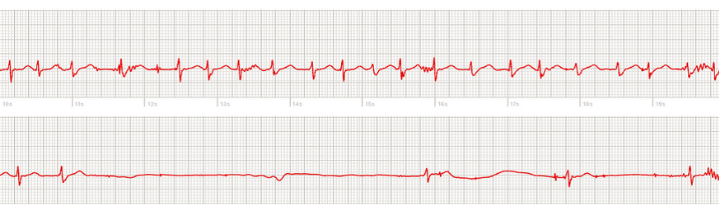 An example of an Apple Watch ECG showing atrial fibrillation.
Symptoms
AF may cause a wide range of symptoms. These symptoms can range from palpitations, fatigue to even giddiness and breathlessness. In most patients, these symptoms are correlated with the rapid heart rate, which resolves once controlled by medications, but some patients may have persistent symptoms despite a well-controlled heart rate.
Some people with AF may be unaware that their heart is fibrillating while others may instantly experience symptoms as soon as AF occurs. Beyond causing symptoms, AF can also lead to an increased risk of stroke or heart failure if left unchecked.
Treatment of AF is as easy as ABC
Avoid Stroke
Patients with AF have a fivefold increased risk for strokes compared to those without AF. A major stroke can be debilitating and affect your independence. Due to AF, blood flow in atria becomes sluggish and favours clot formation. These clots may dislodge and migrate to the arteries in the brain and starve the brain tissues of oxygen leading to strokes. To reduce this risk of stroke, we recommend using oral anticoagulants such as apixaban, edoxaban, dabigatran, rivaroxaban or warfarin.
Better symptom management
The second goal is symptom control. In patients who are affected by AF, your healthcare provider will discuss and individualise your treatment plan to control AF. This may either be in the form of rate control (giving medications to slow down the heart rate) or rhythm control (restoring and maintaining normal heart rhythm). Rhythm control can be done either via medications, electrical cardioversion (when the heart is given a controlled electric shock with the aim of restoring a normal rhythm) or catheter ablation (a procedure whereby energy is delivered within the heart using wires to destroy and scar up heart tissues that trigger AF).
Cardiovascular (heart) and risk management
The third goal is to optimise the treatment of existing medical conditions that may trigger AF or maintain AF. Blood pressure and blood sugar should be well controlled. Patients should be compliant with medications for coronary artery disease, heart failure and heart valve disease. Leading a healthy and active lifestyle will help too.
Lifestyle adjustments
Diet
In general, there are no major dietary restrictions although following a heart healthy diet, which consists of foods with plenty of fruit, vegetables, whole-grains and nuts with minimal processed foods may help to prevent the onset of cardiovascular conditions and development of AF. However, if you are prescribed warfarin as your anticoagulant, you will need to avoid eating large quantities of food rich in vitamin K such as spinach, kale, cauliflower and lettuce amongst many others. Usually, the pharmacist/dietitian will counsel you on your diet once you commenced on warfarin.
In patients with AF, it is especially important to avoid certain triggers such as alcohol. Heavy consumption of alcohol has been shown to increase risk of AF by up to 25 – 47% compared to those who drink within limits or are teetotaler. The Health Promotion Board (HPB) recommends no more than two standard drinks a day for men, and no more than one standard drink a day for women. A standard alcoholic drink is defined as 2/3 can (220ml) of regular beer, one small glass (100ml) of wine and one shot (30ml) of spirit.
On the other hand, caffeinated beverages such as coffee/tea used to be thought of as a trigger for arrhythmias but has since been debunked in numerous large studies and in fact been shown to be associated with lower incidence of arrhythmias such as AF.
Exercise
Some AF patients may be concerned that physical activity can trigger their AF and lead to symptoms. Some may also experience fatigue either from episodes of AF directly or as side effect from medications used to treat AF such as beta blockers. However, exercise is not only crucial in maintaining general cardiorespiratory fitness but has also been shown to reduce risk of AF, stroke as well as improve mood and symptoms. As such, it is especially important for AF patients to continue physical activity given the numerous benefits that exercise provides. While it may seem daunting to immediately try to achieve the HPB recommendations of 150 – 300 minutes of moderate intensity aerobic physical activity per week, you can always start small with 5 to 10 minutes of brisk walking and build up your endurance as you progress along. Making small changes to daily routine such as taking the stairs instead of the elevator can also make a difference.
Healthy lifestyle
Smoking cigarettes has been shown to have numerous deleterious consequences on health, one of which is increased risk of AF. In fact, it has been shown that there is a 14% increase in risk of atrial fibrillation for every 10 sticks of cigarettes smoked per day. The message is clear when it comes to smoking: “If you smoke, stop smoking, and if you don’t smoke, don’t start”.
Coping with AF
It is important for AF patients to look beyond the physical effects of AF, but also the emotional and mental impacts of AF. Many AF patients experience anticipatory anxiety of when their next episode might occur. Having discussed this with your physician and coming up a personalised emergency plan can help to negate this fear. In addition, a significant proportion of AF patients may also develop depressed mood and thus, deliberate scheduling of fun activities with friends and families can circumvent this vicious cycle.
Although AF is generally a life-long condition without a complete cure, it is not a life-threatening condition and ultimately if managed well, you can still lead a normal healthy and active life.
Article is contributed by Dr Julian Tay Cheong Kiat, Associate Consultant of Department of Cardiology at the National Heart Centre Singapore and Assoc Prof Ching Chi Keong, Board Member of the Singapore Heart Foundation, Senior Consultant of the Department of Cardiology and Director of Electrophysiology and Pacing at the National Heart Centre Singapore.