|
Prevent - Barriers of Helping and How to Address Them

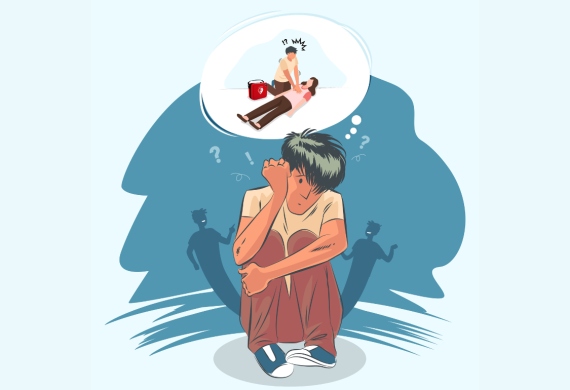
When people are asked whether they would spontaneously assist another person in an emergency, almost everyone will reply positively. However, many refrain and are reluctant to help in real life, especially when they are in the presence of other people during an emergency. This is known as the bystander effect.
In the late 1960s, John M. Darley and Bibb Latané initiated an extensive research to understand the sentiments of bystanders and their decision making process. According to their article, they found that any person who was the sole bystander helped, but only 62% of the participants intervened when they were part of a larger group of five bystanders1.
Three psychological factors were thought to facilitate bystander apathy:
- Diffusion of Responsibility: the feeling of having less responsibility when more bystanders are present
- Evaluation Apprehension: the fear of unfavourable public judgment when helping
- Pluralistic Ignorance: the belief that because no one else is helping, the situation is not actually an emergency
These were shared by Dr Gabriel Ong, Senior Principal Psychologist from the Home Team Behavioural Sciences Centre, Ministry of Home Affairs, during the National Life Saving Day 2023 Symposium organised by Singapore Heart Foundation on 15 Jan 2023.
Motivators and Inhibitors of Responders Reacting to an Emergency
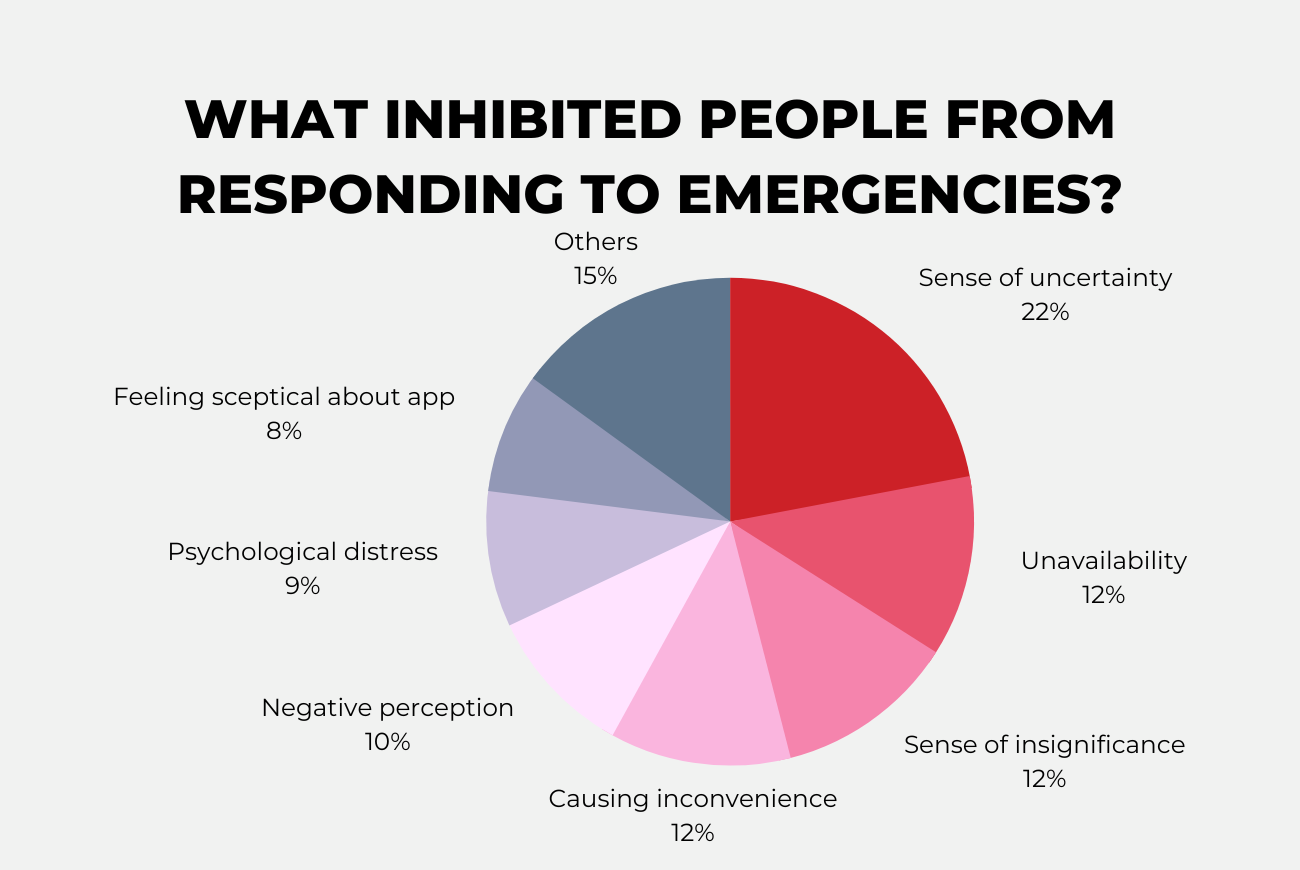
Based on statistics shared by the Singapore Civil Defence Force (SCDF), only 35% of its myResponder app users responded to an alert and arrived at a fire or cardiac arrest incident in 2019. What is preventing the 65% from responding?
Following the findings from a joint study conducted by the Home Team Behavioural Sciences Centre, Ministry of Home Affairs and SCDF, the six top reasons that inhibited people from responding to emergencies were:
- “I felt unsure” (22%)
- “I was not available” (12%)
- “I don’t see the point” (12%)
- “It was inconvenient” (12%)
- “I was afraid of being held liable (10%)
- “It was traumatising” (9%)
Ways to Reduce Barriers to Help
What can we do to reduce the barriers of helping?
- Boost confidence by making the process of responding and helping simpler
- Increase awareness of importance of helping
- Strengthen narratives on the importance of community first responders (CFRs)
- Emphasise the importance of intervening in the first few critical minutes
- Help CFRs understand that they can help despite not being CPR/AED trained
- Care for the well-being of responders
- Provide relevant resources such as helplines
- Provide psychological first aid training
With the help of the SCDF operators, responding to an emergency will not seem too intimidating, especially with instructions provided in bitesize.
It is important to not only remove the barriers to help, but also emphasise on the motivators to encourage more people to step out to help during an emergency.
Watch his full presentation here:
Reference:
1. Hortensius, R., & De Gelder, B. (2018). From Empathy to Apathy: The Bystander Effect Revisited. Current Directions in Psychological Science, 27(4). https://www.ncbi.nlm.nih.gov/pmc/articles/PMC6099971/