|
Why are Women with Heart Disease More Susceptible to Dementia

Are you ruled by your head or your heart? Truly, there is a scientific basis for the heart-brain axis and not merely a sensational metaphor. Evolving research has shown that women with heart disease are strongly linked to developing cognitive problems and dementia, more so than men.
Dementia is a progressive neurodegenerative disorder of the brain, eventually causing inability to function independently. In the recent Well-being of the Singapore Elderly (WiSE) nationwide study, the prevalence of dementia was found to be 1 in 10 people aged 60 years and above. It has been projected that there will be 80,000 persons living with dementia by 2030 in Singapore1. This disease is well-known to affect more women than men, with 2 out of 3 with dementia being women. It is also strongly associated with various cardiovascular disorders, which more frequently co-exist than by chance alone, due to multiple common risk factors and a degree of interaction.
Heart disease linked to dementia in women
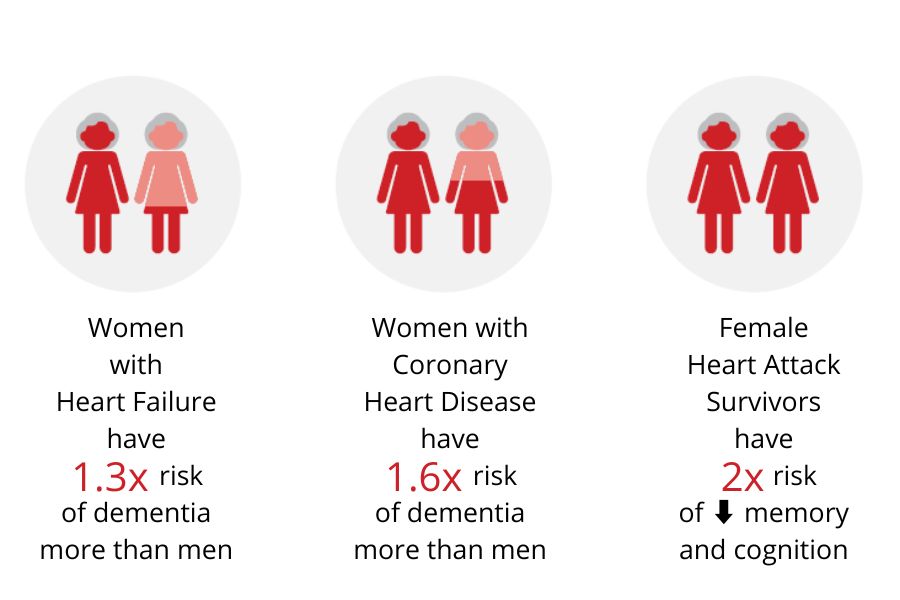
There has been increasing evidence on a broad scale documenting women’s predisposition to dementia with heart-related issues. This is especially so for older and postmenopausal women. In a long-term study of more than 6,000 women aged 65-79, female heart attack survivors are 2 times as likely to see decline in memory and cognition2. Women with coronary heart disease and heart failure were 1.6 and 1.3 times more likely to develop Alzheimer’s disease than men with the same condition respectively3. Even without heart disease, women with high blood pressure and diabetes are at higher risk of cognitive decline than men. The usual risk factors for heart disease and stroke apply to dementia too. Heart disease is more than just blocked or damaged arteries; it is also an inflammatory process that can affect turnover of brain cells, leading to small bits of tissue death in the brain over time.
Cardiovascular risk factors for dementia
The following risk factors contribute to findings that women are disproportionately affected by dementia, compared to men4. Some of the less obvious reasons are further explained below:
- Increased prevalence/severity of high blood pressure, diabetes (especially >64 years old)
- Increased stroke risk with atrial fibrillation, bypass surgery, aortic valve procedures
When it comes to stroke prevention for those with atrial fibrillation, women are found to have been less aggressively treated with blood thinners than men. Women are also found to have higher stroke rates when undergoing heart bypass surgery and transcatheter aortic
valve procedures, but reason for this difference is still unclear.
As women generally have a longer life expectancy than men, they are more at risk of developing dementia with age. Unfortunately, this also means that women living with heart disease and dementia carry a larger burden of disease in their lifespan compared to men. Living longer does not necessarily mean living better, when quality of life is impaired by poor heart and brain health.
Heart disease is reversible, dementia is not
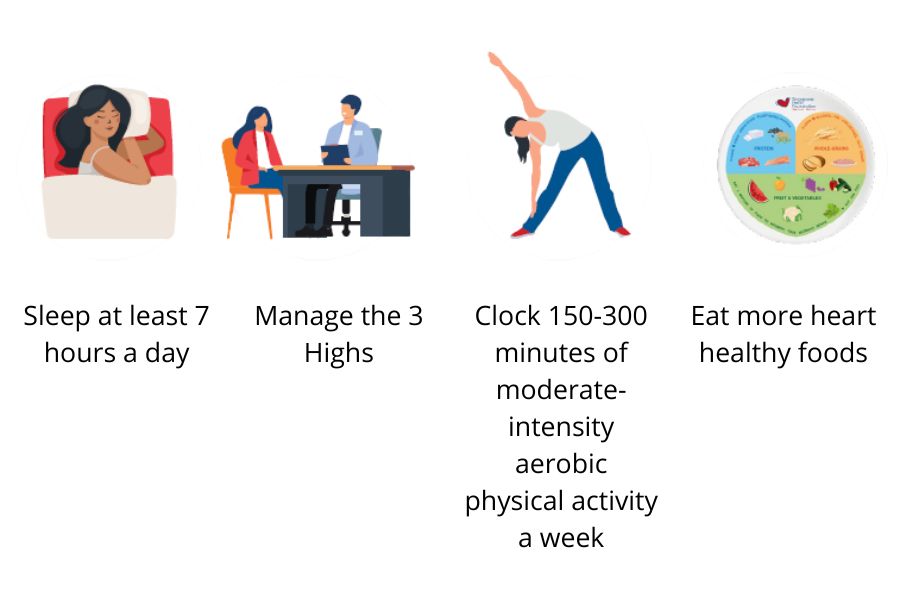
Understanding the connection between heart disease and dementia is important because heart disease is reversible, but Alzheimer’s disease is not. 80% of cardiovascular disease is preventable by having a healthy lifestyle – eating healthy foods such as fresh fruit and vegetables, staying physically and mentally active, and paying attention to the three highs – blood pressure, blood sugar and blood cholesterol levels. All these efforts can not only prevent heart disease, but also prevent cognitive impairment and dementia.
Prevention
Heart disease can have a long-term impact on the brain, what is good for your heart is good for your head. Women especially, must wise up.
Article is contributed by Dr Low Ting Ting, Senior Consultant at the National University Heart Centre, Singapore (NUHCS). She is also the Director of the Women’s Heart Health Programme at NUHCS.
References
- Subramaniam, M., Chong, S. A., Vaingankar, J. A. et al. (2015). Prevalence of Dementia in People Aged 60 Years and Above: Results from the WiSE Study. Journal of Alzheimer’s Disease, 45(4).Haring, B., Leng, X., Robinson, J. et al. (2013). https://pubmed.ncbi.nlm.nih.gov/25672767/
- Cardiovascular Disease and Cognitive Decline in Postmenopausal Women: Results From the Women’s Health Initiative Memory Study. JAHA, 2(6). https://www.ahajournals.org/doi/10.1161/JAHA.113.000369
- Dong, C., Zhou, C., Fu, C. et al. (2022). Sex differences in the association between cardiovascular diseases and dementia subtypes: A prospective analysis of 464,616 UK Biobank participants. Biology of Sex Differences, 13(21).https://bsd.biomedcentral.com/articles/10.1186/s13293-022-00431-5
- Volgman, A. S., Merz, C. N. B., Aggarwal, N. T. et al. (2019). Sex Differences in Cardiovascular Disease and Cognitive Impairment: Another Health Disparity for Women? JAHA, 8(19). https://www.ahajournals.org/doi/10.1161/JAHA.119.013154