|
Can the Haze Cause a Heart Attack?
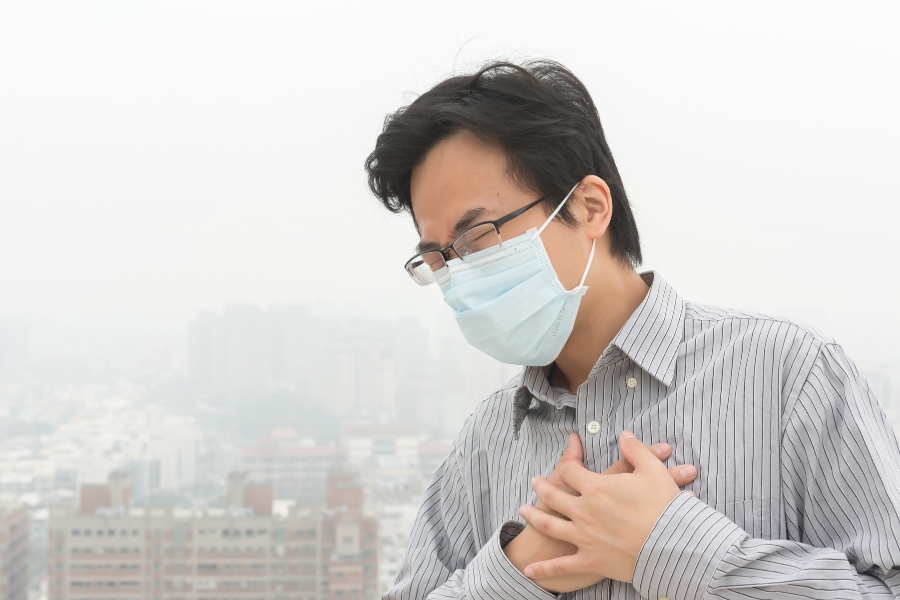
Haze resulting from air pollution is a well-known cause for increased risk of heart attacks and strokes, especially among susceptible individuals, such as the elderly or those with pre-existing medical conditions. Historically, the first well-documented episode of air pollution happened in December 1952 in London, where 12,000 died. The World Health Organization (WHO) estimated that urban outdoor air pollution accounted for 4.2 million deaths a year due to stroke, heart disease, lung cancer and chronic respiratory disease, which is comparable to the 4.8 million premature deaths attributable to smoking. The number of deaths attributed to bad air had increased by 16% from 2004 to 2008, with little reason to imagine that the situation would improve in the ensuing years.
The main components of air pollutants come from gases such as nitrogen dioxide and sulphur dioxide, which are produced directly from car traffic, industrial emissions, and domestic heating. They can undergo a chemical reaction in the atmosphere to produce ozone, another type of pollutant.
The other common air pollutant component is the particulate matter (PM) in inhaled air, which is the main culprit for increased deaths globally. The smaller particles of 2.5 mm in aerodynamic diameter (PM2.5) and the ultrafine particles (PM0.1) can penetrate through the lung airspace and fine blood vessels to enter our blood circulation.
How does air pollution affect my heart?
When in the bloodstream, the air pollutants can provoke marked inflammation in the lungs and the rest of the other organs, increase the ‘stickiness’ of blood platelets to cause clot formation and accelerate the hardening of arteries (atherosclerosis) with resultant plaque formation. Coronary plaques destabilised by air pollutant exposure can rupture to form blood clots that cause heart attacks.
Short term exposure can increase the risks for heart attacks, strokes, abnormal heart rhythms (arrhythmias), heart failure and even sudden cardiac arrest . The risk of death is even greater with long-term exposure.
Current science suggests air pollution facilitates atherosclerosis development and progression and may play a role in high blood pressure and diabetes.
How should I protect myself from air pollution?
In Singapore, air quality is measured by the Pollutant Standards Index (PSI). The PSI is calculated based on six pollutants: particulate matter, fine particulate matter (PM2.5), sulphur dioxide, carbon monoxide, nitrogen dioxide and ozone. During periods of haze caused by forest fires in the region, the predominant pollutant is PM2.5. WHO guidelines stipulate that exposure to PM2.5 should not exceed 10 μg/m3 annual mean, or 25 μg/m3 24-hour mean.
When the PSI reading in Singapore is moderate at 51 and 100, normal outdoor activities can go on. But when the PSA is between 101 to 200, it is in the unhealthy range. Healthy people are urged to reduce prolonged or strenuous outdoor physical exertion, while vulnerable groups, including pregnant women, children, the elderly, and people with existing heart or circulatory condition, should minimise such exertion.
While the responsibility for controlling air quality rests with national governments in implementing public health measures to reduce pollution, an individual can undertake the following measures to reduce exposure to pollutants:
- Be aware of the risk of air pollution and be cognizant of the media alerts on air quality in your living areas.
- Avoid walking and cycling in streets with high traffic intensity, particularly during rush hour. Instead, run and exercise in parks and gardens and avoid major traffic-heavy roads.
- Use cars and motorbikes as little as possible and always consider public transport alternatives.
- A diet rich in fruit and vegetables containing antioxidants may help to counteract the effects of air pollution.
Article is written by Prof Tan Huay Cheem, Chairman of the Singapore Heart Foundation, and Senior Consultant for the Department of Cardiology at the National University Heart Centre, Singapore.