|
Drowning and CPR
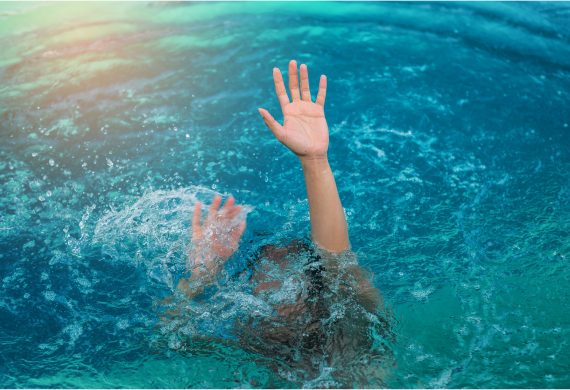
Drowning is the impairment of breathing due to submersion or immersion in liquid. In 2019, nearly 650 people died by drowning every day worldwide. Locally, 99 deaths caused by drowning were reported from 2015 to 2019, with 37 casualties primarily between 20-39 years old. Most drowning deaths in Southeast Asia occur during recreational water activities, living near water, working around or traveling on water, flooding disasters, accidents due to alcohol consumption, bathing, collecting and storing water, etc.
Preventing drowning is possible through implementing WHO-recommended interventions, such as installing barriers, providing safe places for pre-school children, teaching swimming and water safety, training bystanders in rescue techniques, enforcing water-related regulations, and improving flood risk management.
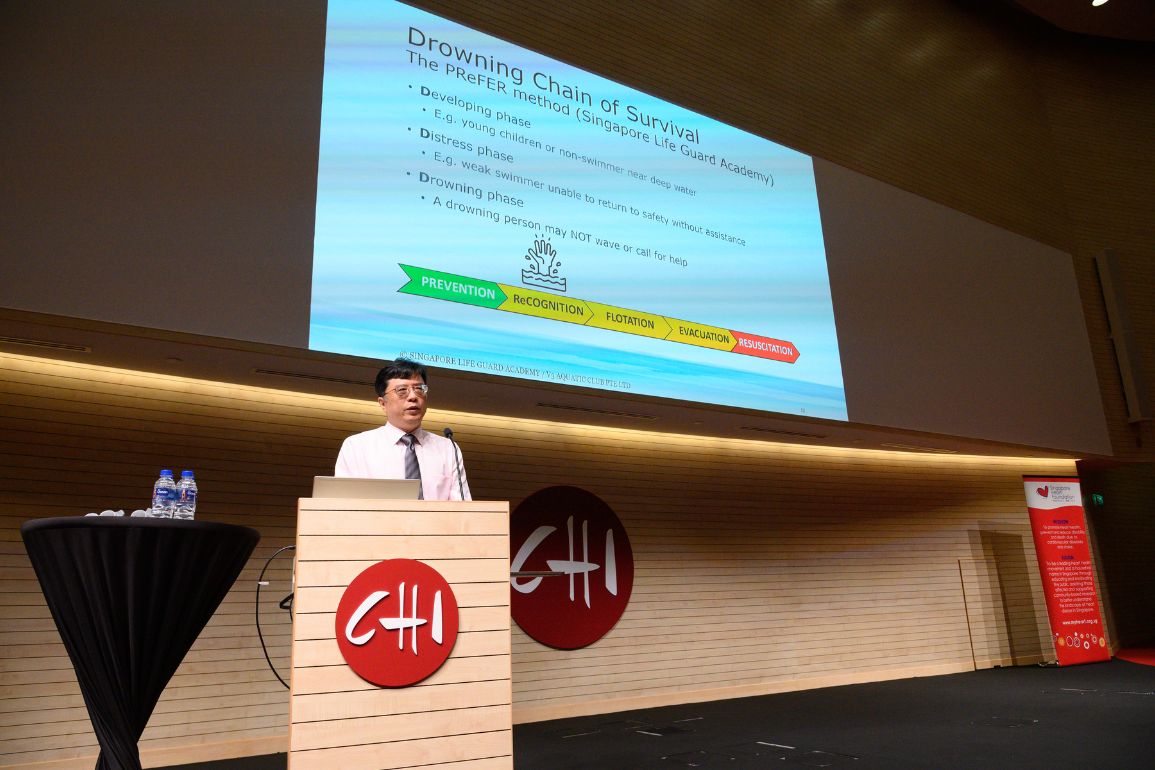
Learn from Mr Ng Chuen Ser, Director of the Singapore Life Guard Academy, as he elaborates about the importance of bystanders during a drowning rescue and outlines the Chain of Survival for drowning using the Singapore Life Guard Academy’s PReFER method: Prevention, Recognition, Flotation, Evacuation and Resuscitation during the National Life Saving Day Symposium 2024.

Prevention: The first link in the chain focuses on preventing drowning accidents in the first place. This includes education, awareness raising the implementation of safety measures such as active adult supervision when children are in or around the water.
Recognition: If a drowning accident occurs, it is crucial to recognise it immediately.
Flotation: After recognising that a casualty is in distress and asking someone to get help, the next priority is to interrupt the drowning process by providing flotation to the casualty.
Evacuation: Removing the casualty from the water is essential to put a definitive end to the drowning.
Resuscitation: Immediately call 995 for ambulance and start CPR* without delay. Professional lifeguards and volunteer lifesavers with a duty to respond are recommended to be trained in Drowning CPR^. When available, an AED should be used.
*Hands-only CPR by lay rescuers and CPR with chest compressions and ventilations by BCLS providers.
^Drowning CPR starts with ventilations first (airway management), follows by the standard 30 compressions with 2 ventilations procedures. Pocket mask and bag-valve-mask can be used by rescuers who are formally trained with regular recertification. When available and certified, use the highest possible inspired oxygen concentration.
Watch to find out more: