|
From Flight to Fight
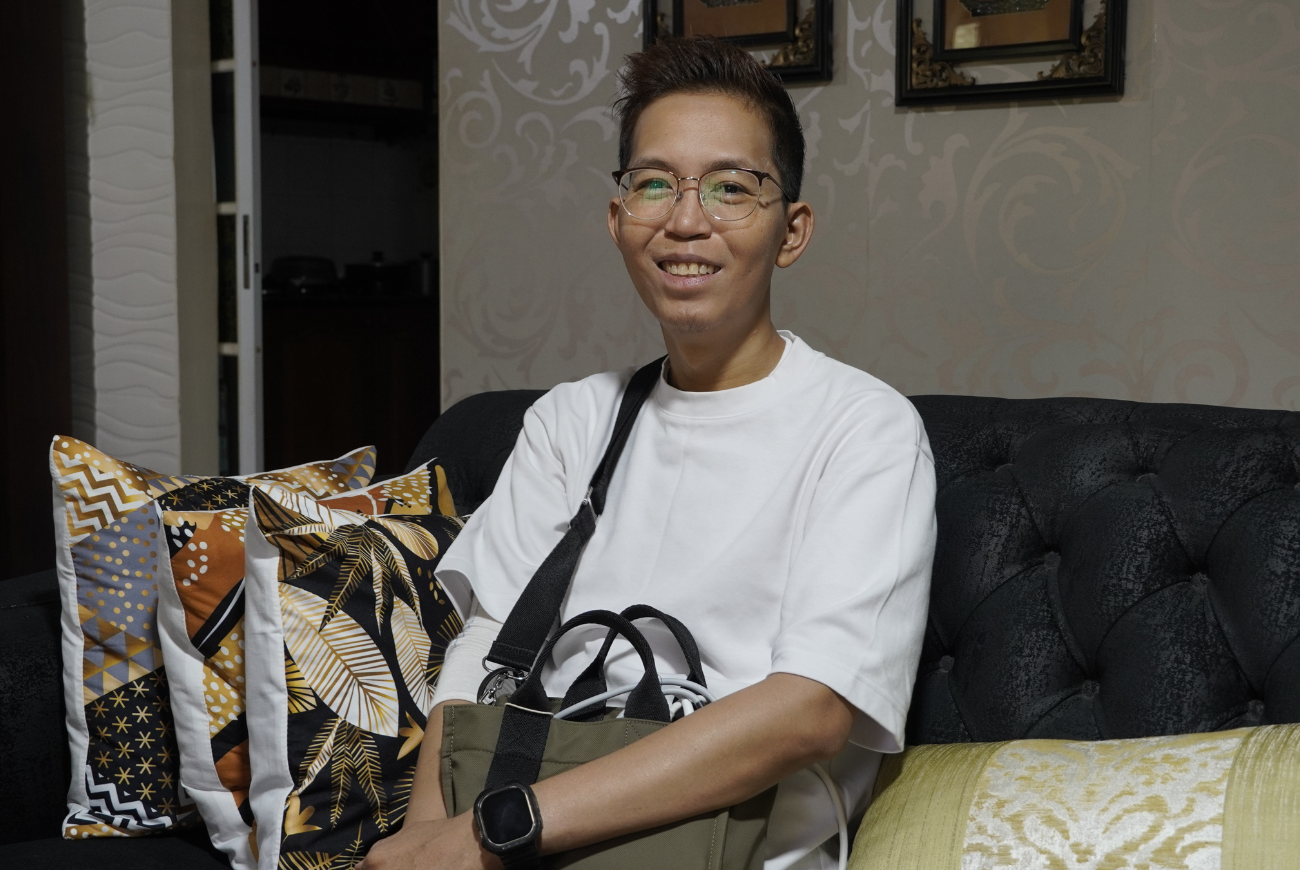
When air steward Mr Muhammad Azrin Bin Ali, 34, returned from his shift in February 2023, he began to feel bloated and lethargic. At first, he suspected that his lifelong blood condition, beta thalassemia major*, which requires him to undergo regular blood transfusions, was the cause of the discomfort.
Mr Azrin was hospitalised for a month before he was referred to a cardiologist. This was when he was diagnosed with heart failure. “I felt neither afraid nor sad,” when he learnt about his condition, he recounts. “I just felt a mix of emotions… Maybe it’s really time for me.”
Despite the circumstances, hope prevailed. He had a Left Ventricular Assist Device (LVAD) implanted to keep his heart’s left ventricle functioning; this was to ensure that blood could continue to be pumped to the rest of his body.
It was a difficult period for Mr Azrin. In addition to being hospitalised, he was put on extended medical leave, and he experienced an infection which left him bedridden. Moreover, the medical treatments depleted his savings.
He was discharged from hospital in May the same year, but was re-admitted again for complications including seizures and a severe infection. In all, he was admitted to an Intensive Care Unit (ICU) three times. It was in August when he finally returned home, but the stark contrast between his life before and after the diagnosis shocked him.
“From being able to do everything myself, to being dependent on my family, my mum, my dad, it felt terrible,” Azrin remarked.
He was not only unable to return to his job, which he greatly enjoyed, but he was also confined to his home where he had to endure the pain that came with his recovery. These experiences took a toll on his mental health. “I was crying every day,” he shared about that difficult period.
However, Mr Azrin did not let depression take control of his life. Step by step, he recovered and was able to enjoy the outdoors again. But this was not without the LVAD’s battery by his side. The LVAD’s battery connects from an open wound in his torso to his heart, but he must get a new dressing every week. At the same time, he goes for weekly checkups with his cardiologist, and for maintenance of his LVAD; and every month he has to endure blood transfusions for his Beta Thalassemia Major. He has also recently begun going for weekly physiotherapy sessions.
To get to and from his weekly medical appointments, Mr Azrin uses the Heart Support Fund’s CabCharge card, which helps him cover the transportation costs, and thereby reduce the strain on his finances. The card allows him to get to and from his appointments by taxi – a safer and more convenient way for him to travel, especially with his condition and the LVAD.
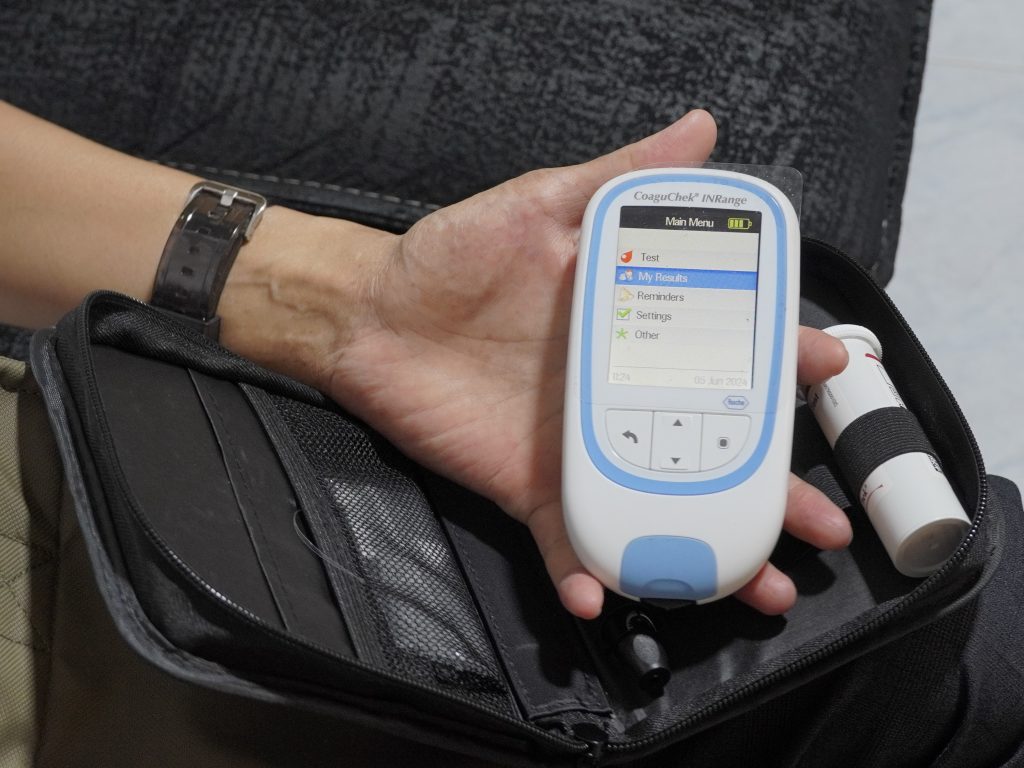
The international normalised ratio (INR) device measures the time it takes for blood to clot.
In addition to his CabCharge card, the cost of an INR monitoring device was also subsidised by the Singapore Heart Foundation’s Heart Support Fund. This essential device helps Mr Azrin manage doses of warfarin, a medication which prevents blood clots.
Mr Azrin hopes the LVAD could be removed by the end of the year, and that he could return to flying once again.
“I could not imagine going through the recovery period without the support from my family as well,” he asserts.
He is of course, grateful for the support from the Singapore Heart Foundation. “A very big thanks to the donors as well, their contributions have not only helped me, but many other patients as well,” he affirms. “It has been a great ease on all our lives, and we are most grateful for their contributions.”
Reflecting his spirit of perseverance, he advises those in similar situations, “Times like these are like a small dent in your life, but it doesn’t mean just because of that slight dent you lose all hope or confidence to move on. You just have to keep moving forward.”
*Beta thalassemia major, also known as Cooley’s anemia, is an inherited blood disorder caused by an abnormal gene. It prevents the production of normal haemoglobin, which transports oxygen from the lungs to the body. This leads to anaemia. Thalassaemia is a genetic condition that affects both men and women. In Singapore, about 3% of the population are carriers of the thalassaemia gene. Beta thalassaemia major is a severe form of the disease that requires monthly blood transfusions to sustain life.