|
High Performance CPR – What’s This All About?
Cardiovascular disease is a leading cause of death in Singapore, with about 2,300 out-of-hospital cardiac arrests (OHCA) occurring annually and survival rate at 23.6%. This puts us behind Seattle & Kings County (56%), Seoul (33%) and Tokyo (29.9%).
To increase survival rate, a team from the Singapore Civil Defence Force travelled to Seattle & Kings County, USA, in 2016 to learn about high-performance CPR, which was first introduced there and contributed to a significant increase in survival from cardiac arrest. Other emergency medical systems that have adopted the practice include Australia, New Zealand and Ireland.
High-performance CPR refers to team-based resuscitation, similar to the concept of F1 pit-crew, where each team member is assigned a specific task.

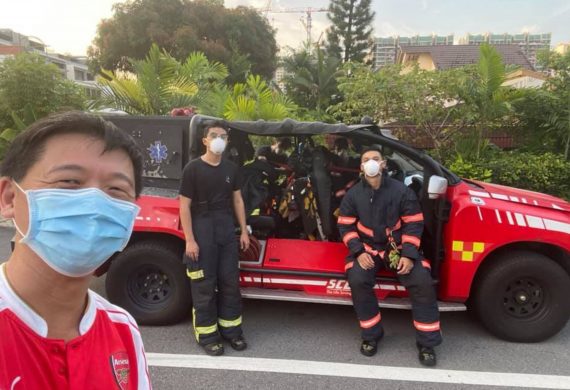
Back in Singapore, SCDF piloted the first phase implementation of tiered response in 2017. A fire bike, equipped with AED, medical drugs, oxygen cylinders, and diagnostic equipment, is first dispatched to attend to life-threatening emergencies such as active seizure and cardiac arrest, to stabilise the condition of the patient before the ambulance arrives.
Since April 2019, in addition to a fire bike and ambulance, SCDF also dispatches a four-man crew on either a Red Rhino, fire engine or fire medical vehicle, to provide two tiers of responders – Basic Life Support and Advanced Life Support – for cardiac arrest cases.
This means that there will potentially be seven to eight responders attending to one single cardiac arrest case, all with a specific task to perform on-scene.
Typically, the fire bike will arrive at the scene first to start CPR and deploy AED. When the four-man fire engine/red rhino arrives, the Emergency Medical Technician will operate the AED, Fire and Rescue Specialist to deliver oxygen and ventilation, and two firefighters to rotate in giving chest compression.
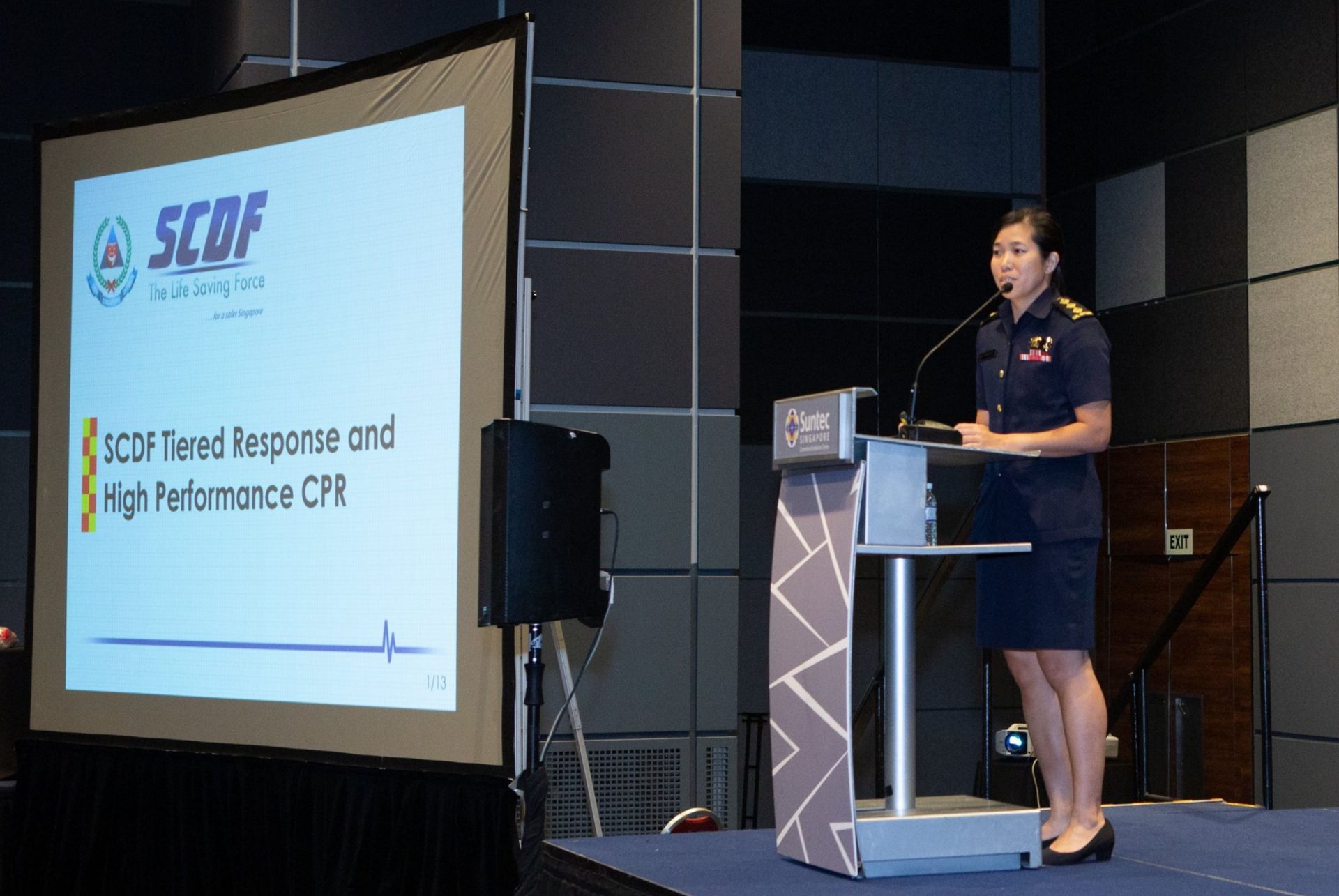
“As we know when you do CPR, it’s tiring. After a while you may not be able to compress enough, may not be able to do a full recoil. So to make sure we can achieve good manual CPR throughout resuscitation, we have two persons doing chest compression and they will rotate (every two minutes),” said Captain Amelia Justina Lim at the National Life Saving Day Symposium organised by the Singapore Heart Foundation.
“All these must be done in a well-coordinated manner so that we can minimise interruptions to the chest compression.”
The ambulance crew can then focus on advanced interventions, such as putting on intravenous fluids, administering life-saving drugs, etc.
According to Captain Lim, past studies have also shown that the optimal survival rate occurs when a pulseless patient receives chest compression above 70 per cent of the time. The goal for SCDF is to achieve 80 per cent and above, which means for every 10 mins that a patient is pulseless, he should receive at least 8 mins of quality chest compression.
“First we have to make sure that the compression is deep enough, the rate is the correct rate (100 to 120 bpm) and we have good recoil. The last thing is also of course minimize the interruption. So when you have a team doing it, the team needs to be very well coordinated, otherwise we’ll have a lot of interruptions. Or if you only have one person doing it, then the person will be tired and after awhile the quality (of the chest compression) is not there anymore.
“All these are done because we want to maintain good blood circulation to the brain. We want to achieve not just the pulse returning, but we also want to achieve a good neurological outcome. This means when the patient gets the pulse back, they can wake up and get discharged from the hospital,” said Captain Lim.
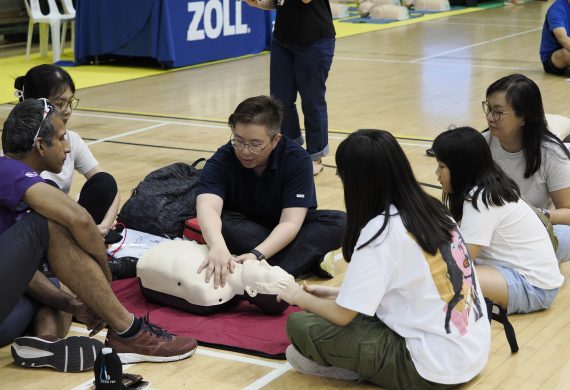
Watch her presentation and a live demonstration of high performance CPR here:
Her presentation slides are also available for download.