|
A Second Chance, Earned in Seconds
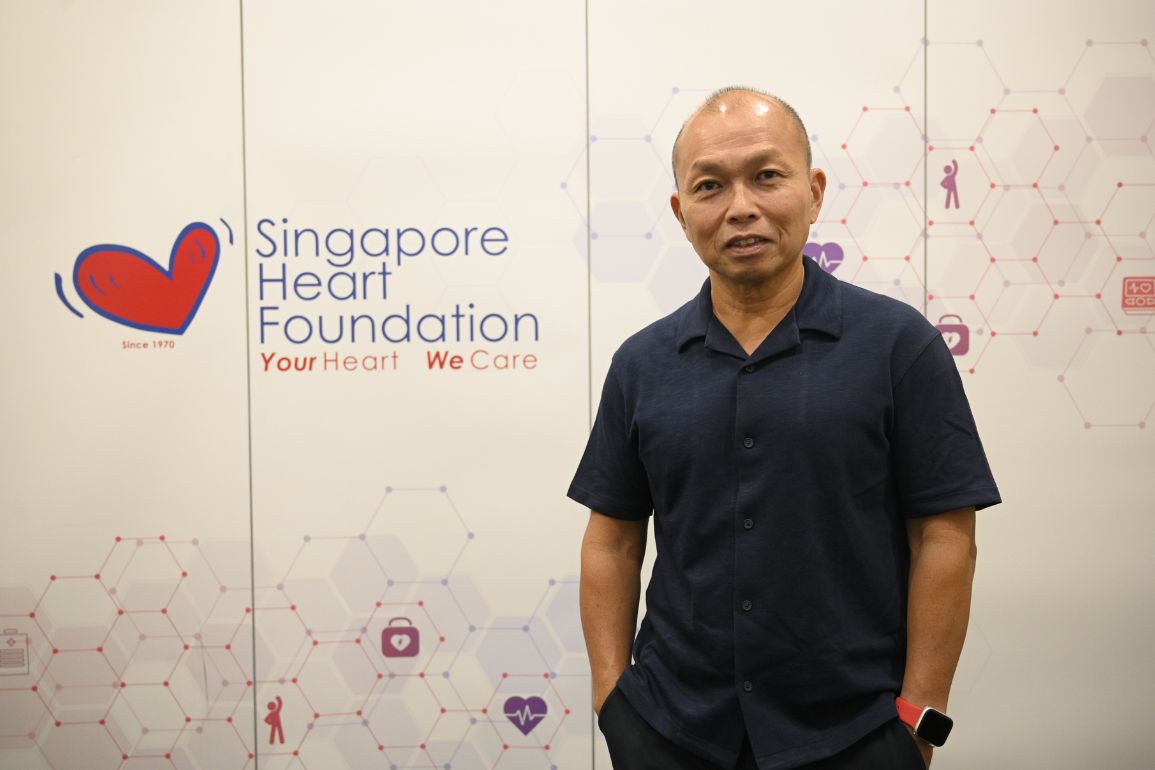
On an ordinary afternoon in Jun 2024, Mr Edward Poh — aged 60 and known among peers for his active lifestyle — collapsed without warning. This was during a friendly badminton game at the NUSS Guild House in Kent Ridge. There were no signs. No chest pain. No breathlessness. One moment he was lunging for the shuttlecock; the next he was unconscious on the floor.
What unfolded in the minutes that followed was a textbook example of what saves lives in cardiac arrest — not luck, but preparation.
Several of his teammates had undergone CPR training. One immediately began chest compressions; another ran to fetch the nearest Automated External Defibrillator (AED). As fate would have it, Dr Jason Chen, a cardiologist from the National University Heart Centre, Singapore (NUHCS), was having lunch nearby. In the commotion, he intervened — delivering a single shock using the AED, followed by a dose of adrenaline. His actions, coordinated with those of Edward’s friends, stabilised him long enough for paramedics to take over.
Edward survived — and later underwent successful bypass surgery, coincidentally done by Dr Jason. And the incident has changed Edward’s perspective.
Until that day, Edward believed his disciplined routine — regular exercise, no smoking, no alcohol — shielded him from major health risks. But looking back, he recognises the overlooked years. In his 30s and 40s, late nights, unmanaged stress and poor diet were common. The damage, he admits, was cumulative. Lifestyle changes made in his 50s have helped, but they would not fully erase decades of strain.
Two lessons stand out from his experience.
- Fitness does not mean immunity.
Edward now encourages everyone — especially men over 50 — not to rely on appearances or just “feeling fine.” He urges them to take preventive screenings seriously. “Get an angiogram,” he advises, “even if you think you’re healthy.” Since his episode, several of his friends have gone for cardiovascular scans — and a few have uncovered hidden risks they would not otherwise have known. - CPR and AED training saves lives.
Edward is now a vocal advocate for public training. He emphasises how every minute counts in a cardiac emergency. “If help takes eight minutes and no one intervenes, the outcome is usually fatal,” he says. “That could have been me.” He also points out that while AEDs are more common now, many bystanders still lack the confidence or knowledge to use them.
Edward’s story is not just one of survival. It is about what enabled that survival—trained responders, accessible equipment and a chain of help that starts within seconds. Today, he’s a member of the Cardiac Arrest Survivors’ Club, a support group hosted by the DukeNUS, Singapore Civil Defence Force, Singhealth, Singapore Heart Foundation and Unit for Pre-hospital Emergency Care. The club offers a space for survivors and families to rebuild their lives — through activities like group discussions, nature walks and shared meals that reconnect members to life after crisis.
Mr Edward Poh is here today because someone stepped up when seconds mattered. His message is clear: learn CPR; know where your nearest AED is and never assume good health is a guarantee. The life you save might be a family’s — or your own.
Join the Cardiac Arrest Survivors’ Club and be part of a community that turns survival into strength here.
Watch Mr Edward’s story in the video below.