|
Hydrotherapy for Heart Recovery: A Low-Impact Approach
The journey to recovery after heart disease or a cardiac event is not always easy. Cardiac rehabilitation empowers patients to regain their strength, confidence and vitality through a balanced programme of exercise, education and support. It helps them improve both their heart health and quality of life.
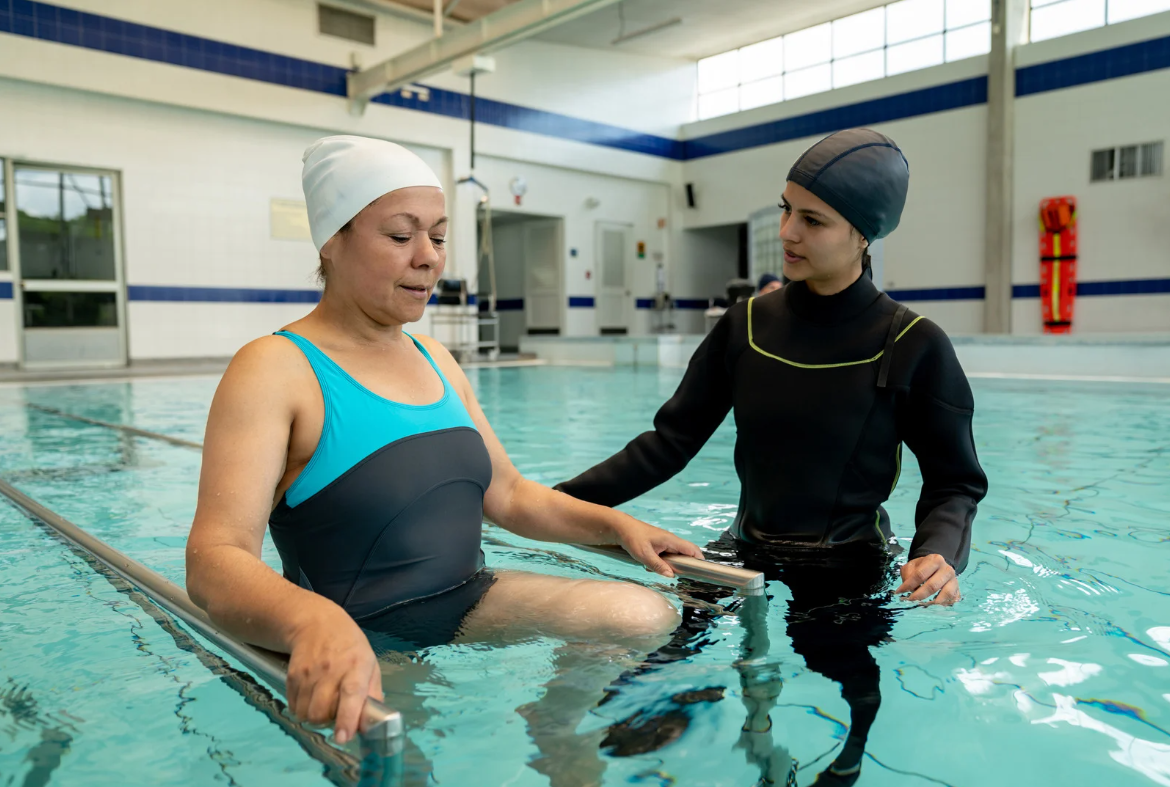
Hydrotherapy, the therapeutic application of water for pain management and rehabilitation, has become a valuable component of cardiac care. By performing exercises in water, patients benefit from its buoyancy, resistance and warmth. This facilitates movement and reduces strain. Hydrotherapy provides a safe and effective environment for improving strength, mobility and confidence in heart patients. It can also complement conventional land-based rehabilitation programmes.
Why water works?
Hydrotherapy’s effectiveness lies in the physical properties of water:
❤ Buoyancy reduces a person’s body weight and eases pressure on joints and
muscles, allowing for safe movement.
❤ Hydrostatic pressure (the gentle pushof water) helps blood flow back to the
heart. It compresses blood vessels in the arms and legs towards the centre of the
body. This can enhance the amount of blood pumped with each heartbeat and slow down the heart rate during water immersion.
❤ Thermal effects of warm water (typically 33-36°C) relax muscles, reduce pain
and improve circulation.
❤ Viscosity (the water’s thickness that slows movement) provides natural resistance
for strength training without weights, making it ideal for those with limited
mobility.
These effects work together to improve cardiovascular efficiency, reduce inflammation and boost functional capacity.
How hydrotherapy helps heart patients
Hydrotherapy provides a safe and effective way for individuals with heart conditions to exercise, whether they are recovering from a heart attack or surgery. The buoyancy of water reduces the strain on joints and muscles. These allow heart patients to perform movements that might be difficult or painful on land (e.g., jogging, jumping). This could benefit those with comorbid musculoskeletal conditions, such as arthritis or post-operative pain.
In cardiac rehabilitation, hydrotherapy can:
❤ Improve exercise tolerance and cardiovascular endurance
❤ Enhance blood circulation
❤ Promote psychological well-being, thus reducing anxiety and increasing confidence
Patients often report feeling more relaxed and less fatigued after attending hydrotherapy sessions. This encourages them to stick with their rehabilitation programmes.
Hydrotherapy vs Land-based rehabilitation
While land-based exercise remains the standard for cardiac rehabilitation, hydrotherapy provides distinct advantages for certain groups of people. Research indicates that water based exercises can be as effective as land-based workouts in enhancing maximum oxygen consumption during activity. It may also improve heart rate variability in older adults.
Key differences include:
❤ Impact on joints
Water supports the body and reduces stress on joints. This makes it ideal for patients with physical limitations.
❤ Exercise intensity
Water-based exercises can be done at moderate intensity. However, tracking heart rate and exertion can be more complex due to hydrostatic effects.
❤ Accessibility
Land-based rehabilitation facilities may be more accessible. Hydrotherapy can be more inclusive for those with mobility challenges.
A blended approach can be beneficial, with initial exercise in water followed by a gradual move to land as strength and confidence develop.
Hydrotheraphy at Changi General Hospital
Changi General Hospital (CGH) includes hydrotherapy as part of the cardiac rehabilitation programme. It is an alternative option for heart patients who are keen to resume water based activities after a cardiac event. A person with mobility limitations can also use hydrotherapy to engage in exercise at a specific intensity.
Patients must first undergo thorough screening to determine suitability for hydrotherapy. This involves evaluating the severity of their cardiac condition, as is regularly done in cardiac rehabilitation programmes. Patients should be able to control their urination, bowel movements and must not have any open wounds.
Many patients experience greater empowerment and reduced fear in the water. This sense of safety is important for recovery. The supportive environment helps build confidence, reduces fall risks and encourages movement without pain.
For example, one patient who had severe osteoarthritis in both his knees, felt that land exercises were very hard for him. In the water, he moved with ease. He was even able to do jumping jacks.
Hydrotherapy is a gentle but effective method in cardiac rehabilitation. It benefits the body, mind and overall function in a safe setting. It does not replace land-based rehabilitation but complements it effectively, especially for those with pain, limited mobility or fear of exertion.
With proper screening, supervision and programme design, hydrotherapy can transform recovery. It restores not just heart health, but also confidence and hope.
The article is contributed by Ms Loke Shi Jia, Principal Physiotherapist, Rehabilitative Disciplines at the Changi General Hospital.