|
Sudden Cardiac Arrest
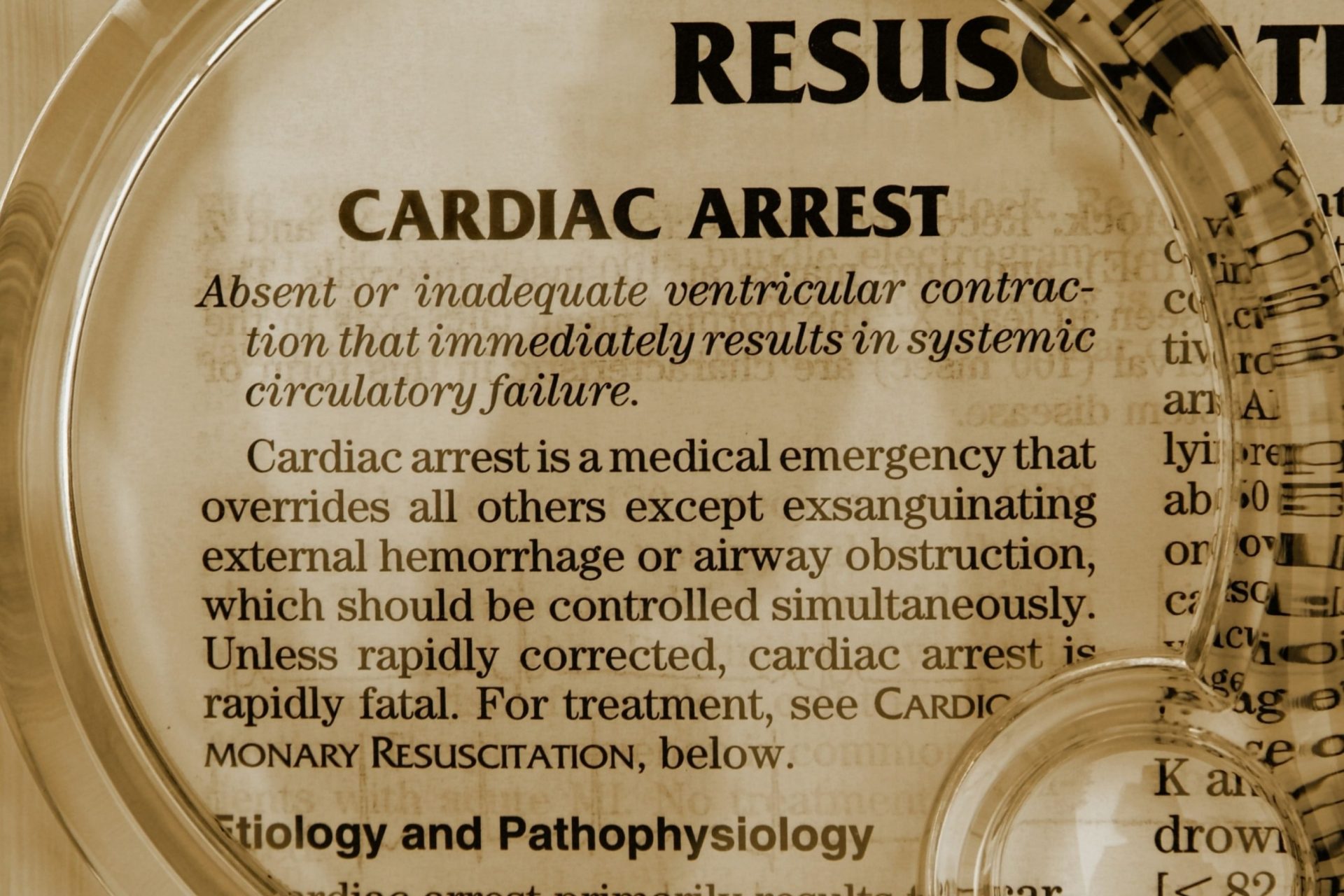
Sudden cardiac arrest (SCA) is the natural death from cardiac causes, heralded by abrupt loss of consciousness within one hour of the onset of acute symptoms. This usually happens when the heart stops beating unexpectedly, and oxygen-rich blood is unable to reach the brain, lungs, and other organs.
What is Cardiac Arrest?
A heart attack occurs when blood flow to the heart is blocked, resulting in the death of parts of the heart muscle.
Cardiac arrest occurs when the heart malfunctions and stops beating unexpectedly. It is one of the complications of a heart attack. In fact, about half of heart attack victims present with SCA.
The immediate cause of SCA is often a sudden development of an abnormal heart rhythm called ventricular fibrillation (VF) or less commonly due to asystole (heart stops contracting). In VF, there is chaotic electrical activity without mechanical contraction so that there is a rapid cessation of blood circulation. VF can be preceded by ventricular tachycardia (VT) with a rapid heart rate, e.g. 200 beats per minute, but very low blood pressure.
When the pumping action is disrupted, the heart cannot pump blood to the brain, lungs and other organs. Seconds later, a person becomes unresponsive and stops breathing (or gasps for air). Death occurs within minutes if the victim does not receive treatment immediately.

Signs
Sudden cardiac arrest often occurs without warning and causes an immediate collapse. In some cases, it may be preceded by symptoms related to an underlying heart condition, but once cardiac arrest occurs, it becomes a medical emergency within seconds.
Common signs of sudden cardiac arrest include:
- Sudden collapse with loss of responsiveness
- Loss of consciousness, where the person does not respond to calling or shaking
- No normal breathing, or only gasping, irregular breaths
- Absence of a pulse, indicating the heart has stopped pumping blood
- Seizure-like movements or convulsions, which may occur due to a lack of oxygen to the brain
Without immediate intervention, brain damage and death can occur within minutes.
Causes
Sudden cardiac arrest occurs when the heart’s electrical system malfunctions, causing it to stop beating effectively. While coronary heart disease is the most common cause, other conditions and triggers may also lead to cardiac arrest.
Coronary Heart Disease (CHD)
About 80% of sudden cardiac arrest cases are due to coronary heart disease. Blocked or narrowed coronary arteries reduce blood supply to the heart muscle, increasing the risk of dangerous heart rhythms. The risk is higher in individuals with previous heart attacks, extensive heart muscle damage or heart failure.
Abnormal Heart Rhythms (Arrhythmias)
Most cases of cardiac arrest are caused by life-threatening arrhythmias such as ventricular fibrillation or ventricular tachycardia. These rhythms prevent the heart from pumping blood effectively and can develop suddenly without prior symptoms.
Structural Heart Disease
Diseases that affect the heart muscle or valves, such as cardiomyopathy or severe heart valve disease, can disrupt normal electrical activity and increase the risk of cardiac arrest.
Genetic and Inherited Heart Conditions
In younger individuals, sudden cardiac arrest may be caused by inherited conditions affecting the heart’s electrical system or structure. These include long QT syndrome, Brugada syndrome, hypertrophic cardiomyopathy and certain congenital heart defects.
Other Medical and External Triggers
Sudden cardiac arrest may also be triggered by severe electrolyte imbalances, drug toxicity, severe blood loss, trauma or lack of oxygen. In some cases, intense physical exertion in individuals with undiagnosed heart conditions can precipitate cardiac arrest.
Prevention
The risk of sudden cardiac arrest can be reduced by reducing the risk of CHD.
- Screening and effective control of CHD risk factors e.g., high blood pressure, high blood cholesterol, etc.
- In those with known CHD, various types of tests can be conducted to identify those at higher risk of heart attack and SCA.
These tests include ECG, exercise or other types of stress tests, echocardiography, imaging techniques e.g., CT scans, isotope scans, coronary angiography, ECG Holter Monitoring and electrophysiologic study. - Those at higher risk may be treated with medications, angioplasty, pacemakers or implantable defibrillators.
In younger individuals those with a family history of SCA or other types of heart disease affecting younger family members may be screened by a doctor and referred if there are suggestive signs e.g. an abnormal ECG.
Individuals planning to participate in strenuous exercise should have a medical examination, including an ECG, a stress test (e.g., a treadmill test), and other types of cardiac examination.
Treatment
What should you do when someone is having a sudden cardiac arrest?
The essential steps for helping a cardiac arrest victim are illustrated in a system called the “Chain of Survival”. The seven rings in this chain are:
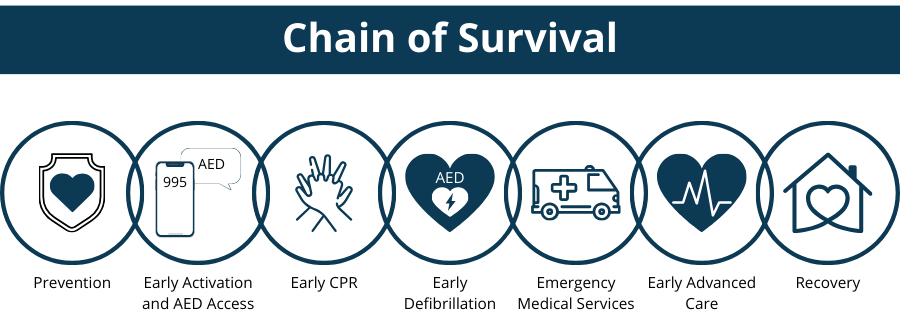
Do your part by completing the first four rings of the chain.
First Ring: Prevention
Prevention is better than intervention. A healthy diet and lifestyle can reduce the risk of heart diseases. Going for regular medical check-ups can help detect problems early and prompt the individuals to seek treatment early and adjust their diet and lifestyles.
Second Ring: Early Activation and AED Access
Call 995 for an ambulance and ask someone to get an AED. Follow the SCDF dispatcher’s instructions.
Third Ring: Early CPR
Initiate CPR as soon as possible to provide oxygen and blood flow to the brain and heart.
Fourth Ring: Early Defibrillation
If two people are available to help, one should begin CPR immediately while the other calls 995 and finds an AED.
AEDs are increasingly available in the community, at lift lobbies, shopping malls, and schools. Download the myResponder app, and it will show the AED nearest to you.
Follow the voice prompts from the AED and be ready to defibrillate.
Fifth Ring: Emergency Medical Services (Ambulance)
Quick access to the scene and transport to the hospital makes a difference to the chance of survival for the casualty.
Life-threatening cases, such as cardiac arrests, are critically time-sensitive and will receive enhanced medical support and a faster response from the Singapore Civil Defence Force (SCDF). In addition to sending an ambulance and a fire bike, SCDF will also deploy Emergency Medical Technicians (EMTs) on red rhino, fire-engine or fire medical vehicles to render prompt medical treatment and perform concerted high-performance CPR on victims.
The team will focus on performing quality and continuous chest compressions with controlled ventilation, which will greatly improve the chances of the victim’s survival.
Sixth Ring: Early Advanced Care
Medical teams will provide advanced cardiac life support at the hospital with the use of Intravenous/Intraosseous (IV/IO) medication and delivery of oxygen via mechanical systems (i.e., Bag-Valve Masks and ventilators).
Seventh Ring: Recovery
To ensure a good survival outcome after OHCA, requires continued community and medical support (i.e., social services, physio/occupational therapy, nutritional guidance, etc) and therapy to rehabilitate the individual back to normalcy.
Understanding Sudden Cardiac Arrest
Sudden cardiac arrest is a critical medical emergency that occurs when the heart unexpectedly stops pumping blood. Understanding cardiac arrest and how it differs from other heart conditions is essential, as survival depends heavily on rapid recognition and immediate action. Early CPR and prompt use of an AED can significantly improve survival outcomes and reduce long-term complications.
Frequently Asked Questions
What is cardiac arrest?
Cardiac arrest refers to a sudden and unexpected loss of heart function, breathing and consciousness due to an electrical malfunction in the heart. Without immediate treatment, it is fatal within minutes.
Is sudden cardiac arrest the same as a heart attack?
No, sudden cardiac arrest and a heart attack are different conditions. A heart attack is caused by blocked blood flow to the heart muscle, while cardiac arrest occurs when the heart’s electrical system fails and the heart stops beating.
Can sudden cardiac arrest happen without warning?
Yes, sudden cardiac arrest can occur without warning, even in people who appear healthy. In some cases, it may follow symptoms such as chest pain or shortness of breath, but many casualties collapse suddenly.
What should I do if someone collapses from sudden cardiac arrest??
Call 995 immediately, start CPR and use an AED as soon as one is available. Early CPR and defibrillation greatly increase the chances of survival.
Who is at higher risk of sudden cardiac arrest?
People with coronary heart disease, previous heart attacks, heart failure or inherited heart conditions are at higher risk. Other risk factors include high blood pressure, diabetes, smoking and a family history of sudden cardiac death.