|
A Stitch in Time Saves Nine: Surviving Sudden Cardiac Arrest
BY JOANNE SU
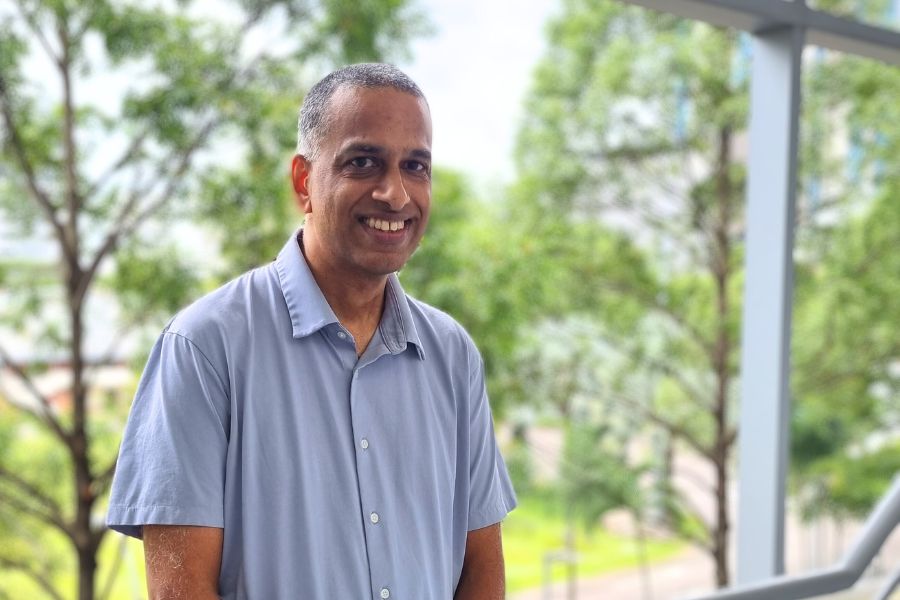
Kalai Pillay’s story of his sudden cardiac arrest is as vanilla as they come. Like for other victims, there was no warning before the cardiac arrest hit. He also has no memory from that day, which is common. Doctors told him that he collapsed while jogging. Yet, unlike many victims, Kalai cheated death and is living well thanks to a swift rescue by lifeguards at Queenstown Sport Centre.
“I was very relieved,” he recounts. “The doctor said I could go back to doing exactly what I was doing prior to the incident. That meant a lot to me.” Here is where Kalai’s story turns from cliché to rarity. Of the mere 22.2% of cardiac arrest survivors in Singapore, he is part of an even smaller minority who can return to a normal life.
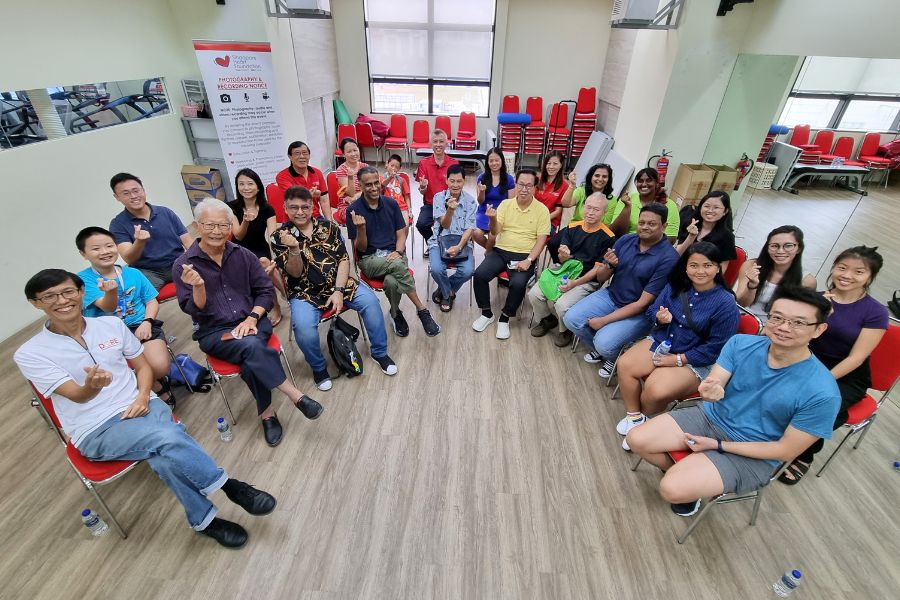
“Many are not so lucky. They struggle with disability, depression, and anger. Their families struggle to care for them,” says Prof Marcus Ong, Senior Consultant, Director of Research, and Clinician Scientist, at the Department of Emergency Medicine in Singapore General Hospital and Director for the Unit for Pre-Hospital Emergency Care. The only way to improve the chances and quality of survival from sudden cardiac arrest is for lay people to apply CPR+AED immediately or early. He shared these insights at the first meeting of the Sudden Cardiac Arrest Survivor Club, attended by nine survivors including Kalai, at the Singapore Heart Foundation (SHF) on 18 Mar.
Prof Marcus hopes that the Club will serve as a place of hope and support for a broad spectrum of survivors. He called on those present to raise awareness of this fatal condition and mobilise more volunteers to learn lifesaving skills and become community first responders.
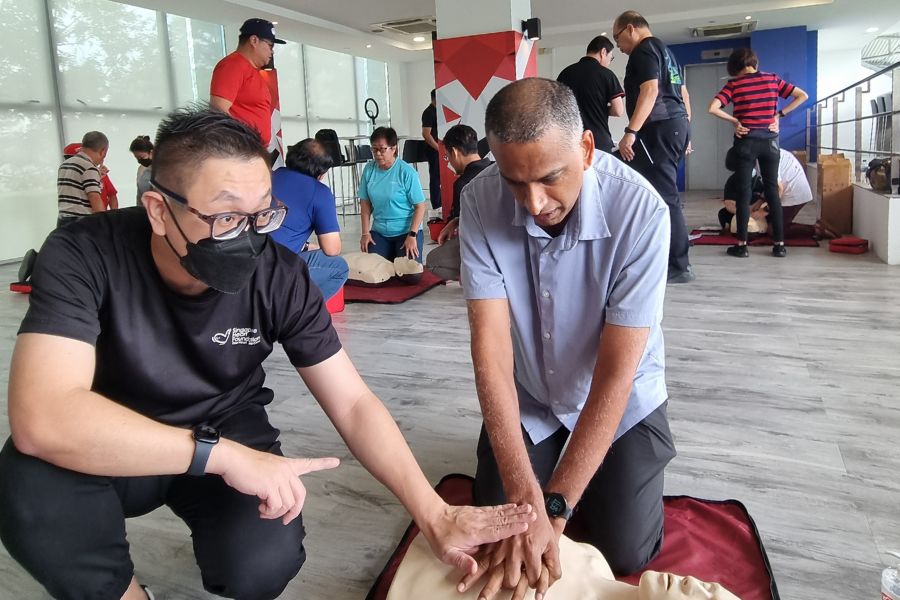
Kalai is leading by example in this regard. Since his recovery, he has been certified in CPR+AED at SHF and has registered as a community first responder on the myResponder app. He encourages others to get trained. “Just come for the course,” he said, “A lot of the doubt that you have [of being able to save a life] will go away.”
To paraphrase a famous maxim, “If not me, who? If not now, when?”