|
Surviving Two Sudden Cardiac Arrests
By GOH WEN SHUEN
It was 30 June 2019.
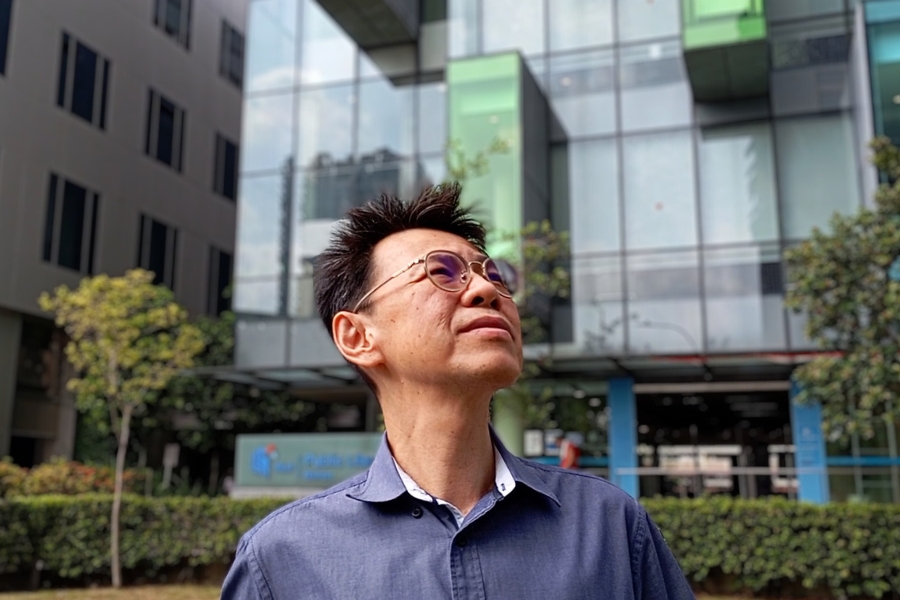
It was a quiet Sunday evening for technical officer Mr Alfred Leong, now 59. At that time, he did not exercise regularly, but he was conscious of his diet and consumed less salt, less oil, and less sugar. Alfred was not a smoker and managed his work stress effectively. Besides having a slightly high cholesterol level, he had a clean bill of health.
Alfred had arranged to meet an insurance agent at a fast food restaurant; he was accompanied by his wife that Sunday evening. Nothing was out of the ordinary, until he suddenly felt weak and tired, and was unable to talk. His wife, a nurse, noticed that Alfred’s face had turned bluish, and his eyes had rolled back. Suddenly, Alfred was experiencing a cardiac arrest.
Alfred’s wife immediately pushed away the tables and chairs so that he could lie on the booth seat. She instructed the insurance agent to call 995 and shouted for an Automated External Defibrillator (AED), even as she performed Cardiopulmonary Resuscitation (CPR) herself for a couple of minutes. In the chaos, Alfred stirred briefly.
“In the midst of gaining consciousness, I sensed that I was in total darkness. I began to open my eyes and saw my wife near to my face, and looking worried,” he recounted.
During the ordeal, he was surprisingly calm. Holding onto her, Alfred told his wife to take care of herself, if he did not survive. He then vomited excessively, shortly before the paramedics arrived.
In the ambulance, Alfred’s life still hung in the balance. On the way to hospital, he had a second cardiac arrest, and the driver pulled over, for him to be resuscitated again. The memory is still fresh in Alfred’s mind, as he recalls, “The paramedics were trying to defibrillate me.” It was only after he arrived at the A&E that Alfred was successfully revived, in the nick of time.
Alfred spent the next nine days in the hospital; for two days he was in the cardiac care ward, and the remainder of the days he was in the general ward. At the hospital, he underwent a defibrillator implant, and thereafter, cardiac rehabilitation. His family was deeply worried at that time; they could not believe that he could experience such a thing. He tenderly recalls, “I sensed that they were afraid I would not survive. They were worried to see me lying on the bed connected to the life-support machine.” The cardiac arrest also left psychological wounds for Alfred; for the next six months, he was afraid to fall asleep, afraid that he would not wake up.
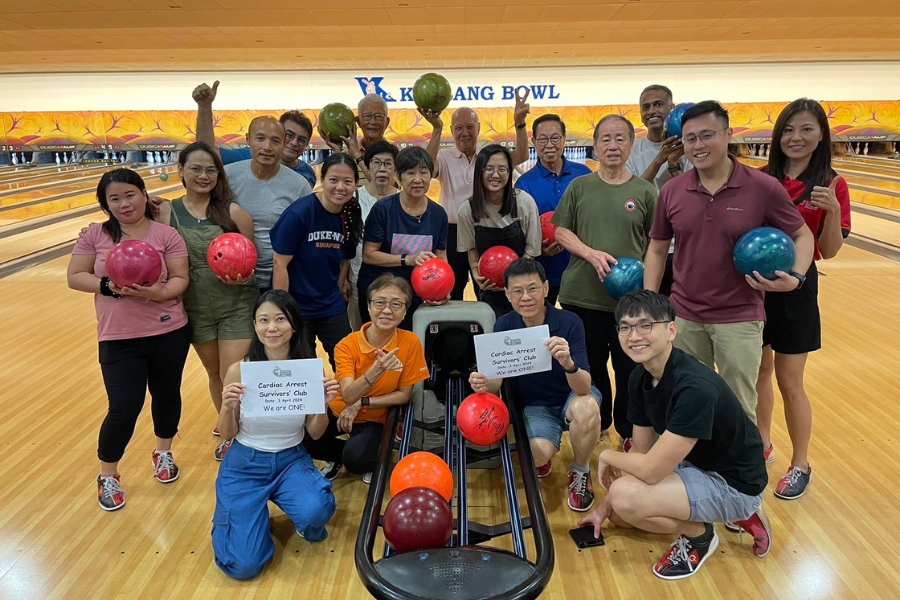
Alfred’s newfound tribe, the Cardiac Arrest Survivors Club
Despite the challenges, Alfred has since changed to his lifestyle, and his health is stable. While recovering, he began to exercise more regularly; he runs on treadmills or at a park near his home. He is now also a member of the Cardiac Arrest Survivors’ Club, a support group for survivors of cardiac arrest, and for their families, and caregivers.
With his recovery, Alfred has gained a new optimistic perspective on life. He now looks forward to the future and seeks to live life to the fullest. “Do not take things too hard and treat every day as a new day,” he says of his new outlook on life. He is also grateful to his wife for her quick response that evening, and he is deeply appreciative of his family for their support during his recovery. “They made sure that I had a nutritious diet, maintained a healthy lifestyle. They also gave me words of encouragement to lessen my worries during the recovery period,” he recalls.
Most of all, the event reminds Alfred of the importance and value of life itself.
If he could advise his younger self, he would simply say, “You are given a second chance to come back to life; grab the opportunity to learn from any mistake you have made, and be a better person tomorrow.”