|
Atherosclerosis
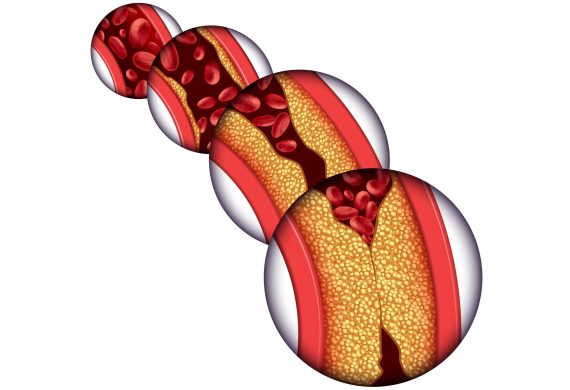
Atherosclerosis is a progressive disease in which arteries harden and narrow and their walls to lose elasticity due to the accumulation of fatty deposits.
In patients with this condition, cholesterol, fats, calcium and fibrin (clotting factors in the blood) build up into plaque and narrow the affected arteries. As atherosclerosis worsens, blood vessels become so narrow that blood flow is restricted.
Causes
The exact mechanism underlying the development and progression of atherosclerosis is not known. Many scientists believe it is sparked by damage to the endothelium, the innermost lining of blood vessels. Such damage may be caused by various factors, including elevated blood cholesterol levels, high blood pressure (hypertension) and smoking.
As a result of damage to the endothelium, cellular debris, fibrin, cholesterol and other fatty substances deposit on the walls of arteries. The affected arterial walls become more permeable to low-density lipoprotein (LDL) or bad cholesterol. Once the bad cholesterol is oxidised, it stimulates the endothelial cells to secrete chemical substances. This leads to further accumulation of deposits on the walls of arteries at the site of the plaque.
As the atherosclerotic lesion develops, a lipid core builds up, damaging the arterial walls and increasing the risk of blood clot formation (thrombosis). The innermost layer of the affected arteries becomes thickened with a corollary decrease in blood flow in that vessel.
Complications
-
Coronary heart disease
Atherosclerosis can develop in any artery. When it occurs in the coronary arteries supplying blood to the heart muscle, the patient is said to have coronary heart disease.
The most common symptom of this condition is radiating chest pain, known as angina pectoris or angina for short. -
Heart attack
When coronary arteries become completely blocked by a blood clot (thrombus), the patient will suffer a heart attack.
Watch this animation to understand atherosclerosis: