|
Myocarditis
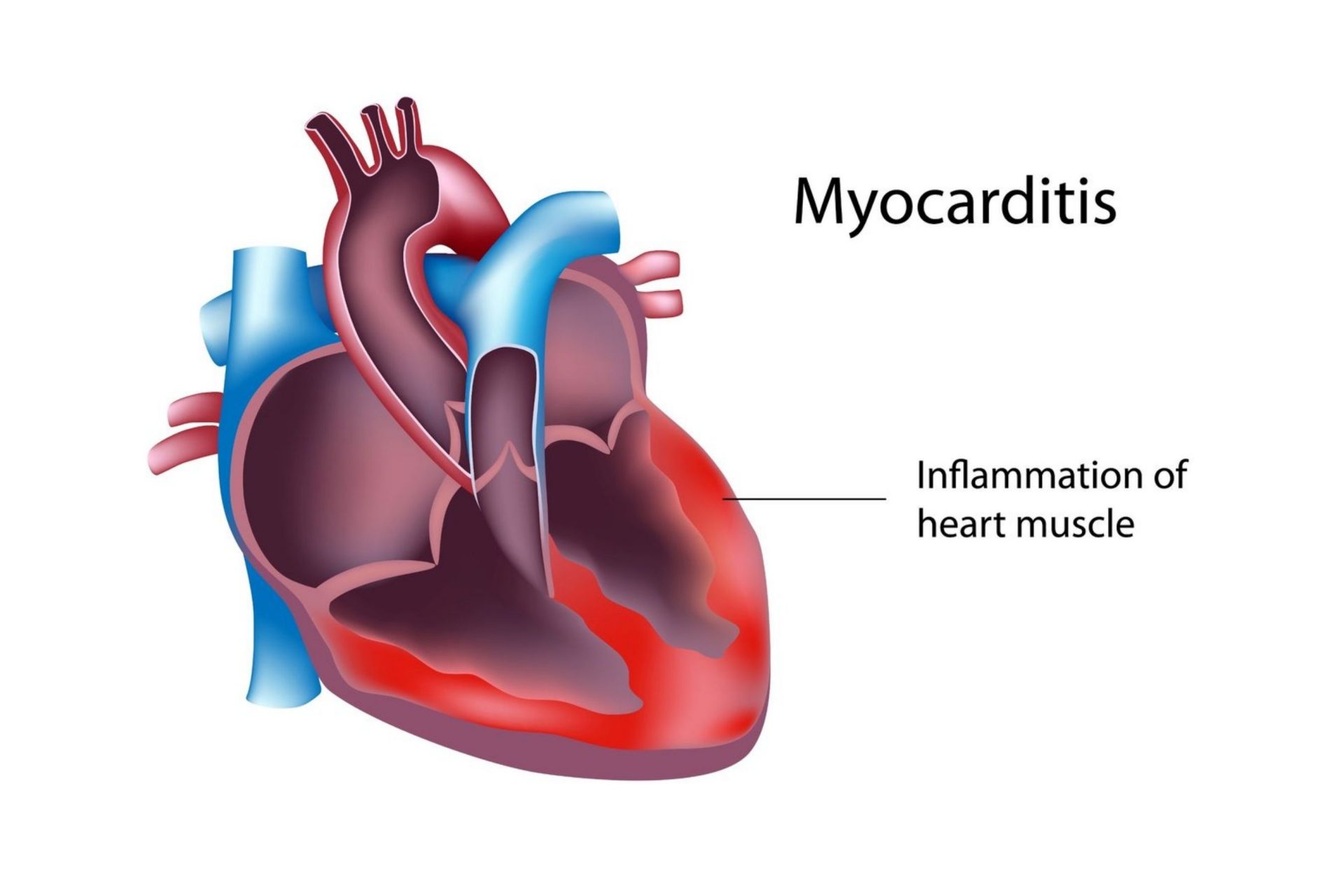
Myocarditis refers to inflammation (reaction of living tissue to injury or infection) of the heart muscle. This inflammation may affect parts of the heart muscle or the whole heart muscle.
Causes
There are various causes of myocarditis and these include:
- Autoimmune diseases (body defending system attacks the body’s healthy tissues) – In these conditions, besides the heart, other body systems such as the pericardium, skin, kidneys, brain, blood vessels, liver, or joints may also be affected.
- Infection – Commonly due to viral infection, such as adenovirus, influenza virus, herpes virus, Coxsackievirus, HIV virus, etc. Bacteria and parasitic infections are rare.
- Other systemic diseases, such as systemic lupus erythematosus and sarcoidosis.
- Vaccinia-associated disease or certain drugs.
Diagnosis of myocarditis, in its strictest sense, will require specific histological, immunological and immunohistochemical criteria. However, as these tests are either invasive or expensive, many patients are diagnosed with suggestive clinical manifestation and some blood tests or other tests without doing the heart muscle biopsy.
Symptoms
Myocarditis can be asymptomatic, but it can also be mildly, moderately or severely symptomatic. The course of myocarditis is also variable. It can be acute, subacute or chronic.
Manifestations and symptoms of myocarditis are many and varied. The patient may be/may have:
- Asymptomatic or minimally symptomatic
- Symptoms predominantly due to the underlying disease and are non-specific, such as fever, loss of appetite, feeling tired, skin rashes, muscle ache, body ache, headache or cough.
- Heart symptoms, such as heart failure, difficulty in breathing or leg swelling. Some patients may experience chest pain, irregular heartbeats, fainting or even sudden death.
Diagnosis
Some of the following tests may be performed, depending on the patient’s symptoms and certain indications:
- Electrocardiogram (ECG), 24-hour ECG Holter monitoring
- Blood tests that include cardiac biomarkers, brain natriuretic peptide, immunological screenings
- Chest X-ray
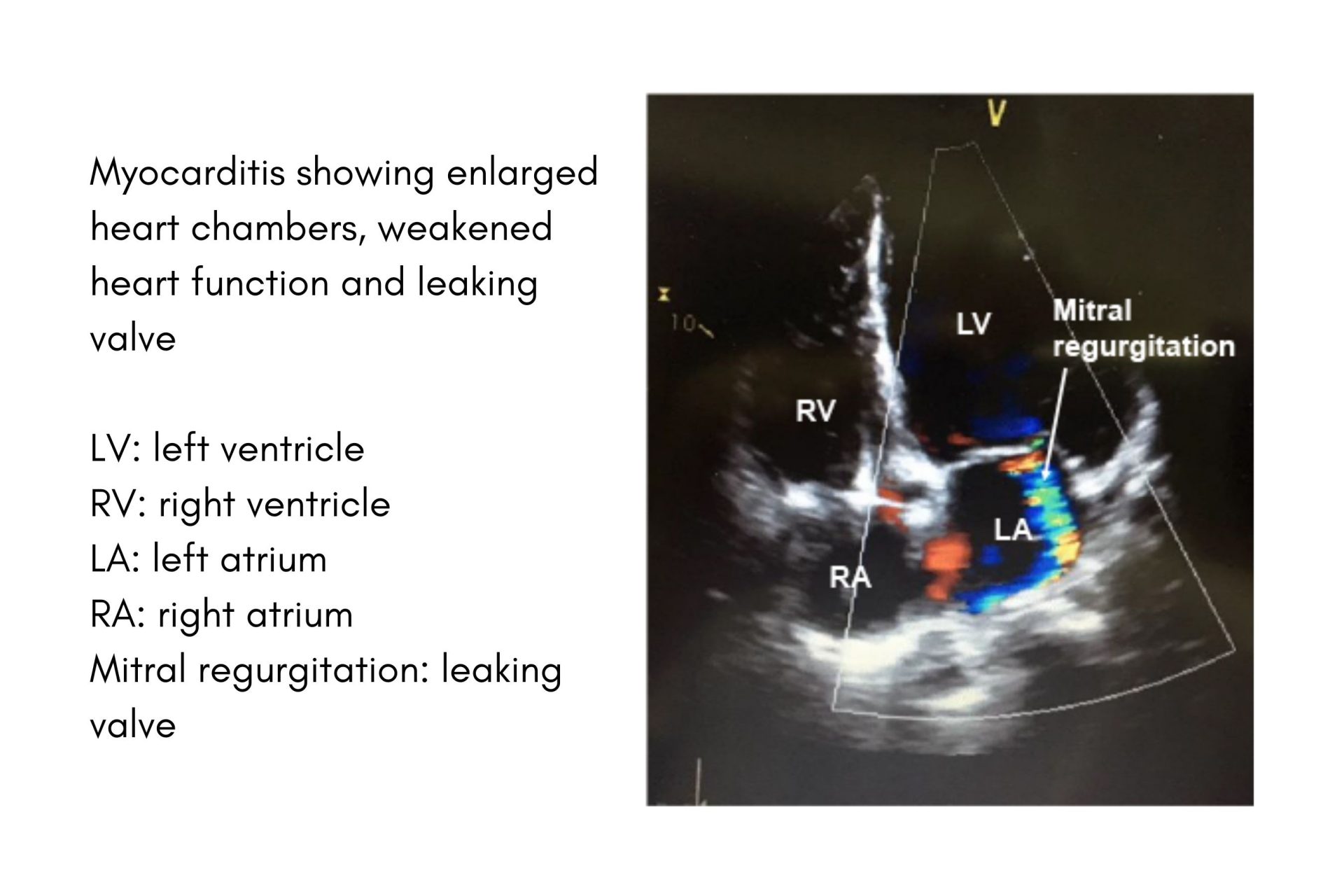
- Echocardiography (ultrasound examination of the heart)
- Cardiac CT scan, Cardiac Magnetic Resonance
- Cardiac catheterisation, coronary angiography
- Cardiac muscle biopsy
Treatment
Treatment of myocarditis depends on the severity of the symptoms and the underlying cause of the disease. For most patients, no treatment is needed except for a few days of adequate rest, if the symptoms are mild. Others may require oxygen therapy.
- Depending on the symptoms, various medications are available to help the patient to breathe better, control water in the lungs or leg swelling, regulate the heartbeat and strengthen the heart muscle function.
- If the underlying cause is due to an abnormal body immune response, there are medications to deal with the process. There are also medications to prevent blood clot formation within the heart chambers, if myocarditis has resulted in a dilated and weak heart.
- In very severe cases, equipment or devices may be needed to help patients to breathe, raise blood pressure if it is too low, regulate the heartbeat or augment the heart pumping action.
- Artificial heart insertion or a heart transplant (when donor is available) may be needed, if there is no response to the above intensive treatments.
Prognosis
The prognosis of myocarditis varies widely, depending on the severity of the disease. Many patients will recover uneventfully. Some will enter into a sub-clinical stage, but slowly and progressively result in a weak and dilated heart many years later. Some will end up with frequent irregular heart rhythm. In severe cases, the patient may die either suddenly or eventually.
Patients who survive should follow up regularly with their doctors, abstain from alcohol consumption and certain drugs. Adequate rest is important. Exercise to one’s ability, but never get involved in strenuous physical activities.
What to do?
There are many causes for a young person to collapse suddenly. This may or may not be due to myocarditis.
When a person collapses, unless there is an obvious noticeable cause, the priority for the rescuer is to determine if the victim is suffering from a cardiac arrest.
Ensure that the environment is safe before approaching the victim, then ascertain that the victim is unconscious with no normal spontaneous breathing. Determination of pulse or a heartbeat is optional for the layperson rescuer.
When cardiac arrest is confirmed, the rescuer must immediately call for help or an ambulance via 995 and proceed to perform effective cardiopulmonary resuscitation (CPR) at a rate of 100-120 compressions/minute and with a depth of 4-6cm. The rescuer may perform CPR with assistance from other bystanders or with help from the SCDF 995 telephone dispatcher. CPR should be continued until the arrival of the emergency response team.
Find out more about SHF’s CPR+AED courses here or download the myResponder app and help to save a life.