|
3 Salt Myths Busted
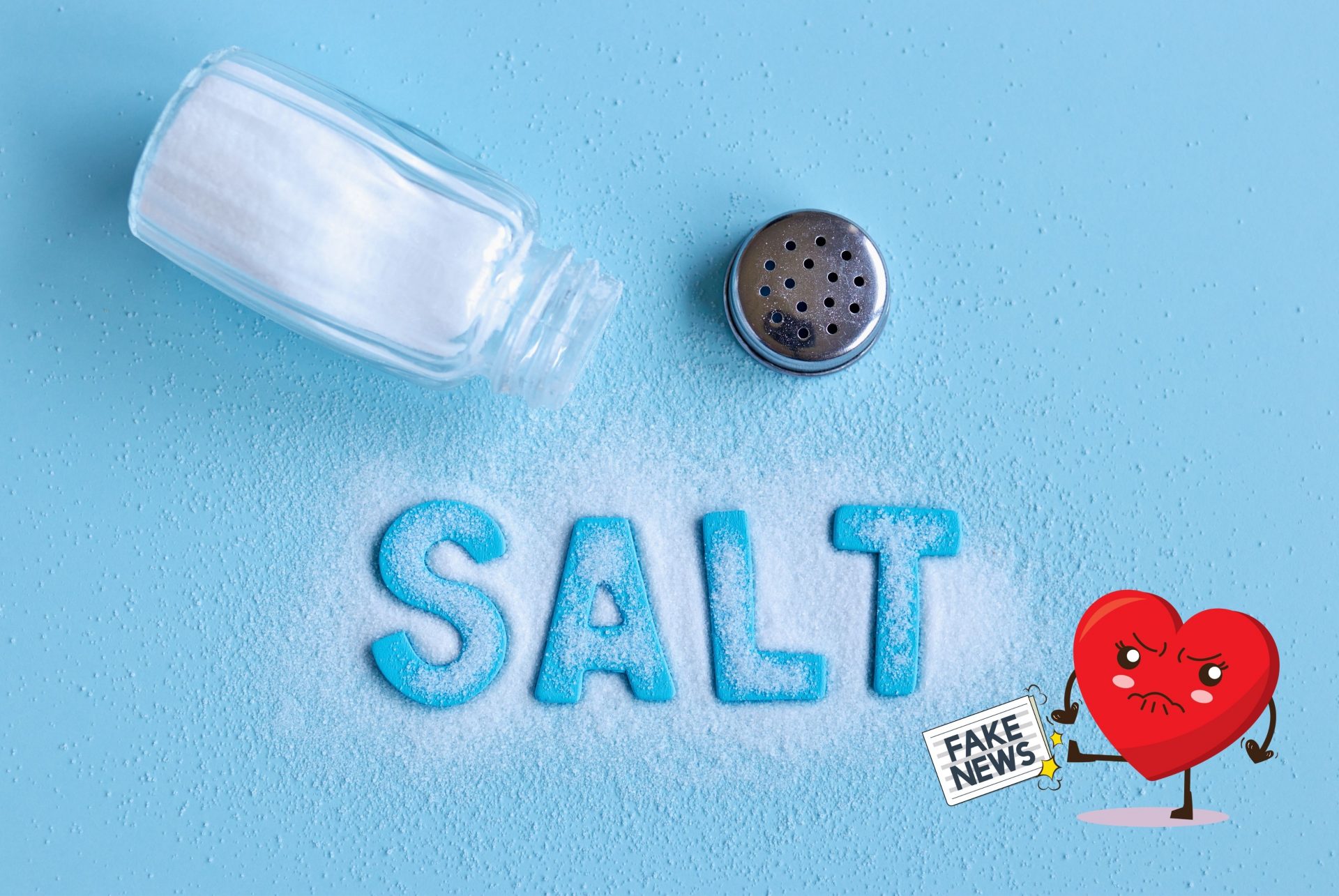
You may have heard many messages about salt and sodium, and they can be very confusing. But there are two things you can be sure about: firstly, a prolonged high sodium intake – mainly from the salt in our diet – can lead to high blood pressure, increasing our heart disease and stroke risk. Secondly, a small amount of sodium is still essential for our body to function effectively.
As for these three other statements, you should take them with “a pinch of salt”.
MYTH: Sodium and salt are the same.
FACT: They are different. Sodium is a compound found naturally in food or added during manufacturing in the forms of salt, monosodium glutamate (MSG) or baking soda. Because sodium increases our blood volume, excessive consumption could lead to high blood pressure.
On the other hand, salt is a combination of sodium and chloride. By weight, table salt is approximately 40% sodium and 60% chloride. And because salt – which includes sodium – is typically consumed in our diet, it is also suggested that excessive consumption can lead to high blood pressure.
MYTH: Sea salt, bamboo salt, Himalayan salt, and other premium salts are better than the usual salt.
FACT: Sea salt, table salt, pink Himalayan salt, and salt crystals all contain similar sodium by weight. Although some contain more nutrients than table salt, the amount we add during cooking is not significant.
If you prefer a healthier alternative, you can consider lower-sodium salt, which mimics some saltiness. However, remember to use the same amount as usual salt to prevent excessive consumption. i.e. if you usually add ½ teaspoon of table salt to your dish, replace that with the same amount of lower-sodium salt. For children above 7 years old, the recommended daily sodium intake is less than 2,000mg, equivalent to of salt.
People who have underlying medical conditions should consult a doctor on the suitability of salt substitutes.
MYTH: Drinking more water helps to flush out the salt from your body.
FACT: Water helps to quench our thirst but will not be able to counteract the undesirable effect of excessive sodium consumption.