|
Being Prepared for Daily Emergencies
Adapted from the article that was first published by Temasek Foundation Cares.
It was just another ordinary morning when Mr Yeo Jun Jie left his home for work four years ago. But by that afternoon, the 25-year-old had lost his father.
His 55-year-old dad who worked as a taxi driver, had suffered a cardiac arrest.
“My dad had just collected his taxi from the workshop after servicing, when he collapsed,” Mr Yeo recalled. “A doctor who was nearby, broke the window of his taxi and administered CPR (cardiopulmonary resuscitation), while a passerby called for an ambulance. But they were not able to save him.”
Time and help are crucial
Each year, over 2,000 people die from out-of-hospital cardiac arrest (OHCA). The survival rate1 has increased from 11.6% in 2011 to 21.3% in 2016. Nonetheless, OHCA is still a leading cause of death in Singapore.
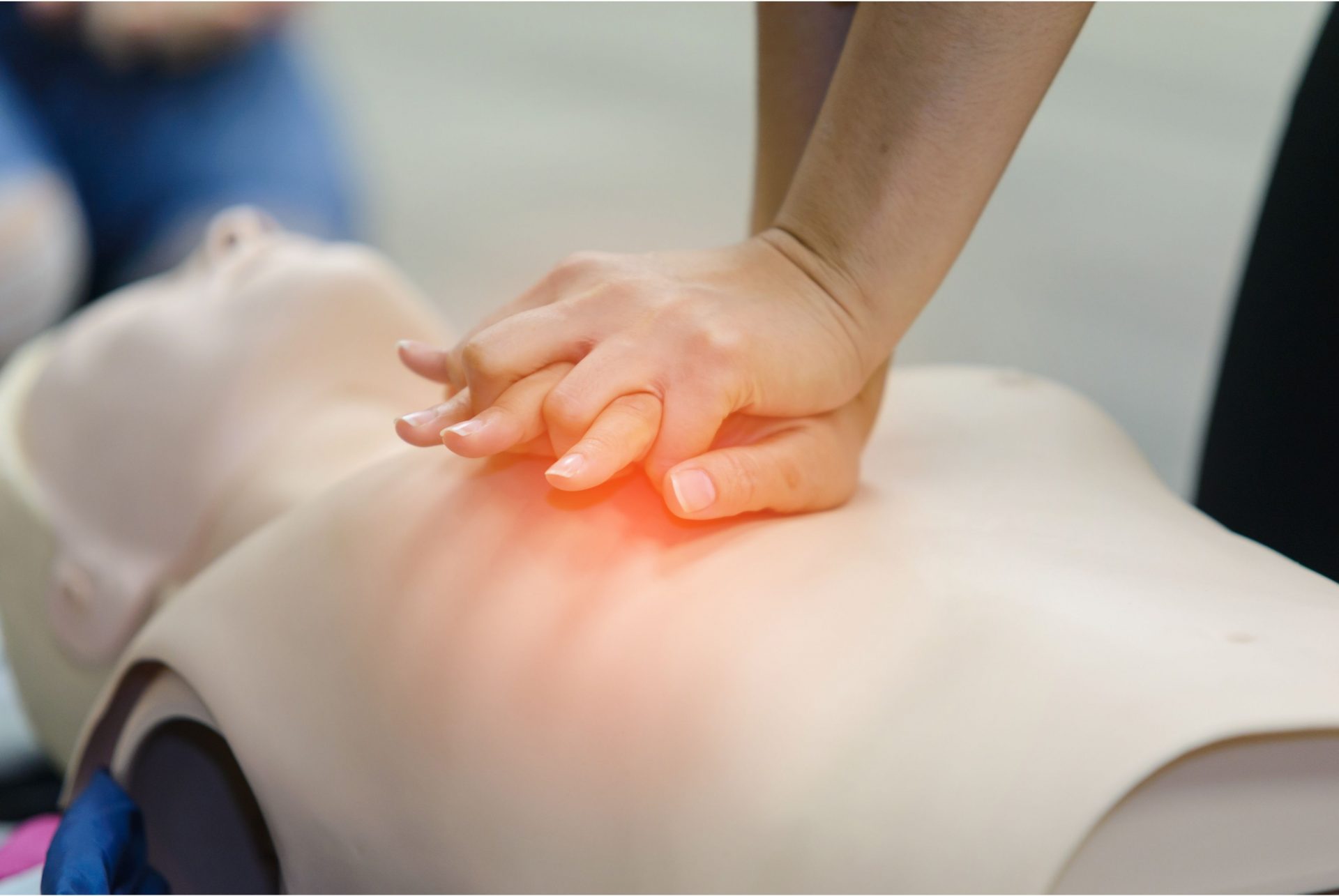
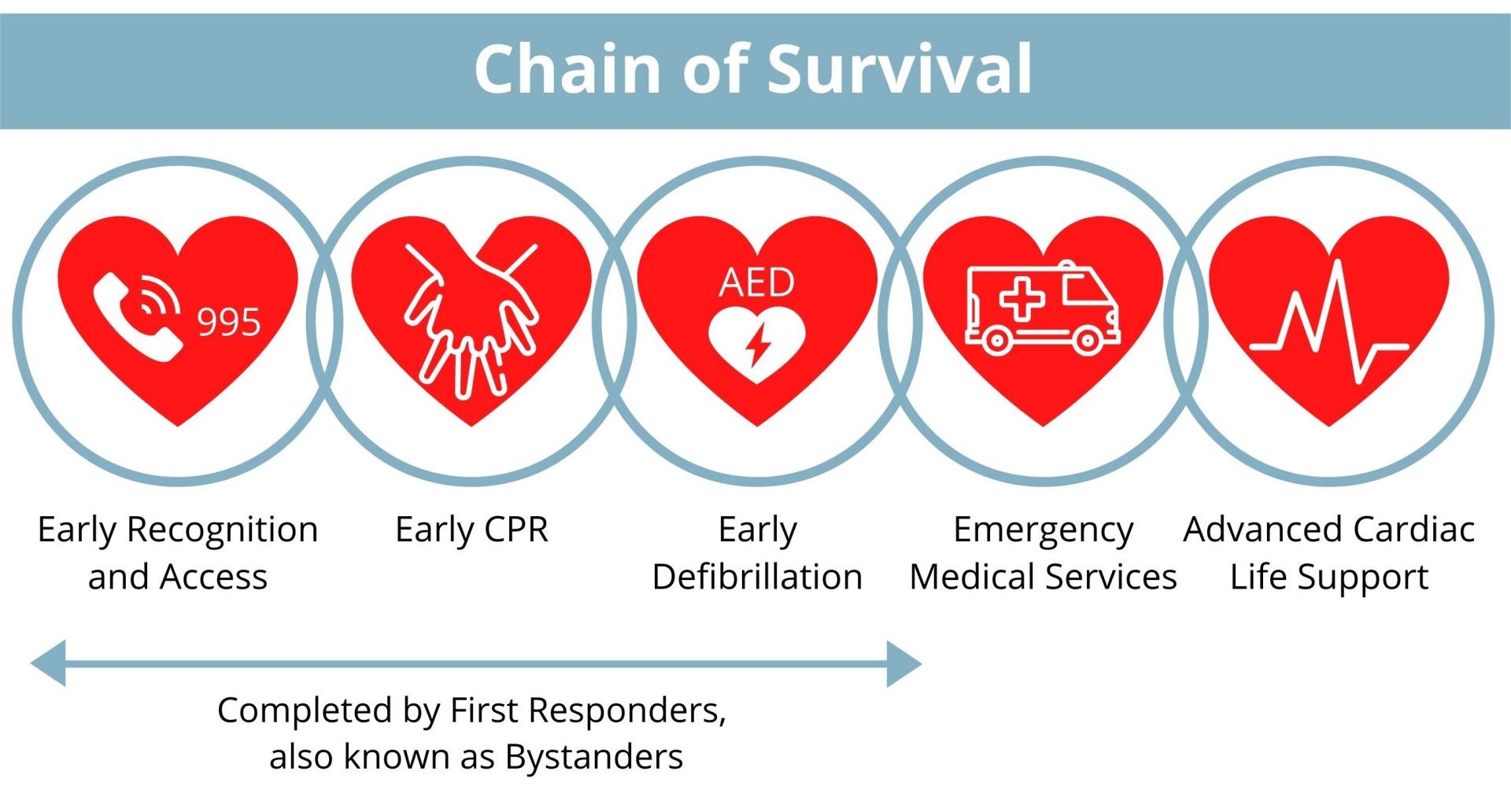
The OHCA survival rate drops by 7 to 10% with each passing minute. As an ambulance takes an average of 11 minutes to arrive at an emergency, helping the victim during those precious minutes can increase his chance of survival. Besides carrying out chest compressions to circulate blood around the body so as to keep oxygen flowing to the brain and vital organs, an automated external defibrillator (AED) should also be used to shock the heart to bring it back to a normal rhythm. Doing both CPR and AED is the best way to improve survival rates of up to 50%.
Efforts to improve survival rates
To help prepare the people of Singapore for a range of emergencies, Temasek Foundation Cares under its ‘Stay Prepared’ initiative looks to equip people with lifesaving skills and to make AEDs more readily available to the public.
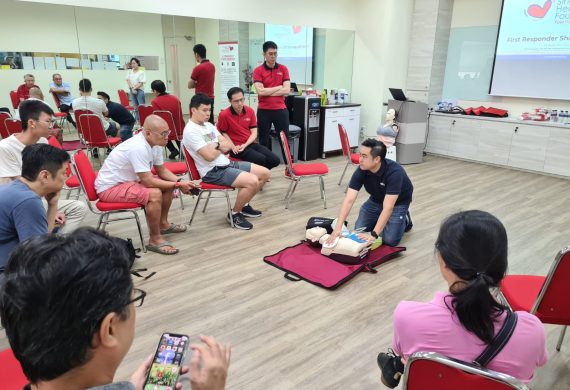
In 2014, Temasek Foundation Cares partnered the Singapore Heart Foundation to launch ‘Restart A Heart’, a first responder programme which trains people in basic resuscitation skills such as chest compression-only resuscitation and the use of AEDs. This was followed by ‘AED on Wheels’ in 2016, a pilot three-year programme with SMRT Taxis, which equips 100 taxis with AEDs to increase their availability in the community.
Providing a 50-50 chance
A study led by the Singapore General Hospital and conducted from 2011 to 2014 found that CPR performed by bystanders has more than doubled during this period. In 2011, 21.9% of OHCA cases received bystander CPR; this has increased to 50.4% in 2014. More bystanders also used AEDs in this period.
More can be done.
Some common concerns of providing bystander help include not knowing what to do or fearing that a wrong procedure could hurt the victim. Many would rather wait for emergency services to arrive. Mr Chu Tommy, a lifesaver coach and member of the Civil Defence Auxiliary Unit, the volunteer force of the Singapore Civil Defence Force, said: “This is a psychological barrier. If everybody thought this way, then nobody will come forward. What if this was your loved one? Wouldn’t you feel upset if no one helped your family member?”
Having been a coach and volunteer for more than a decade, Mr Chu knows first-hand how important these lifesaving skills can be. “If you attempt to administer help, the victim has a 50-50 chance of survival,” said Mr Chu. “Moreover, when you call 995, a medical dispatcher will stay on the line with you and guide you along.”
He added, “Learning lifesaving skills is not difficult. If everyone is equipped with lifesaving skills, then we can rest assured that should our loved ones need help one day, there is somebody who can give that help. You never know who may need it.”
Mr Yeo would agree. Even though his father could not be saved back then, Mr Yeo had tried to locate the people who helped his father that fateful day, to thank them. “I’m very grateful to them, knowing that they tried their best to save my dad,” he said.
Some facts about cardiac arrest
- In a cardiac arrest, the heart suddenly stops due to an electrical malfunction in the heart that causes an irregular heartbeat. This disrupts the heart’s pumping action and blood cannot flow to the brain, lungs and other organs. The victim loses consciousness and has no pulse.
- Unlike a cardiac arrest, a heart attack is caused by blocked arteries which prevent blood from reaching a section of the heart. Symptoms may be present hours, days or even weeks before a heart attack happens. The heart usually does not stop beating during a heart attack.
- If someone suddenly collapses, check for breathing and pulse. If there is no breathing or pulse, chest compressions must be given to the victim and an AED administered, otherwise the victim could die within minutes.
- AEDs are available in places such as MRT stations, shopping malls, schools and many sports facilities in Singapore. You can download the myResponder app to help you locate the nearest AED in times of emergency. The app also allows you to call SCDF’s Emergency Medical Service (995). By 2019, there will be one AED for every two HDB blocks islandwide.
To sign up for various CPR+AED lifesaving courses, visit www.myheart.org.sg.
1Referring to shockable, witnessed cardiac arrest patients