|
Legal and Ethical Issues of Resuscitation
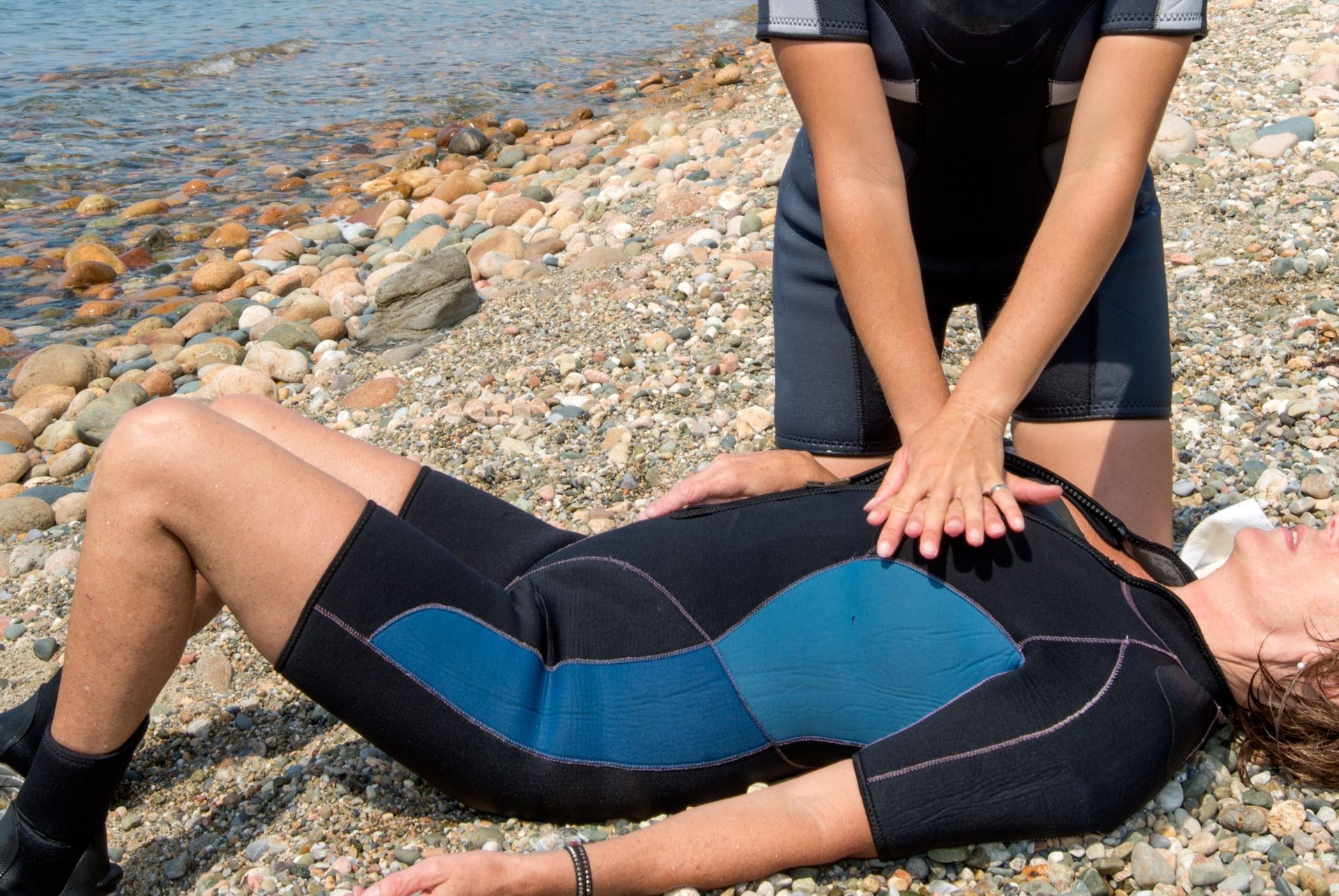
“Will she sue me for molesting if I perform CPR on her?”
“Will he sue me for injuring him if I fracture his ribs during CPR?”
“Will I get into trouble if I walk away from a cardiac emergency?”
Have these questions crossed your mind when you encounter a cardiac arrest incident? Do you know that the greatest challenge to increasing the out-of-hospital cardiac arrest (OHCA) survival rate in Singapore is not only the lack of knowledge of CPR+AED but predominately the fear of being sued if the casualty suffers from an adverse outcome?
OHCA is a leading cause of death in Singapore, accounting for more than 2,500 deaths annually. In 2019, there were more than 3,300 suspected sudden cardiac arrest cases in Singapore. Once OHCA has occurred, the chance of survival reduces by up to 10% for every minute without chest compressions and defibrillation.
To encourage more community first responders to step forward and help save a life, Mr Eric Lee, Singapore Heart Foundation’s Volunteer Principal Chief Instructor and Basic Cardiac Life Support, Cardiopulmonary Resuscitation and Automated External Defibrillator Training Consultant; and Ms Kuah Boon Theng, Managing Director of Legal Clinic LLC came together for a webinar hosted by the Singapore Heart Foundation and the Law Society Pro Bono Services, to introduce the Good Samaritan Initiative to encourage more community first responders to step forward and help save a life.
Is there a Good Samaritan Law in Singapore?
Ms Kuah: There is no Good Samaritan Law enacted in Singapore and it has not resulted in significant liability on first responders or anybody who goes to someone’s aid. You will be hard put to recall any case where a victim you try to save actually turns around and sue the rescuer who has revived him or her. It is quite unheard of, so there is no real evidence that attempting to save lives actually incurs real liability. I accept that people might be fearful, but what I would say is that it is a fear that we have not seen translated into actual complaints, claims or court proceedings.
Can someone be sued if the casualty suffers from a physical injury or dies after the resuscitation attempt?
Ms Kuah: Say someone tried to save a life but was unsuccessful – it would be extremely difficult, in my view, for anyone to claim that if a rescuer had not tried to make an attempt, the victim would be alive. This is basically what somebody who makes a claim will have to prove, and it is very difficult to prove in a real emergency. If somebody really suffers OHCA, how is the claimant going to show and demonstrate that if this victim was left well alone, he would have miraculously been revived, whereas the attempt to revive him was what actually sealed his fate? It is actually very difficult to make that sort of case. So that is why we have not seen these claims in practice.
In law, there is this thing called “causation”. You need to be able to prove that the action taken was reckless, unreasonable and should not have been attempted at all. If you did proper chest compression, we accept that there are some inherent risks that might not be completely avoidable (such as fracturing ribs), but the person who wants to make claims ultimately still need to show that without this action the victim would have been better off. And I think that the causation evidence is going to be very difficult for somebody to demonstrate.
Can a man be sued for outrage of modesty for trying to save a woman’s life and must undo her blouse to place the AED pads on her body?
Ms Kuah: I’ll be very surprised if the police were to charge the poor man because in a situation where the intention was clearly not to molest or outrage the modesty of the victim, and it was to save a life, and the circumstances support that, I can’t see how it can be said that the intention (to molest) was there and the elements of the criminal offence are made out.
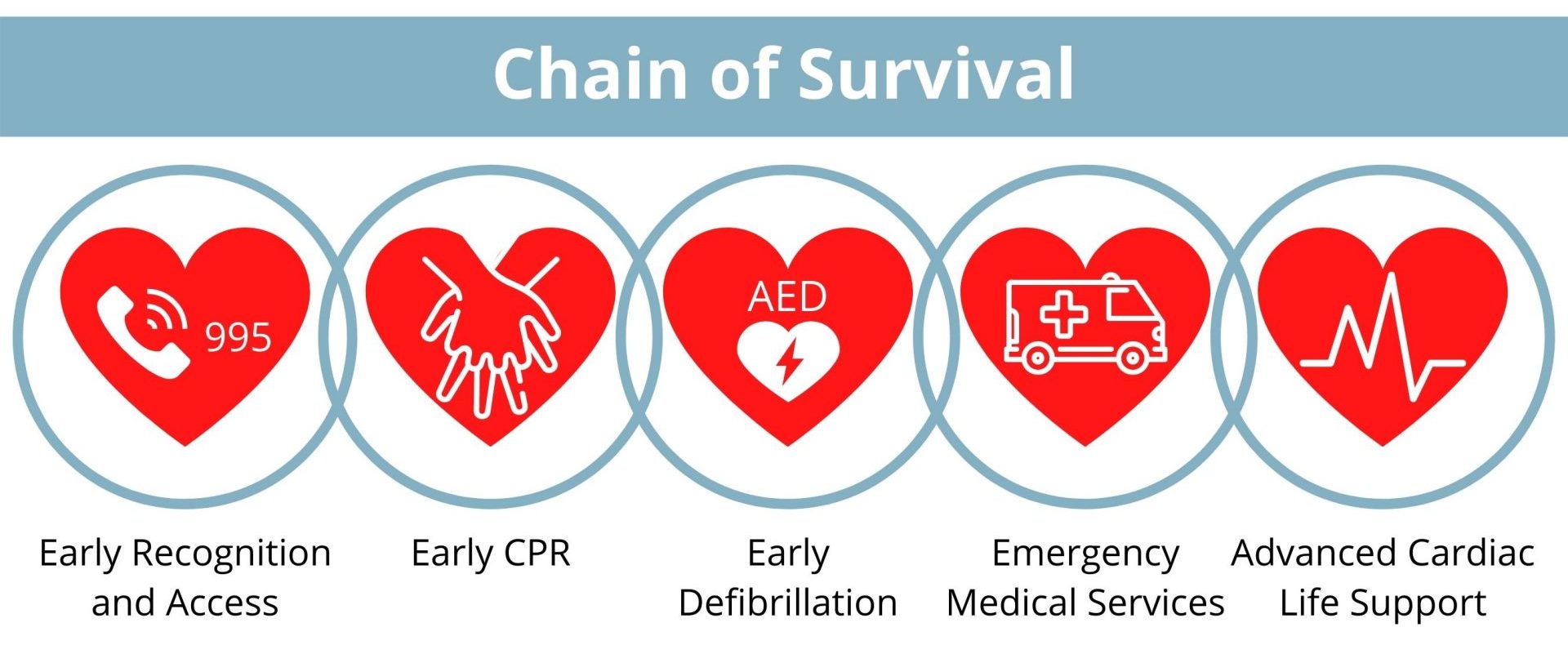
Chain of Survival – Factors that Affect the Survival Rate of OHCA
Find out more by watching the webinar here: