|
Responding, No Matter What: Desmond Woo
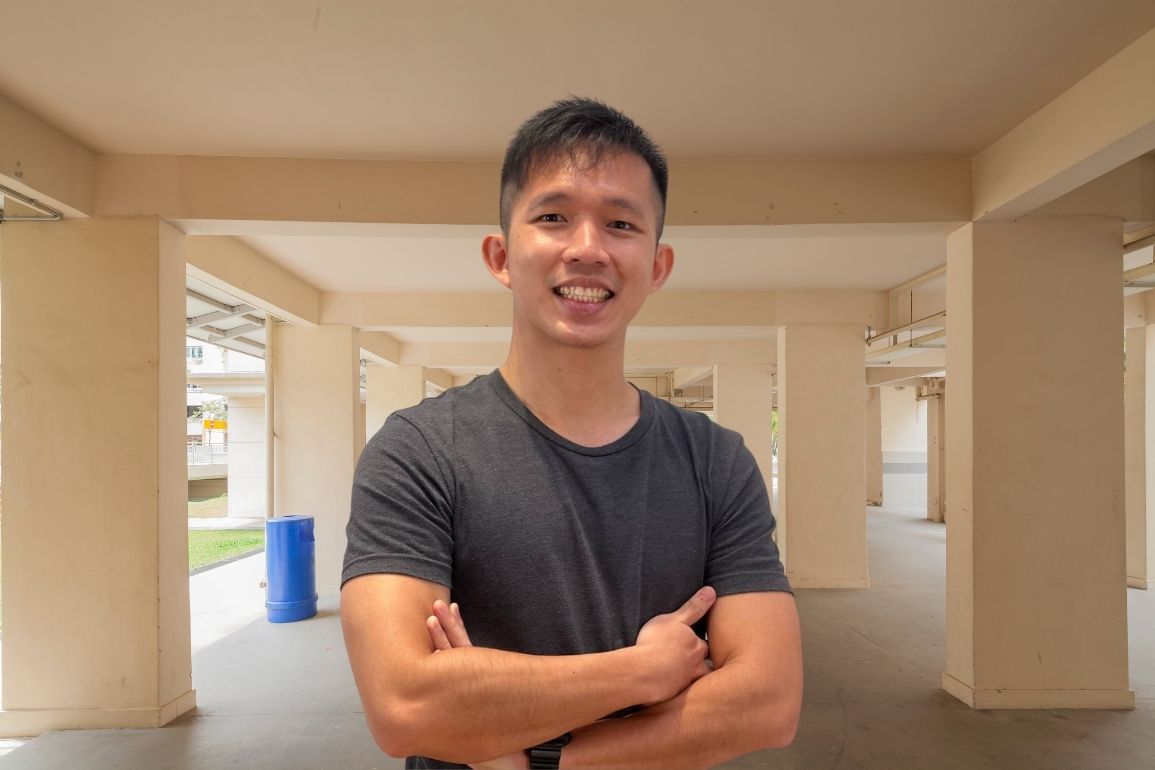
Talking about being a community first responder (CFR) comes so naturally to Mr Desmond Woo that we might well have been discussing something as ordinary as walking or reading. There is no hesitation or self-doubt on questions about responding to a cardiac arrest emergency or what to do after arriving at the scene. As the trained medic puts it, “becoming a CFR felt like a natural calling.”
It has been five years since Desmond became a CFR. The memory of his first case is still vivid. He recounts that it was drizzling when he arrived at the victim’s house. Children were trying unsuccessfully to awaken their grandfather. “Thankfully, one of them had some medical skills, so we revived the grandfather together. We kept going [till the medics arrived] and thankfully, the grandfather survived.”
That successful first case gave him all the confidence to go on. Since then, he has been responding to alerts as best as he can. Even on occasions that others might find inconvenient, Desmond remains committed. “One of the more unexpected cases I’ve attended was on the eve of Chinese New Year in 2019,” he shares. It turned out to be his younger brother’s good friend’s father. “He collapsed in the house due to cardiac arrest and, unfortunately, did not survive.”
Sudden cardiac arrest is a fatal yet survivable condition if the victim receives timely CPR+AED intervention. Thus, a larger pool of volunteer first responders increases the chances of a victim’s survival. Better a neighbour nearby than an ambulance far away.
Desmond sees progress on this front. He tells us that “the first two years as a CFR, I always responded alone. Over the years, I’m glad to see more people stepping up… There was one case where I saw three CFRs, including me, respond to the emergency. It’s heart-warming to know that more people are stepping up to help.”
When people find out that he is a community first responder, they mostly ask him why he would choose to take on this heavy duty. To this, he says, “People may tend to choose comfort over responding to help someone in need… but it is about making a difference. Kindness begets kindness. My priority will always be to render my efforts for lifesaving until authorised personnel says to stop. To be able to support and later revive someone… gives me a sense of satisfaction, knowing that I’ve been able to give back to the community.”
We ask him what advice he would give to someone who wants to help but is afraid. Without skipping a beat, he says, “Don’t be afraid to respond. It will be scary the first time, but it gets easier. The fear comes from responding to a casualty who is “medically dead” at the point of time. This is when the person needs you the most, so quickly help because you are equipped to do so. You can [also] support [the paramedics] in other ways, like transferring the casualty to the ambulance, lending strength as support. That experience will go a long way.”