|
The Impact of Pregnancy on a Mother's Heart

Cardiovascular disease may complicate up to 4% of all pregnancies1. During pregnancy, physiological changes occur in order to deliver sufficient oxygen and nutrients to the growing foetus. It is normal for total blood volume, heart rate and cardiac output (amount of blood pumped out of the heart) to increase throughout the course of pregnancy, putting extra stress on the body and the heart. Although majority of pregnant women cope well with these changes, a small proportion may suffer from cardiovascular complications.
There are two groups of women at risk of heart disease during pregnancy: Those with pre-existing heart conditions that may surface or worsen and those who may develop new conditions.
Pre-existing heart conditions, such as:
- Congenital heart disease, such as a hole in the heart, severe narrowing of valves, Tetralogy of Fallot (a birth defect that affects normal blood flow through the heart) and Ebstein’s Anomaly (a rare heart defect in which parts of the tricuspid valve are abnormal).
- Pre-existing heart problems that may develop after birth, including severe forms of valve regurgitation (leaking valves) and cardiomyopathy (heart muscle disease).
- Patients with previous heart surgery, especially those with artificial valve replacement.
Medical conditions that arise in pregnancy, such as:
- Gestational hypertension, blood pressure reading of at least 140/90 mmHg that begins after week 20 of pregnancy, is the most common medical disorder during pregnancy and is estimated to occur in up to 8% of pregnancies2.
- Pre-eclampsia is a severe form of gestational hypertension. In pre-eclampsia, there is protein leakage in the urine and organ damage. Women who are pregnant for the first time, overweight before pregnancy, having had multiple pregnancies before, and have underlying medical conditions such as kidney disease and diabetes mellitus are at higher risk of developing pre-eclampsia.
- An even more severe complication known as eclampsia may occur in the form of seizures, stroke, kidney failure or coma, and it is life-threatening for both mother and baby.
- Gestational diabetes is high blood sugar that develops after week 20 of pregnancy. It affects about 6% of pregnancies in the U.S. and is more common in women who are overweight, physically inactive, with pre-diabetes or have a family history of diabetes, or had previously given birth to a baby with a high birth weight above 4kg.
When to seek medical attention
Some warning symptoms of heart disease in pregnancy include:
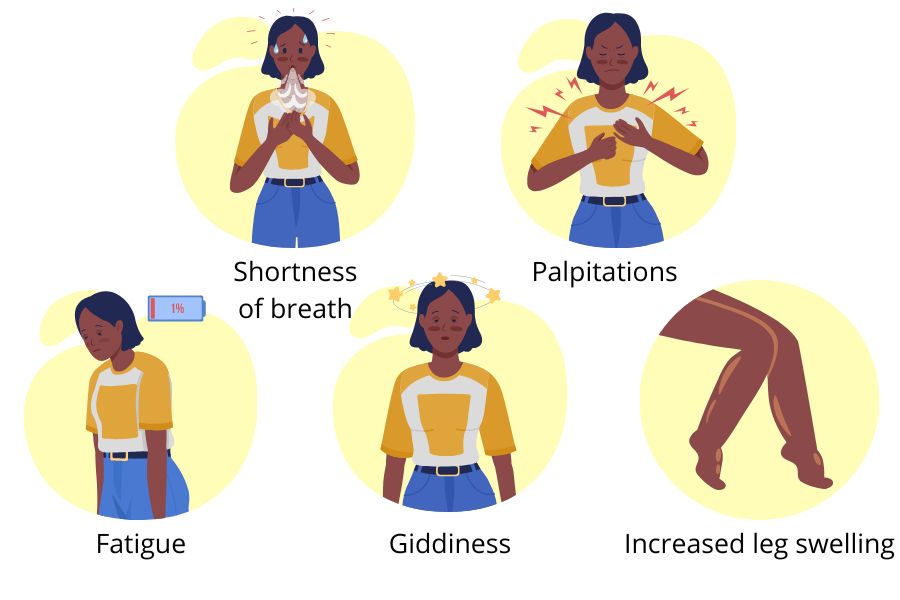
Although these symptoms are commonly encountered in pregnancy and are not specific to heart disease, they could signal a heart problem if:
- They begin after week 20 of pregnancy.
- They prevent you from doing your normal daily tasks.
- You experience shortness of breath
- even while resting.
- that wakes you up in the middle of the night.
It is important to remember that conditions such as high blood pressure and diabetes are asymptomatic at early stage and usually only detectable with regular medical check-up or self-monitoring.
Managing heart health during pregnancy
Pregnant women need to attend antenatal appointments regularly. Those with previous heart condition or surgery need to discuss with their respective specialist even while planning to get pregnant and have proper evaluation early in pregnancy. It is also important to inform the obstetrician of any pre-existing heart condition so that appropriate care and follow-up can be done.
It is normal to gain weight during pregnancy, but excessive weight gain will predispose to high blood pressure and diabetes, which will put extra stress on the heart function. Proper diet and exercise are required with monitoring of weight gain of mother and baby during antenatal check-ups. In general, a heart-healthy diet is recommended with controlled intake of sodium, sugar, saturated fat and trans fat.
It is also important to manage stress and avoid situations that cause emotional upset. Ordinary activities such as listening to music, taking walks and regular breaks during a task can have a calming effect. Relaxation strategies such as prenatal yoga classes may be helpful if approved by your doctor.
Article is contributed by Dr Goh Ping Ping, Member of the Singapore Heart Foundation’s Go Red for Women Committee and Cardiologist in Private Practice.
Reference
- Elkayam, U., Goland, S., Pieper, P. G., & Silverside, C. K. (2016). High-Risk Cardiac Disease in Pregnancy: Part I. JACC Journals, 68(4). https://www.jacc.org/doi/abs/10.1016/j.jacc.2016.05.048
- Regitz-Zagrosek, V., Lundqvist, C. B., & Borghi, C. (2011). ESC Guidelines on the management of cardiovascular diseases during pregnancy The Task Force on the Management of Cardiovascular Diseases during Pregnancy of the European Society of Cardiology (ESC). European Heart Journal, 32(24). https://www.escardio.org/static-file/Escardio/Guidelines/publications/PREGN%20Guidelines-Pregnancy-FT.pdf