|
The Therapeutic Power of Art Therapy
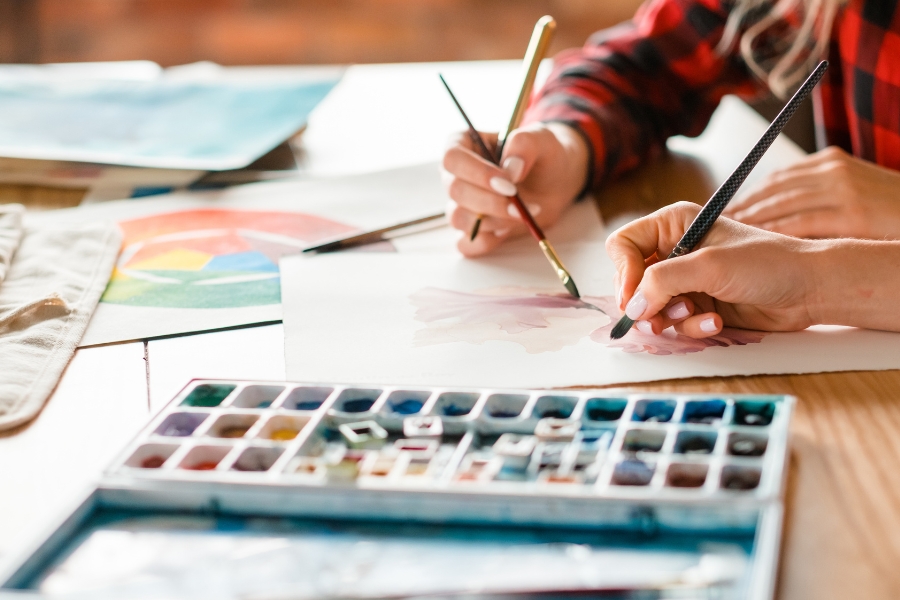
To take care of our well-being, we need to manage our ever-changing needs. The way we deal with our daily situations and emotions is influenced by how upbeat or how low we feel. It could affect the way we feel, think, or behave, and in turn, influence our response to a stressful situation, in social interactions, or in the decision-making process.
Art therapy presents a safe and healthy outlet for you to make sense of strong emotions and challenging life experiences, including emotions and thoughts which are often not easily expressed in words.
Art as a medium of expression could be an effective alternative to seeing a counsellor or therapist. Art therapy combines art and psychotherapy. Art offers a way for visual communication, and allows the therapist to facilitate further discussion and reflection. Artmaking provides individuals the opportunity to express themselves and make sense of any unprocessed emotion or memory.
Art therapy extends beyond helping individuals diagnosed with mental health conditions; it includes anyone seeking to enhance his/her mental well-being, or is embarking on a journey of personal growth. Most importantly, anyone could engage in art therapy as no prior art skills are required. The focus is not on the technicalities and aesthetics of art, but on the process of creation, the individual’s journey, and the therapeutic relationship. Art therapy could take place on an individual basis or in a group setting, where a professional art therapist guides you through difficult life events and aid your recovery from distress. Group art therapy fosters connection and support, while individual art therapy sessions provide a personal journey of self-exploration. Art therapy incorporates the non-directive and directive approach. The non-directive approach emphasises self-expression and autonomy, whereas the directive approach offers structured interventions for specific goals. Through these approaches, you could develop a better understanding of yourself and let the language of art help you gain new perspectives.
The benefits of art therapy are manifold. Art therapy helps to reduce stress, to deal with emotions, explore more about oneself, cultivate communication skills, or cope with symptoms manifesting from past trauma. Art therapy helps to empower individuals to gain deeper insights into themselves.
Through the use of art materials, art therapy creates a safe space for the client and therapist to communicate on a deeper level. The artwork helps the client to make associations and discover new facets of himself/herself. Non-verbal expressions are a meaningful way not only for participants to communicate with one another, but also to build connections and consequently, strengthen self-esteem and confidence. Art therapy or art may be beneficial for the heart as well.
There is a similarity between engaging in therapeutic art making and art therapy; both could benefit the mind, body and brain. The benefits include the capacity for self-expression, communication, creativity, and stress reduction. However, it should be noted that there is a difference between the two approaches. This includes the goals, the relationships, and the structure of the therapy.
In art therapy, the objective is the idea that the individual could communicate and express something, be it an emotion, experience, or an idea. The art therapist would guide the client through art exercises that are designed to facilitate communication and help the client gain deeper insights into his/her feelings, past traumas, challenges, or develop coping mechanisms. On the other hand, therapeutic art making is focused on building skills and experimentation. While participants may still experience benefits such as stress relief or expression, the emphasis is more on the creative process and product.
Another important distinction is the nature of the relationship between the therapist or facilitator and the participant. In art therapy, the relationship between the client, the artwork and the therapist is structured within a therapeutic framework. The therapist would provide support, guidance and a safe space for exploration and for working collaboratively while addressing their specific needs and goals. This is different from the relationship between an artist and a student. In therapeutic art making, the situation may be more informal and skill-based, with emphasis on learning techniques and creative expression rather than on working on oneself.
There is also a difference in the processes of art therapy and therapeutic art making. In art therapy, there may be the framework or process of going through an intake to understand the client’s needs, to align goals, build rapport, gain consent and subsequently support the client in his/her journey. This is to ensure that the process is conducted ethically and responsibly with the focus on well-being and autonomy. In therapeutic art making, the process is flexible; it is based on the individual’s interests or preferences and he/she could be spontaneous in creative expression.
How can art therapy support heart health?
Stress is a significant risk factor for heart disease and a silent killer. It could trigger physiological responses such as an increased heart rate or inflammation, which in turn could lead to an increased risk of heart disease. Research has shown that engaging in creative activities1 could lower stress levels or cortisol (the body’s primary stress hormone), and increase the production of endorphins (the brain’s natural mood lifters); it could also reduce blood pressure, and improve overall cardiovascular health2. In Singapore, 23 persons die from cardiovascular disease (heart disease or stroke) every day, accounting for 31.4% of deaths in 2022, and highlighting the need for relevant and timely interventions.
Art therapy can be a holistic approach for heart patients as it encompasses improving both the physical and emotional aspects associated with the physical condition. By promoting relaxation, self-expression, and emotional well-being, art therapy could support heart health and enhance the overall quality of life. An example of this is mindfulness-based art therapy which induces emotional relaxation in patients with coronary artery disease, and is also found to improve psychological stability3. In another study conducted by Younge et al., (2015), mindfulness-based training is said to have a positive impact on the physiological parameters including exercise capacity and heart rate; this is in addition to its beneficial for heart disease patients. It can be said that through creative expression, heart patients can articulate their fears, frustrations, and hopes, empowering them to reclaim a sense of urgency in their recovery journey.
Making art offers therapeutic benefits and relaxation. While many believe art skills are required, anyone could engage in art therapy regardless of his/her art experience. If one wishes to start on art therapy, one could start by finding a qualified art therapist, and these are available in the community like SAMH Creative Hub. These therapists guide the client through the therapeutic process and tailor the sessions to suit the client’s needs. The therapist and client set goals for themselves and be open-minded in the way they approach and explore the thoughts and emotions. At the same time, they have to practice self-compassion as there is no right or wrong in the way one could create art in therapy. It is meaningful to experiment with mediums, make mistakes and embrace the process without judgement. There are different ways in which one could also use art for wellness at home.
Activities at Home
While working with a trained art therapist is ideal for one to address specific therapeutic goals, there are activities which individuals could do at home to experience the therapeutic benefits of art. Taking inspiration from art videos on platforms like YouTube or engaging in activities such as doodling could help in self-reflection, mood improvement, and stress reduction. However, it is important to recognise that if you wish to explore deeper issues or gain insights into your emotional and psychological well-being, you could consider going for individual art therapy. This is an important consideration as the role of an art therapist is to provide intentional guidance and support. Seeking help does not mean that you have a mental illness, nor should you wait to be diagnosed. However, early intervention when the individual suffers in prolonged distress is recommended.
Indeed, art therapy serves as a beacon of hope in the realm of heart health. Its ability to reduce stress, promote emotional resilience, and foster social connection makes it a valuable adjunct to other medical interventions; and it is delivered in a non-intimidating way. By embracing the transformative power of creativity, individuals will embark on a journey of recovery.
Article is contributed by Singapore Association for Mental Health (SAMH Creative Service)
Resource:
SAMH Creative Hub
Activities include creative therapeutic interventions, individual art therapy and counselling with creative approaches for all ages.
T: 6320 0722
E: creativehub@samhealth.org.sg
References
- Martin, L., Oepen, R., Bauer, K., Nottensteiner, A., Mergheim, K., Gruber, H., & Koch, S. C. (2018). Creative Arts Interventions for Stress Management and Prevention-A Systematic Review. Behavioral sciences (Basel, Switzerland), 8(2), 28. https://doi.org/10.3390/bs8020028
- Kaimal, G., Ray, K., & Muniz, J. (2016). Reduction of Cortisol Levels and Participants’ Responses Following Art Making. Art therapy : journal of the American Art Therapy Association, 33(2), 74–80. https://doi.org/10.1080/07421656.2016.1166832
- Jang, S. H., Lee, J. H., Lee, H. J., & Lee, S. Y. (2018). Effects of Mindfulness-Based Art Therapy on Psychological Symptoms in Patients with Coronary Artery Disease. Journal of Korean medical science, 33(12), e88. https://doi.org/10.3346/jkms.2018.33.e88