|
Understanding Stroke
01 December 2019
- 2 mins read
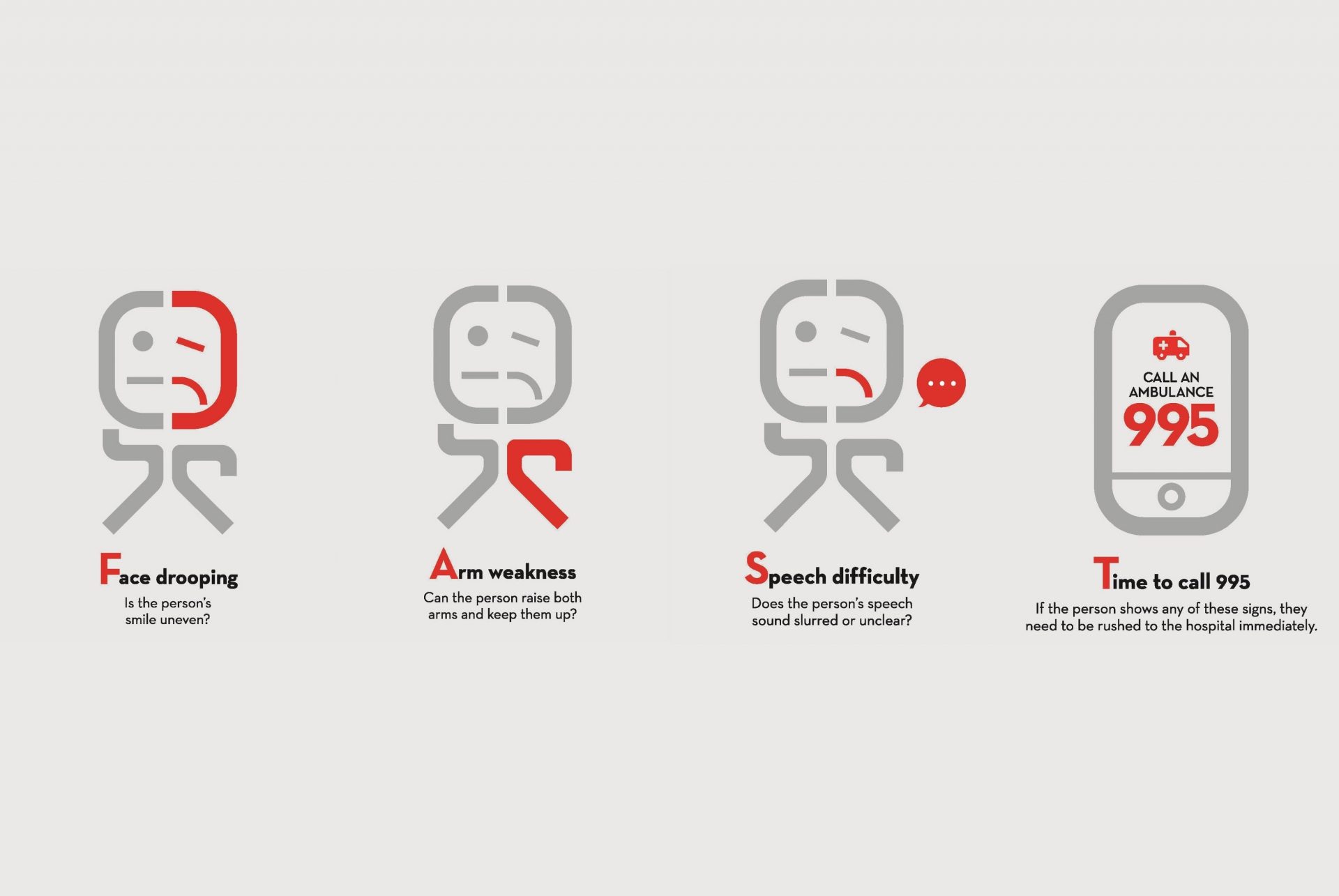
Stroke is an emergency. You can recognise stroke signs using the F.A.S.T acronym. It is important to call for an ambulance if someone has any one of the stroke symptoms. About 2 million brain cells die every minute when a stroke is left untreated. Early arrival to the hospital allows consideration for treatment and have been proven to improve recovery.

You can reduce your risk of stroke through lifestyle modification. Here are 3 common modifiable risk factors of stroke:
- Hypertension is a condition where blood is pumped around the body at a high pressure. 1 in 2 person aged 60 to 69 have high blood pressure. Uncontrolled high blood pressure increases stroke risk by 4 times. 4 in 5 stroke patients have high blood pressure.
- Smoking increases your stroke risk by 1.5 to 2.5 times. After 2 to 5 years, your stroke risk is equivalent to the health of a non-smoker. Smoking cessation programmes can help you to stop smoking. Find out more at http://www.healthhub.sg/programmes/88/Iquit.
- Atrial Fibrillation (AF) is a heart rhythm disorder that can be detected with an ECG recording. It increases the risk of stroke by 5 times. Out of every 5 patients with stroke, 1 suffers from underlying AF. In patients with AF, blood may form clots in the heart and travel to the brain causing stroke. Blood-thinning medication is often prescribed to reduce stroke risk in people with AF.
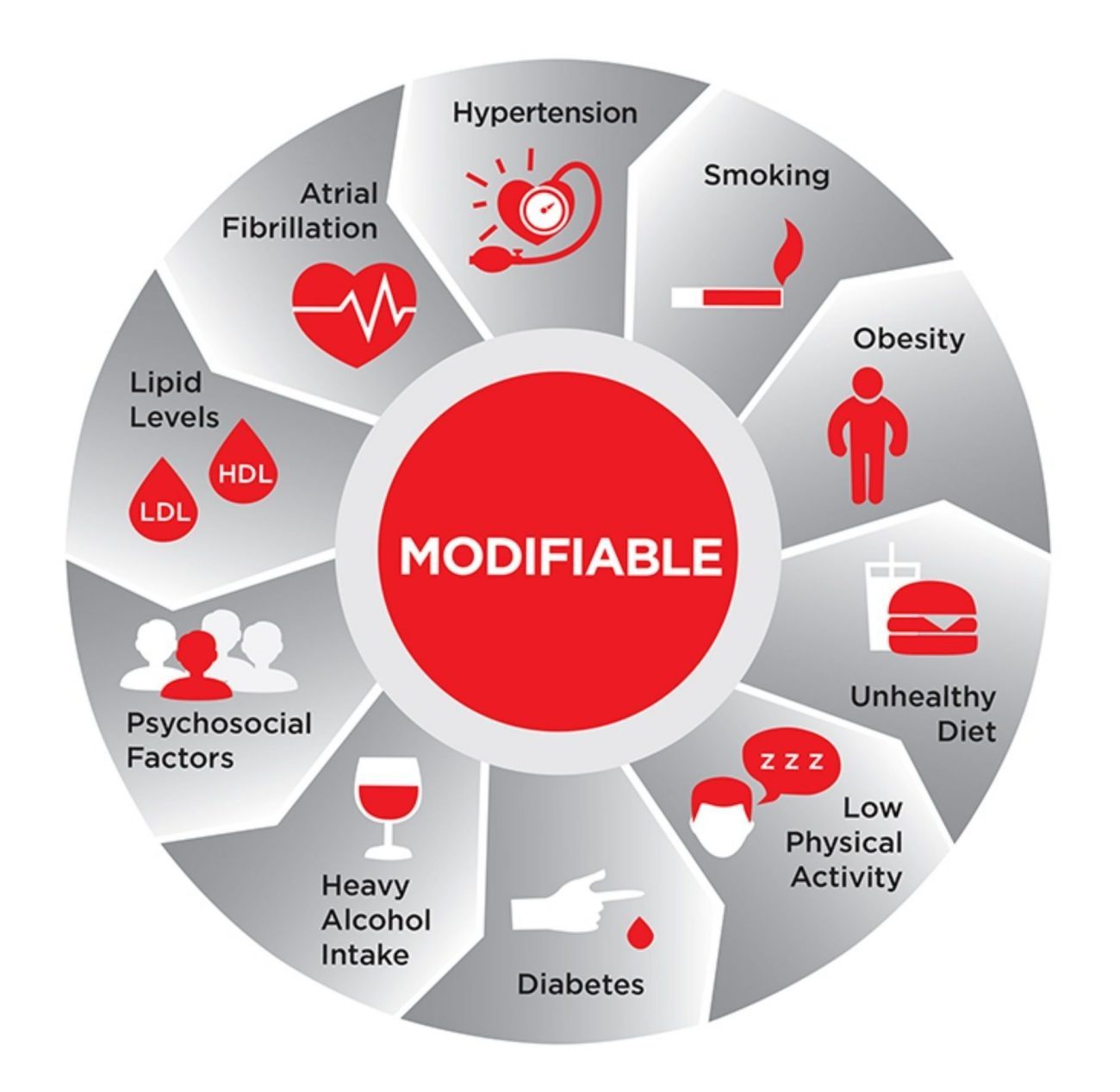
Things to do to lower your stroke risk
- Check your blood pressure once every 2 years from the age of 18, or more frequently as advised by the doctor.
- If you have high blood pressure, take your medications as prescribed and
go for your regular appointments. - Maintain a healthy weight with a BMI range from 18.5 to 22.9.
- Keep active with at least 150 minutes of physical activity every week.
Article contributed by the Stroke Services Improvement Team