|
From Crisis to Community-Driven Recovery
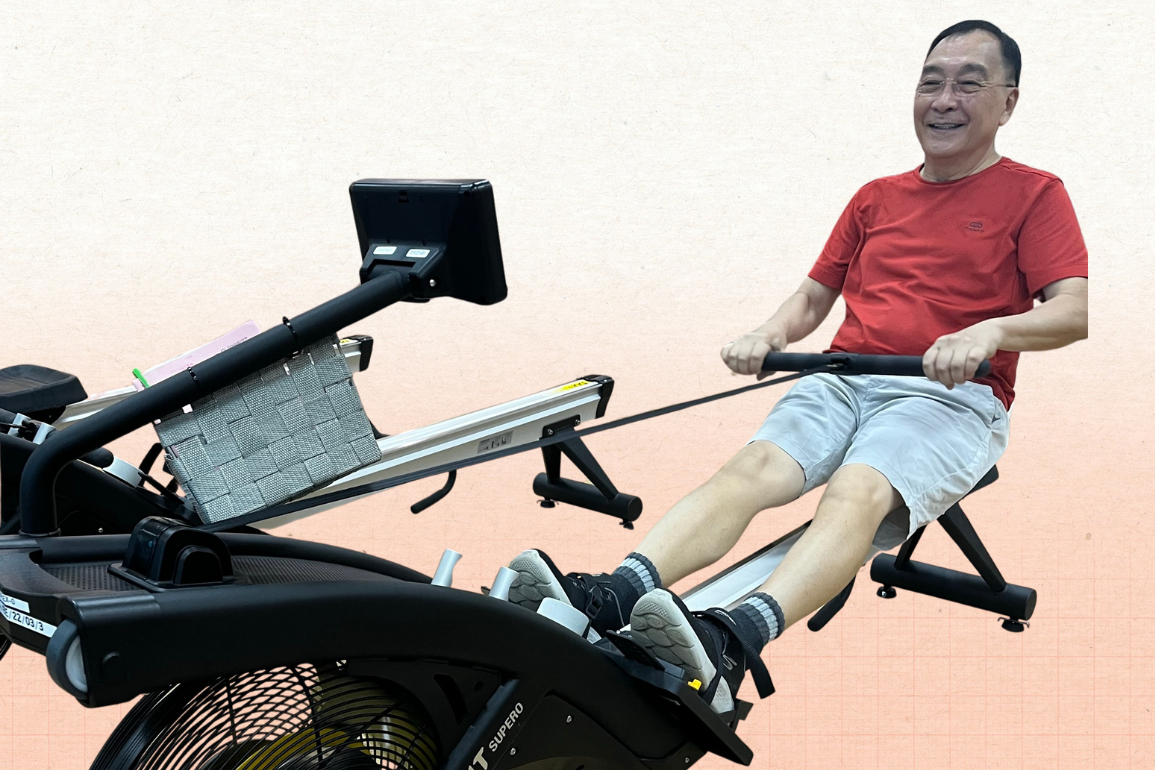
Gary had always considered himself an average, functioning adult. But a lack of regular exercise and a build-up of silent risk factors brought him dangerously close to a fatal outcome. While on a free-and-easy holiday, he began experiencing heavy perspiration and persistent discomfort. It wasn’t until he was finally persuaded to see a doctor that the truth emerged — his arteries were 100% blocked. He had been walking the fine line between life and death.
Following the diagnosis, he was referred to cardiac rehabilitation at the National University Heart Centre, Singapore (NUHCS). But with the programme oversubscribed, he was advised to consider the Singapore Heart Foundation’s Heart Wellness Centre (HWC). Skeptical at first, he gave it a try — and he hasn’t looked back since.
The rehabilitation programme at HWC was tailored to meet his specific limitations and goals. He began with low-intensity sessions — barely managing 10 minutes on the treadmill. But the structured, progressive training soon paid off. Today, he is able to walk for 1.5 hours without experiencing fatigue. This measurable improvement in his stamina and strength has been critical to his recovery.
But what made the biggest difference, according to Mr Gary, was not just the physical training. It was the people. At HWC, he found not only professional guidance but also a strong sense of community. Fellow clients and staff became friends — sharing meals, conversations and encouragement. This social network played a key role in keeping him motivated and emotionally supported.
Among the staff, one name stands out. Ann, an admin staff who has supported Gary for years, remains a steady presence in his life — even after her work responsibilities shifted. Her ongoing concern for his well-being exemplifies the kind of patient-centred care SHF is known for.
Gary believes HWC is more than just a place to recover — it is a space where health and purpose intersect. “It is for your own good, it is for your own wellness, and if you want to see and live a bit longer. Living longer does not mean living without a purpose,” he says.
Cardiovascular disease is a serious challenge, but recovery doesn’t have to be a solitary journey. Gary’s story is a reminder that with the right support — both clinical and social — progress is not just possible, it’s sustainable.
Find out more about the Heart Wellness Programme.