|
Class Exercise for Heart Patients
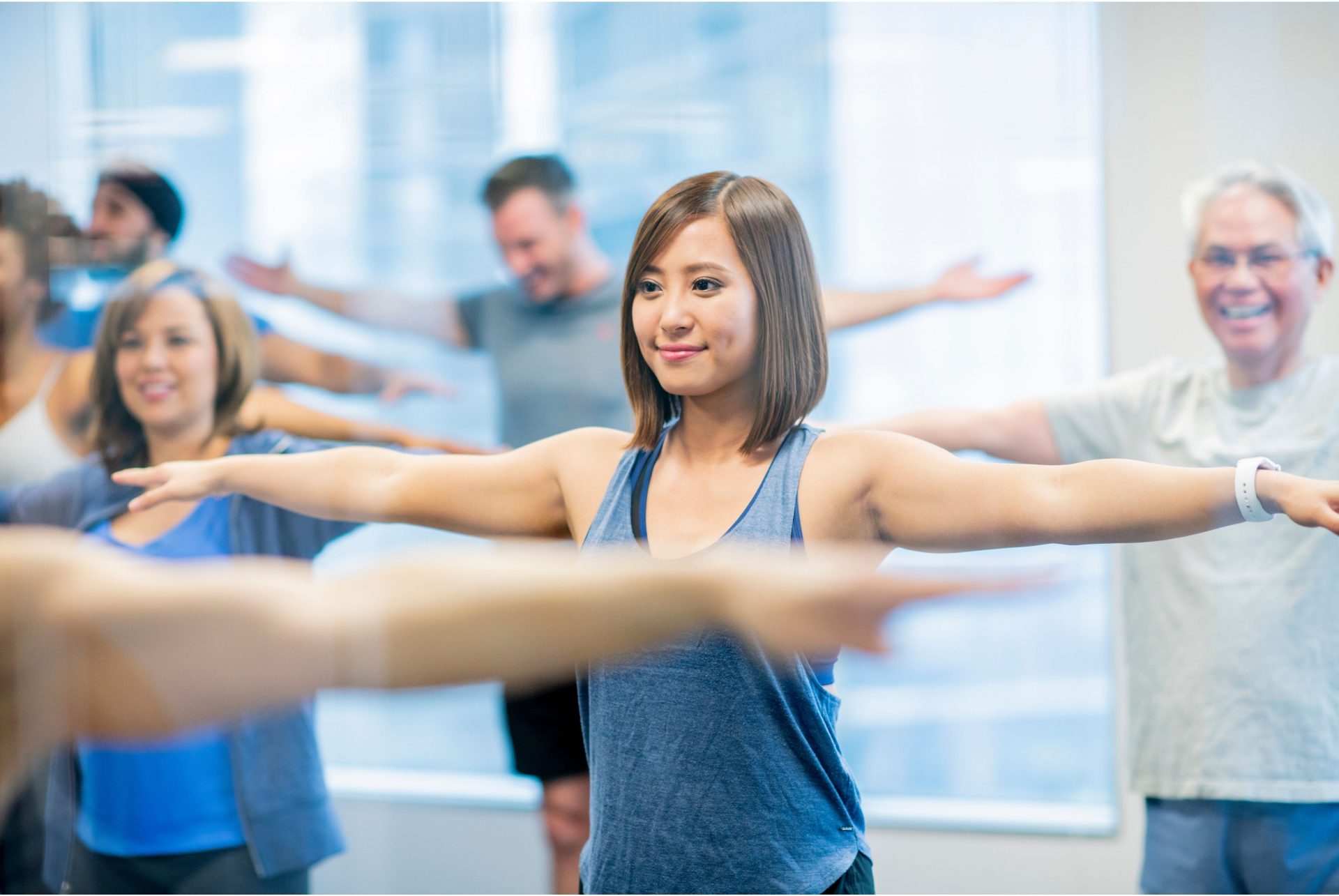
Class exercise is an exercise led by an instructor for a group. Such classes focus on increasing or maintaining your aerobic fitness, strength, flexibility, balance and coordination. Due to the variety of exercise sessions available, some classes may not be suitable for you, because the intensity is too high or the level of supervision and instruction is not right for you. Do note that this advice is general because it covers a wide range of activities such as Zumba, Yoga, Pilates, Aerobics, Step Classes, Spinning, Tai Chi and other group-based activities.
What are the specific benefits of class exercise?
- Sociable and fun
- Improves your confidence and well-being
- Motivates you to exercise regularly
- Offers variety
- Session timetables may make it easier to commit to regular exercise
Exercise classes focus on increasing or maintaining:
- Aerobic fitness
- Strength and flexibility
- Balance and co-ordination
How can I get in shape and when can I start?
It is very important to attend a cardiac rehabilitation programme like the Singapore Heart Foundation’s Heart Wellness Programme and inform the team of your wish to return to or start a particular session. When you start depends on which session you attend, your current level of physical fitness as well as your general health. Your cardiac exercise professional will advise you when you are ready.
It is also crucial that you are informed of the maximum exertion level you can safely reach during your exercise. As with any activity, start low and go slow, build up gradually and pace yourself. There are usually different levels within sessions, so it may be best to start at the lowest. Initially, you may find coordinating the movements challenging but this will gradually improve with repeated session attendance.
How should I feel during my session?
Listen to your body and think about how it compares with how you feel in the cardiac rehabilitation programme.
You should feel your breathing rate increasing, but you should also feel comfortable and able to continue. It is fine to feel that you are exerting yourself, so long as you are not struggling. You should not feel that you are pushing yourself to keep up with other participants in the session.
If you feel exhausted following exercise you may have worked too hard, for too long or the session may have been too demanding for you. Think about reducing the pace at which you are working or changing to an easier session.
Stop exercising if you experience any chest pain, palpitations, dizziness or light-headedness. If the symptoms do not go away promptly with rest, seek medical advice as soon as possible.
What about warm-up and cool down?
The exercises in the first 5–15 minutes and last 5–10 minutes of the session should be performed at a lower intensity and pace, than those performed during the session’s main component.
The length of the warm-up and cool down will be dependent on the length of the session, your present fitness level, as well as the overall intensity.
Other things to consider
- Watch the session before you join, to check that it is right for you
- Speak to the instructor if you have any concerns
- Try not to be influenced by the beat of any music
- Work at your own pace
- Avoid holding your breath
- Exercise only when feeling well
- Dress appropriately
- Do not exercise straight after eating a large meal
- If your session involves a combination of standing and lying exercises, discuss this with your cardiac exercise professional to ensure that this is safe for you
- Remember to take a bottle of water along with you and stay hydrated always
For more information on the Singapore Heart Foundation’s Heart Wellness Programme, call 6354 9340.
Note: The information provided in this article is not intended to replace the advice that your doctor or cardiac rehabilitation team has given you, based on their expert knowledge of your condition.
This guide is based on available evidence and expert opinion, and is produced by the Association of Chartered Physiotherapists in Cardiac Rehabilitation.