|
Resistance Training Guide for Heart Patients

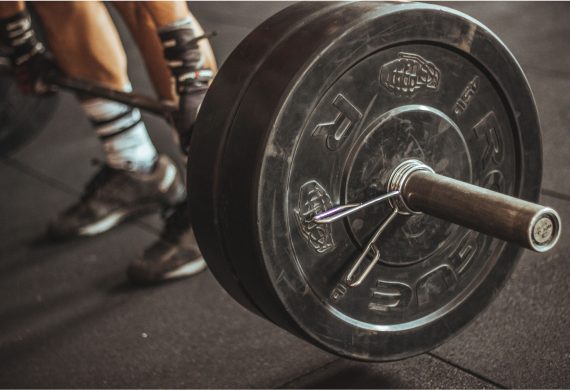
Resistance Training (also called strength or weight training) is the term used to describe a type of exercise where you lift an external load or use your body weight as a resistance to improve the strength, size or endurance of your skeletal muscles.
Many people enjoy resistance training, which includes using their own body weight, free weights, weight machines, medicine balls or resistance bands. It is a good way to improve health and fitness in addition to the recommended 150 minutes of weekly aerobic activity, but it is important that strength training is performed safely and correctly.
What are the benefits of resistance training?
- Improves and maintains muscle tone, strength and endurance – stronger muscles reduce strain on the heart during physical activity and exercise
- Makes everyday activities easier to perform
- Helps maintain healthy body weight and shape
- Helps to reduce the risk of falls, especially in older people
- Improves well-being and quality of life
- Improves/maintains bone density
- Helps to manage long-term health conditions such as reducing high blood pressure and preventing or controlling diabetes
When is it safe to start resistance training?
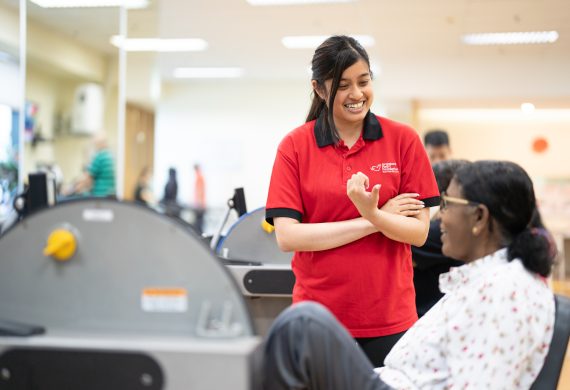
It is recommended that you have an assessment with a cardiac exercise professional who will provide advice, guidance and design with you an individual resistance training programme.
Your start date will vary, depending on your own circumstances and specific cardiac condition.
For example: Angina or an Arrhythmia
You should be able to start as soon as your condition has stabilised.
Heart Attack or Coronary Angioplasty/Stents
You should be able to start in the first few weeks, depending on your diagnosis and treatment.
Pacemaker or Implantable Cardioverter Device (ICD)
In the first six weeks, caution is needed with certain upper body movements used in resistance training (e.g. use of a chest press) and also in the longer term to minimise damage to the device wires.
Open Heart Surgery
During the first 12 weeks, you should be cautious before upper body strength training in order to minimise problems with breastbone healing.
How fit do I need to be?
There is no minimum fitness level required. Strength training may be the most appropriate initial type of exercise for people with low fitness or limited mobility, allowing them to progress to other types of exercise once they have improved muscle strength.
How do I start?
You need to establish the correct choice of exercises and the weight to be lifted for each individual muscle group you plan to train. Your cardiac exercise professional will help you to do this.
How often should I do strength training?
At least twice a week, no more than four times a week. It is recommended to wait 48 hours between each resistance training session.
How much should I do?
1 set of 10-15 repetitions (reps) for each muscle group. If you cannot perform at least 10 reps one after the other, it means that the weight is too heavy.
How do I progress?
- Increase the number of sets up to 3, with a minute rest in between
- Increase the weight (band strength if using resistance bands)
- For specific muscle endurance training, keep the weight the same and increase the number of reps to 20
When should I perform strength training?
You can either do resistance training in the same session as your aerobic exercise, after a partial cool down or in a ‘standalone’ session.
Should I warm up/cool down?
Yes, if you are doing strength training as a ‘stand-alone’, you should warm up the muscles by performing the exercise 10 times without a weight. Cooling down should be done by stretching the muscles used.
How should I feel?
The fatigue in your muscles should increase gradually, as you increase the number of reps performed. By your last repetition, the muscle group you are exercising should feel tired to the point that you are unable to continue. It is normal to feel some muscle soreness up to 48 hours after performing these exercises. If muscle soreness is excessive, you have probably overdone it and should reduce either the weight or the number of sets performed at your next session.
What about technique?
Strength training should be performed:
- With a good posture
- In a rhythmical manner
- At a controlled slow to moderate speed
- Through a comfortable range of movement
- With alternation between lower and upper bodywork, to allow muscles to rest between exercises if working both areas
- With the avoidance of gripping the weights/bands excessively and holding your breath, because both these actions may cause a rapid increase in your blood pressure
- By counting out loud with each rep to help you breathe naturally
Other considerations:
- Only exercise when you are feeling generally well
- Keep hydrated when you are exercising
- Stop exercising if you experience any chest pain, palpitations or light-headedness. If the symptoms do not go away promptly with rest and/or prescribed GTN spray use, seek medical advice as soon as possible.
Note: The information provided in this article is not intended to replace the advice that your doctor or cardiac rehabilitation team has given you, based on their expert knowledge of your condition.
This guide is based on available evidence and expert opinion and is produced by the Association of Chartered Physiotherapists in Cardiac Rehabilitation.