|
Heart Failure

Heart failure, also referred to as congestive heart failure, is a chronic and progressive condition in which the heart muscle is unable to pump enough blood to meet the body’s needs for oxygen. As a result, there is stagnation or backward pooling of blood in vital organs and vessels.
Causes
Heart failure can develop as a result of:
- Coronary heart disease
- A previous heart attack
- High blood pressure
- Damage to the heart valves (for instance, due to rheumatic fever or other infections)
- Cardiomyopathy (a disease of the heart muscle which causes it to become progressively weaker and gradually lose its ability to pump blood effectively)
Symptoms
-
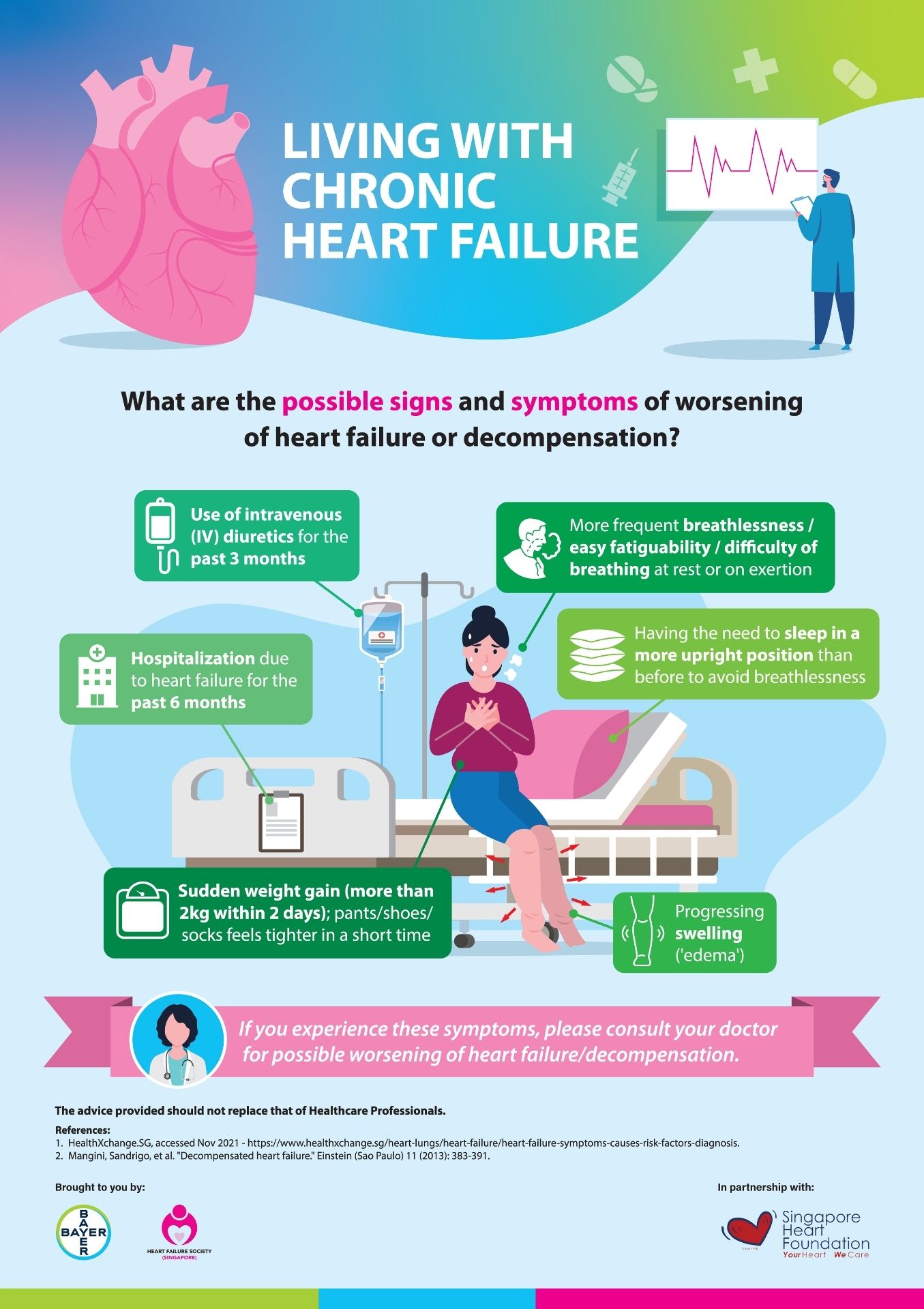
Shortness of breath, especially during exercise
This is one of the early symptoms of heart failure. As the patient’s condition worsens, congestion in the lungs and breathing difficulties develop.
Some patients may also notice a “wet” sound when they breathe, caused by the build-up of fluid in the lungs’ air sacs. -
Abdominal pain and loss of appetite
Accumulation of fluid in organs such as the liver and intestines will cause the patient to experience abdominal pain and loss of appetite. Distension of the veins in the neck may also occur due to blood pooling in these vessels. - Fatigue, loss of energy
-
Fluid retention, particularly ankle swelling
Fluid is likely to build up in the patient’s legs and ankles because of gravity. Such fluid will be reabsorbed into the bloodstream when the patient lies down, flooding his lungs and aggravating his breathlessness.
The patient may even need to lie propped up or stand simply to breathe. - Weight gain
- Light-headed spells and blackouts
Complications
-
Kidney failure
At a more severe stage of heart failure, the patient’s kidneys may begin to fail due to inadequate blood supply. This results in further accumulation of water and waste products in the body, thus aggravating the swelling (oedema) of the body.