
|
CPR on Women: Breaking barriers, saving lives
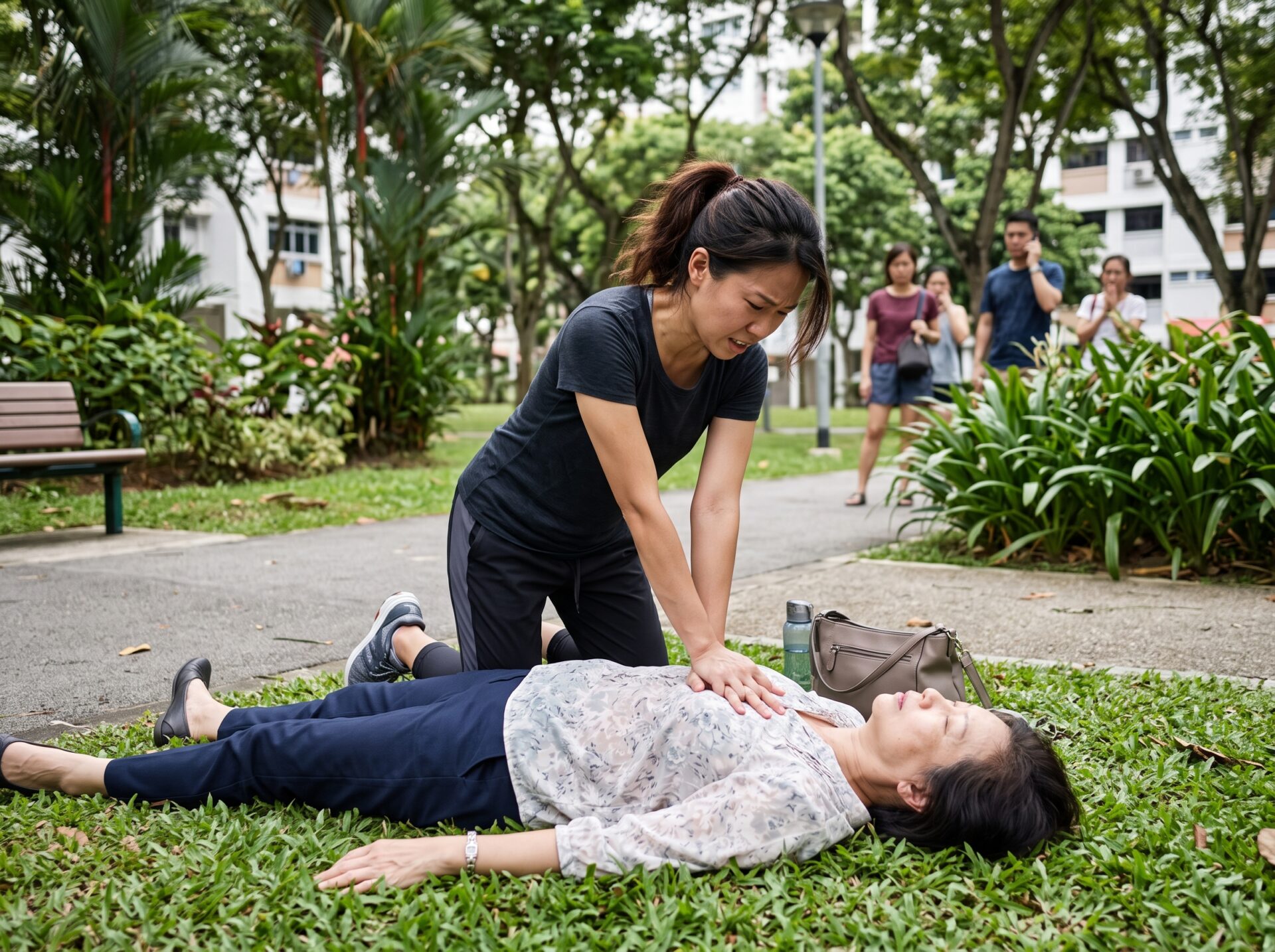
When someone collapses from cardiac arrest, every minute without CPR lowers their chance of survival. Yet research around the world shows that women are less likely than men to receive bystander CPR. Misconceptions, uncertainty and lack of confidence often prevent people from stepping forward.
Here are three common myths and facts that can help more people step forward:
Women are less likely to learn CPR and use an AED.
CPR and the use of an Automated External Defibrillator (AED) are skills that anyone can
learn, regardless of age or gender. However, studies suggest that women are, on average, less likely to participate in CPR and AED training. Contributing factors may include competing caregiving responsibilities, lower confidence in performing CPR, or fewer opportunities to receive training.
At the Singapore Heart Foundation, we are committed to making life-saving skills accessible to everyone. Through our one-hour CPR+AED Awareness Course and CPR Self- Learning Kiosks located in public spaces, we aim to equip more people with the confidence and skills to respond when every second counts.
I could get into legal trouble or be accused of inappropriate touching if I perform CPR on a woman.
When CPR is provided in good faith during a genuine medical emergency, the priority is to save a life. Fear of causing embarrassment or concerns about inappropriate contact should never prevent someone from taking action when every second counts.
Women are less likely to perform CPR or use an AED, whether on family members, friends or strangers.
Many women hesitate because they worry about hurting the person, performing
CPR incorrectly or using an AED the wrong way. Some also feel less confident
responding to strangers.
Taking action is always better than doing nothing. AEDs provide clear voice
instructions and deliver a shock only when needed. CPR does not have to be perfect
to help. Acting quickly can increase a person’s chance of survival.
Every pair of hands can save a life.
Cardiac arrest can happen to anyone regardless of age or gender. Learning CPR and knowing how to use an AED equips you to act when every second counts. The confidence to step forward today could one day give someone the greatest gift of all — a second chance
at life.


