|
How does High Cholesterol Affect our Eyes?

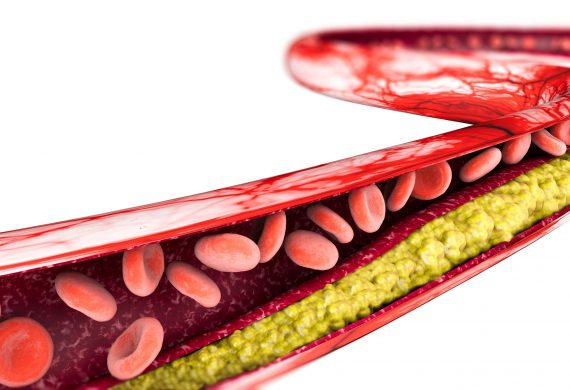
When we speak of high blood cholesterol, we often assume that the organ most likely to suffer its detrimental effects is the heart. While that is often the case, there can be other adverse effects that go far beyond our cardiovascular system. One such area is the eye. It can reveal the presence of high blood cholesterol levels in a multitude of ways.
External Eye
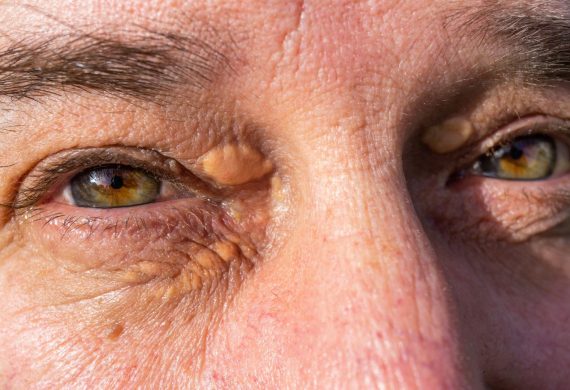
Xanthelasma

One of the most common skin conditions linked to high cholesterol levels1 – xanthelasma is represented by soft yellowish patches found on the upper and lower eyelids, adjacent to the nose.
While these cholesterol build-up are usually harmless and do not cause any symptoms, xanthelasma may be troubling due to its appearance and may indicate an increased likelihood of developing atherosclerosis and heart disease. It is more common in females of Asian or Mediterranean descent or if one is overweight, smokes, has diabetes or high blood pressure1.
With a distinctive appearance, xanthelasma is usually diagnosed through visual examination. However, some doctors might run a blood test, including measurements of HDL (good) and LDL (bad) cholesterol, triglyceride, and apolipoprotein B100 levels, to determine your lipid levels2.
No treatment is usually required, but it can be removed for cosmetic reasons.
Arcus Senilis

Arcus senilis, also called corneal arcus3, results from lipid deposits within the peripheral cornea. It usually begins as a grey or white arc above and below the cornea and may eventually progress to a complete ring.
Arcus senilis is benign and does not cause any complication, therefore no treatment is required. It is often seen in individuals aged above 60, or adults below 40 years old with high blood cholesterol.
Internal Eye
Asteroid Hyalosis
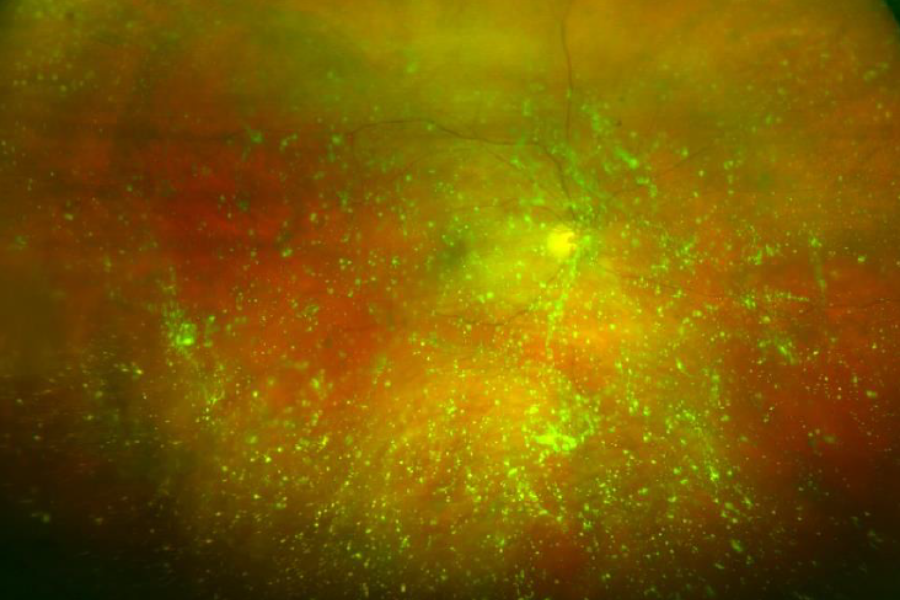
Asteroid hyalosis is an accumulation of calcium-lipid particles that can occur within the vitreous humour (a transparent, colourless, gel-like substance that fills the space between the lens and the retina within the eye). It appears as multiple yellow-white crystals and can be diagnosed during a retinal examination. While the cause is unknown, asteroid hyalosis is often associated with diabetes, high blood pressure and high blood cholesterol.
The presence of asteroid hyalosis often does not affect vision and may not require any intervention. In rare cases, it may cause visual disturbances such as disturbing floaters and can be solved through surgical removal.
Drusen

Yellow deposits made up of lipids and protein can accumulate under the retina and are known as drusen or age-related macular degeneration. Small amounts of drusen will not cause any complications, however, it could lead to blurry vision or metamorphopsia (seeing straight lines as wavy lines) if it occurs close to the fovea (the central part of the macula responsible for clear central vision).
Hollenhorst Plaque

The build-up of cholesterol in arteries causes the formation of plaques, which can dislodge and travel to the blood vessels of the retina. It is usually visually asymptomatic except when the blood flow of the affected vessel is disrupted, and can be detected during a retinal examination. In some cases, it can cause a sudden loss of vision in the affected eye.
A systemic workup is usually required in the presence of hollenhorst plaques as it indicates a substantially increased risk of stroke and heart disease.
Retinal Vein Occlusion
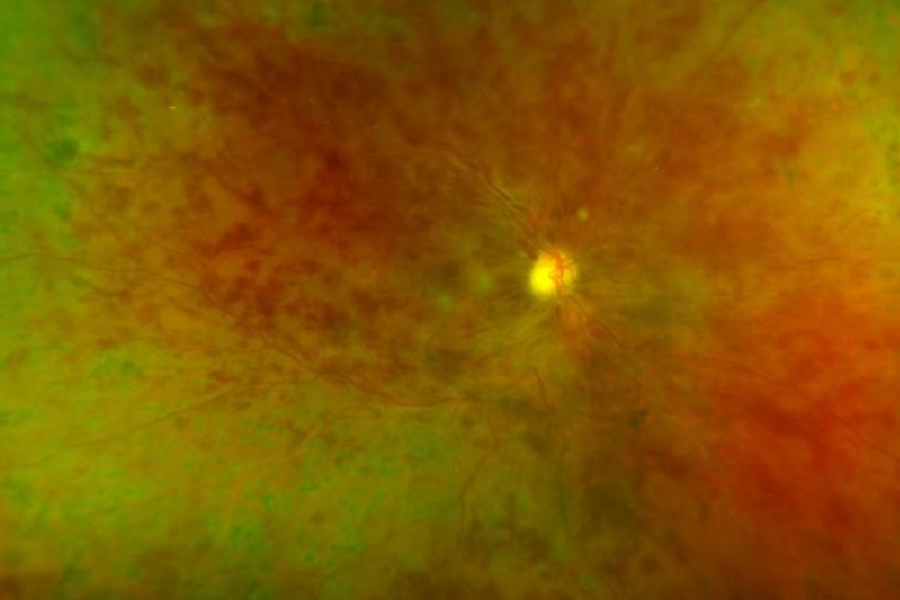
The retina is a light-sensitive tissue in the back of your eye, and receives its blood supply through the retinal artery and retinal vein1.
When cholesterol plaques cause an occlusion of the blood vessels that supplies blood to the retina and optic nerve, it can cause a rise to a stroke of the eye. Retinal vein occlusion occurs when the retinal veins are blocked. As the vessels rupture, it would often result in leakage of blood and fluid within the retina, leading to visual blindness.
The symptoms include blurry vision, floaters or pain, and may usually affect one eye1, and is more common in people aged 50 and above, or in those with high blood pressure, diabetes, glaucoma or atherosclerosis1.
Ischemic Optic Neuropathy

When the blood vessels supplying blood to the optic nerve are blocked, it leads to a condition known as ischemic optic neuropathy, due to reduced blood supply. This also results in visual blindness.
Vascular Occlusions
Vascular occlusions in the eye usually occur with little to no warning symptoms. The most obvious symptom would be a sudden painless change in vision – blurry vision or complete loss of vision. Symptoms may be permanent and usually affect one eye at a time.
The treatment for vascular occlusion is directed at decreasing swelling, improving the blood flow in the affected blood vessels, and restoring vision. Common modes of treatment are via retinal laser procedures, steroid medications or eye injections.
What Are the Risk Factors?
Individuals who are smokers, overweight, have high blood cholesterol, and have family history of high blood cholesterol, diabetes or high blood pressure are more predisposed to suffer from these conditions.
How Will Managing Cholesterol Levels Help?
Managing good cholesterol levels can prevent xanthelasma from growing larger and slow down the development of arcus senilis. It will also reduce the risk of atherosclerosis, which is the narrowing of the blood vessels due to plaque build-up within the vessels, which in turn reduces the risk of vascular occlusions.
Make lifestyle changes by adopting a healthier diet, staying active, quitting smoking, limiting your alcohol consumption and maintaining a healthy body mass index would be a good start. In addition, consuming prescribed cholesterol-lowering medication and going for regular health screening will also go a long way in managing and detecting high blood cholesterol.
When Should You See a Doctor?
For most people, the recommendation is to go for an eye examination annually with an eye doctor. More frequent visits are usually required for those who are at-risk or have pre-existing eye conditions. The eye is the only place in the human body that allows direct visualisation of neural tissues and blood vessels. A thorough examination of the eye can reveal early signs of systemic or ocular disease even in the absence of symptoms.
It is important to seek immediate medical attention as soon as you notice any sudden visual changes, such as blurring of vision or a partial or complete loss of vision. Such symptoms are indicative of a more serious condition. Early detection can help to reduce the risk of permanent and irreversible vision loss.
Conclusion
As you can see, the retina is very revealing of many ailments that can affect our body. It is particularly important for everyone to have a detailed check of their eyes and retina to detect and treat early diseases.
Article contributed by Dr Claudine Pang, Medical Director and Consultant Ophthalmologist at Asia Retina Eye Surgery Centre.
References
- Caceres , V., & Kim, J. M. (2022, October 13). High Cholesterol and the Eyes: Signs and Symptoms. Very Well Health. Retrieved February 22, 2023, from https://www.verywellhealth.com/high-cholesterol-and-the-eyes-signs-and-symptoms-5188484
- Weatherspoon, D., & Duggal, N. (2017, January 25). Everything You Should Know About Cholesterol Deposits in Your Eye. Healthline. Retrieved February 22, 2023, from https://www.healthline.com/health/cholesterol-deposits-in-eye
- (2022, February 3). Can Cholesterol Affect Your Eyes? Cleveland Clinic. Retrieved February 22, 2023, from https://health.clevelandclinic.org/cholesterol-deposits-in-eyes/#:~:text=The%20most%20common%20way%20that,to%20the%20nose%2C%E2%80%9D%20Dr.