|
Who Let the Fruits Out?
While consuming fresh fruits & vegetables might have been what our ancestors had been eating, the 20th-century food industry has somewhat changed our dietary pattern through the advancement of food processing and storage technologies. With the easy availability of cheap and processed fast food, the intake of fruits and vegetables has reduced gradually over the past years.
In August 1988, the United States National Cancer Institute awarded a grant to the California Department of Health Services to initiate the “5 A Day for Better Health” programme – in recognition of the possible association between several ailments and the lack of fruits and vegetable intake. It recommended and encouraged everyone to consume at least 5 portions of fruits or vegetables daily to prevent cancer or chronic illnesses such as heart diseases, stroke, diabetes mellitus or obesity. By eating at least 400 grams daily, the occurrence of cancer was expected to reduce by a fifth and heart diseases by two-fifths.
Together with the Food and Agriculture Organization of the United Nations, the World Health Organization launched the “5 A Day” campaign globally in 2003. Fruits and vegetables may be consumed raw, cooked, frozen or canned, but how much exactly is one portion? It could be an apple, two stalks of broccoli, five spears of asparagus, and so on. To further complicate the size of one portion, certain types of food, such as beans and pulses, are restricted to only one portion a day. A lesser-known fact is that fruit or vegetable smoothies may only make up for 2 of the recommended 5 portions a day.
In 2010, the health benefits of fruits & vegetables were questioned by the publication of the European Prospective Investigation into Cancer and Nutrition (EPIC) study. The relationship between the consumption of fruits, vegetables and cancer was evaluated in about 480,000 men and women from 10 countries. After approximately 9 years, investigators found that there was a small inverse relationship between the intake of fruits & vegetables and cancer risk. The investigators attributed the weak association to the participants’ healthy lifestyles. More recently, a study conducted in England involving more than 65,000 individuals who were followed for almost 8 years, showed that the consumption of more than 7 portions of fruits & vegetables was associated with:
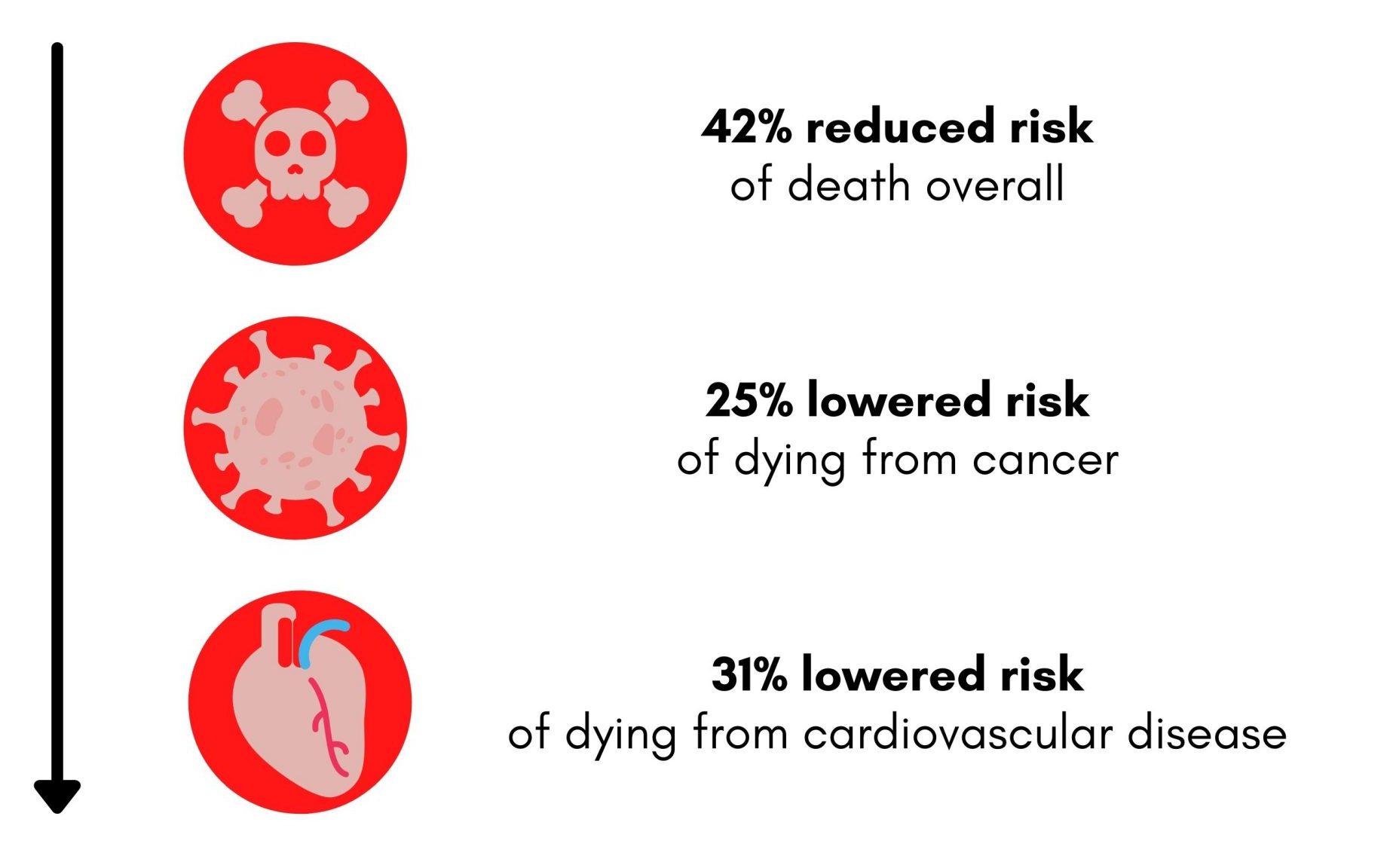
Fresh vegetables offered the best protection, as fruit juices did not confer any significant benefit at all and canned fruits increased the risk of death.
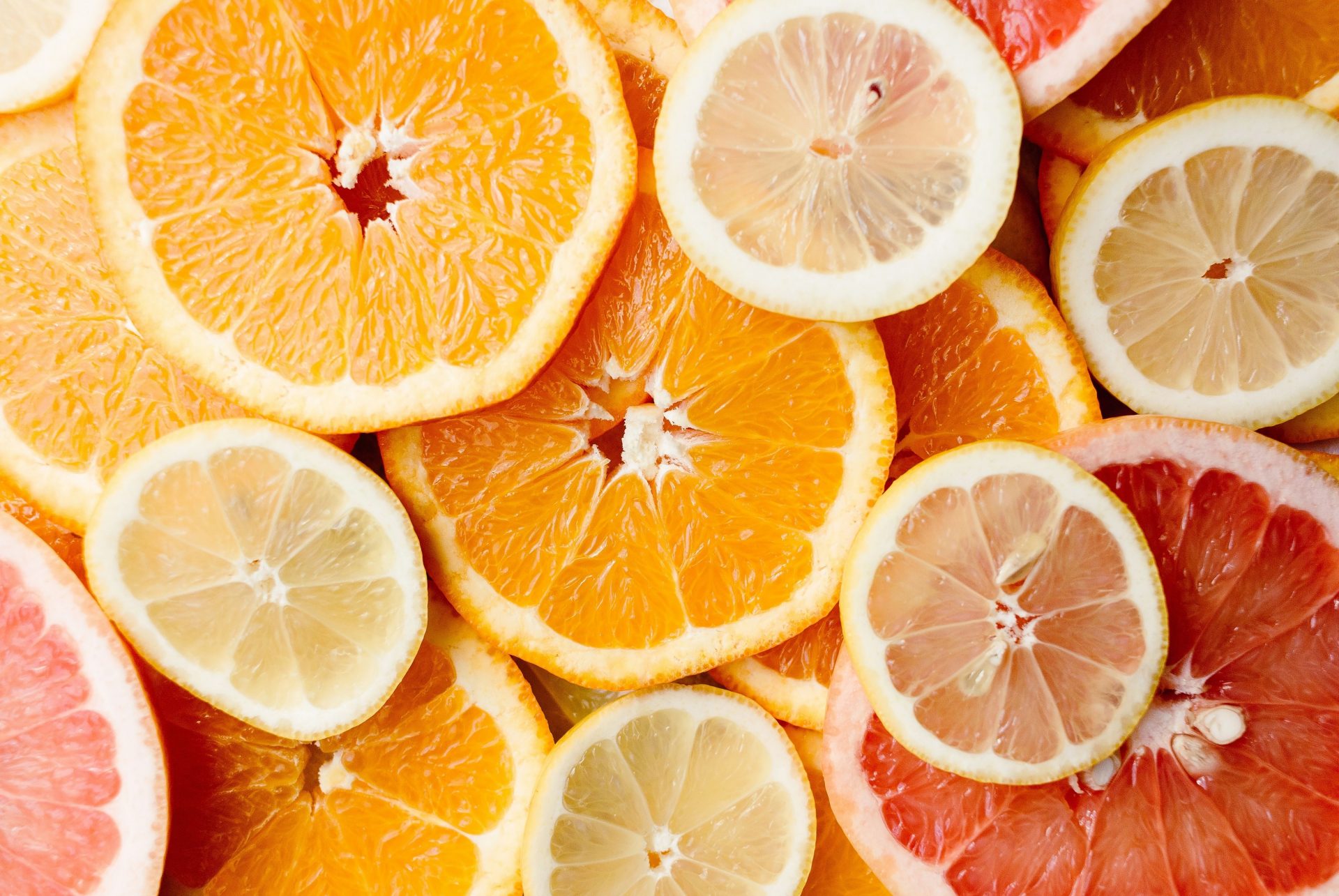
Notwithstanding the fact that our understanding of nutrition has been frequently hampered by contradictory evidence, regular consumption of fruits & vegetables is likely to be beneficial to health. Unfortunately, the invention of modern technologies, such as juicers, blenders and thermo-mixers, has been unhelpful in achieving this goal. Without the fibre, drinking juices or smoothies may increase our intake of fruits & vegetables to more than what is recommended – and result in excessive consumption of sugar. However, when we crunch an apple or chew the juicy pieces of an orange, not only do we limit the amount that we can eat, but it also slows down the process of eating and nutrition absorption by the body. Interestingly, in the futuristic sci-fi movie Men in Black III, Agent J candidly stated that sugar is the most destructive force in the Universe.
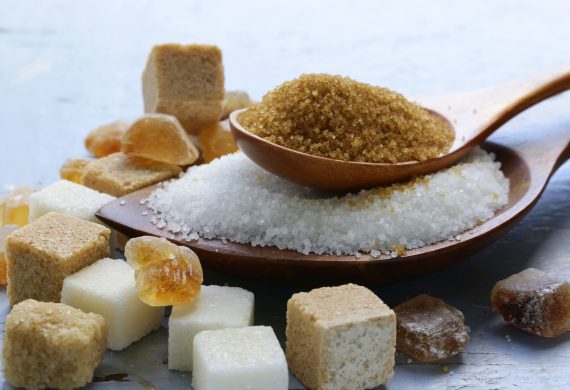
Fructose is the sugar molecule found in fruits and vegetables and it has been increasingly portrayed as the villain in today’s obesity epidemic. The combination of fructose and glucose forms sucrose, which is the most common form of sugar we use today. Unlike glucose, fructose is not as well-absorbed in the gut and it does not stimulate insulin secretion. There are other differences in hormonal responses in the gut. In addition, glucose can be utilised in all the cells of the body. But fructose can be only broken down in the liver, producing fat and other substances. Fructose has also been shown to increase the level of “bad” cholesterol that is more likely to cause thickening of the blood vessels. Conversely, others have argued that it is just another sugar and is not uniquely toxic. When consumed in moderation (less than 50 grams) daily, adverse effects were unlikely to occur. However, excess calorie consumption caused by one’s addiction to sweetness and the differences in how our body handles the types of sugar could contribute to the development of chronic illnesses. Fructose tastes much sweeter than sucrose and it is a cheaper option. A person is also less likely to feel full after consuming fructose. So when high-fructose corn syrup is used as a sweetener in several beverages and foods, the sensation of fullness or satiety may be impaired as a result of the lack of physiological responses. Eating fresh fruits & vegetables not only mitigates these undesirable effects but also limits our intake and prevents over-consumption.
The current public health challenge is to increase the overall intake of unprocessed food. However, fresh fruits & vegetables are relatively more expensive and are perishable. Furthermore, its consumption is inversely proportional to the gross household income. Reversing the tide of cheap, fast and appealing food is a challenging task that demands global, organised and bold interventions. So do remember to always eat your fruits & vegetables fresh, instead of juicing them and reduce the consumption of refined sugars. In the pursuit of good food, health should always take precedence!
Article contributed by Dr Mak Koon Hou, Board Member of the Singapore Heart Foundation. He is also a cardiologist in private practice.