|
Knowledge, Attitudes & Practices (KAP) of CPR+AED Survey 2026
The Knowledge, Attitudes and Practices (KAP) Survey tracks the sentiments of Singapore residents towards bystander response to Out-of-Hospital Cardiac Arrest (OHCA), and assesses their knowledge, attitudes and practices relating to CPR and AED use. The survey also evaluates public awareness of and interest in the myResponder app.
Methodology
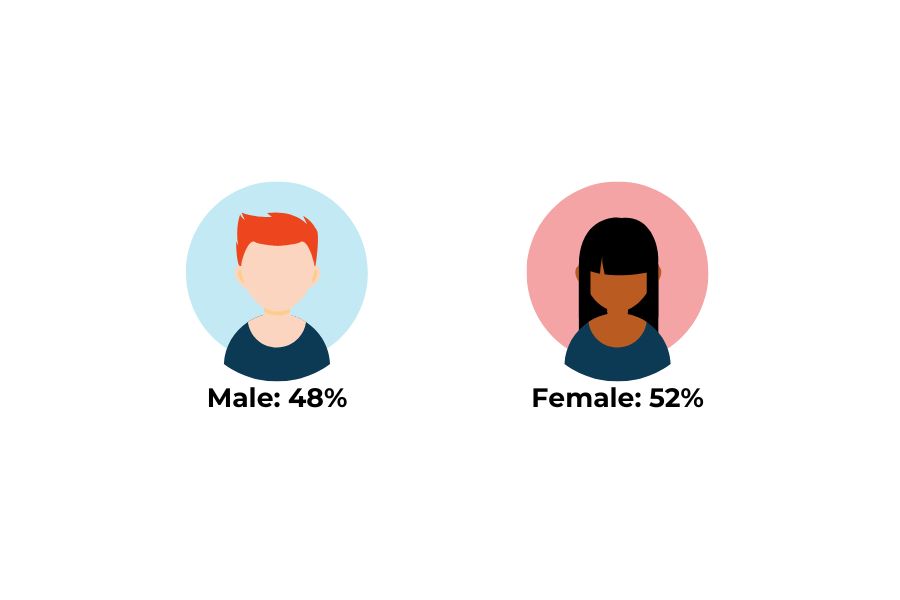
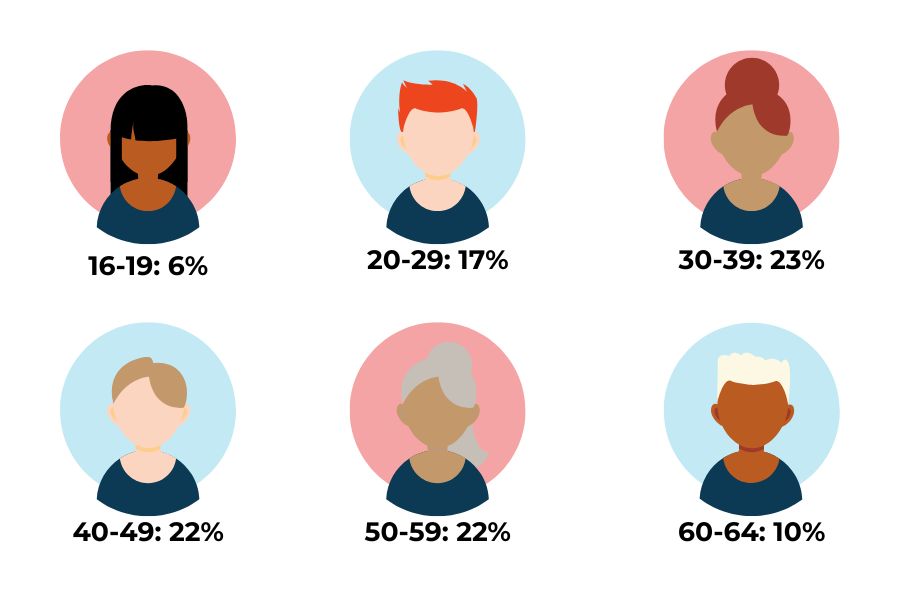
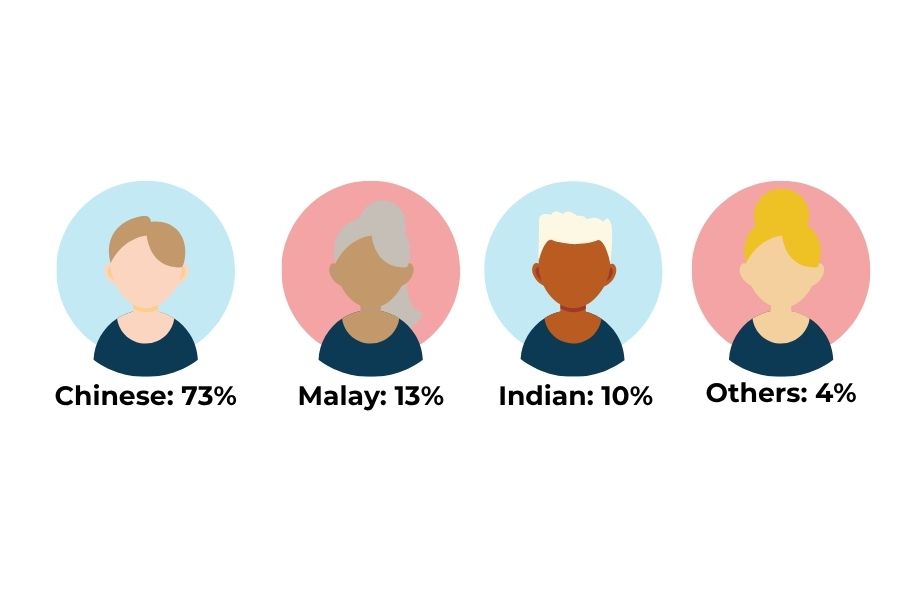
A total of 1,004 Singapore residents aged 16 to 64 years old responded to online panel and door-to-door surveys conducted from 5 Jan 2026 – 30 Jan 2026. The sample was representative of the general population by age and ethnicity.
Gender
Age
Ethnic Group
Summary of Findings
Note: Statistics presented may not add up to 100% due to the rounding-off effect.
Understanding Cardiac Arrest
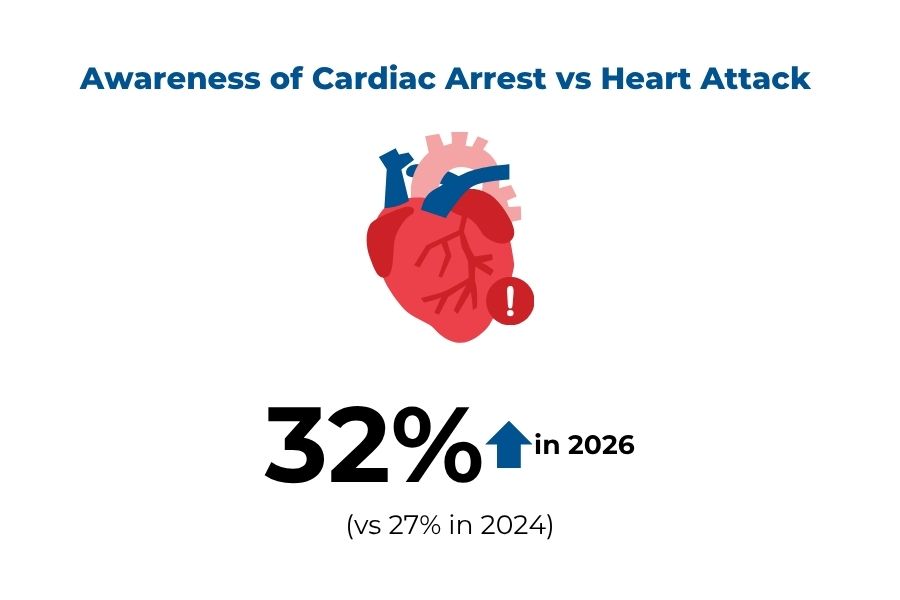
Awareness of Cardiac Arrest vs Heart Attack
32% of respondents were able to distinguish between a cardiac arrest and a heart attack, an improvement from 27% in 2024. While awareness has improved, many Singapore residents still confuse these two medical emergencies, highlighting the need for continued public education.
Immediate Response
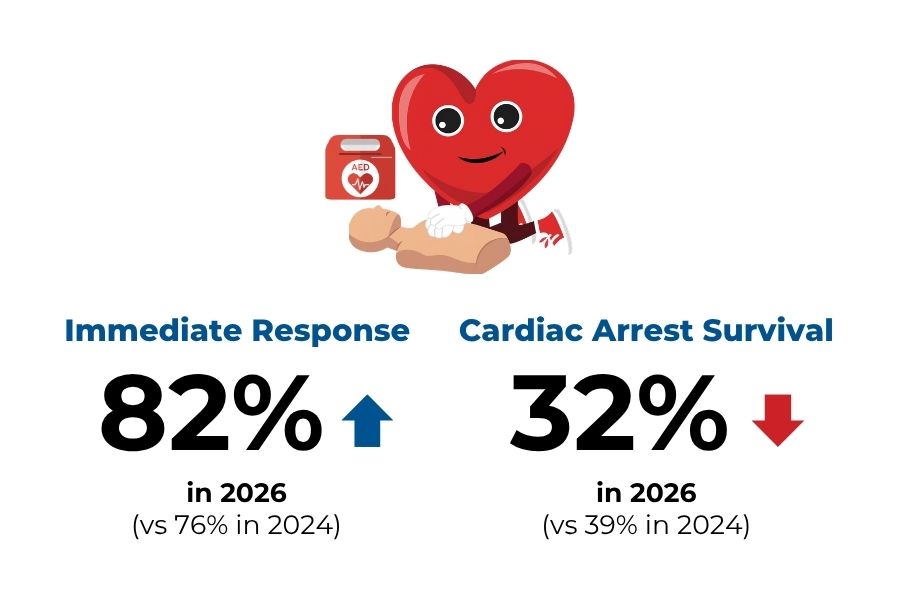
82% recognised the need for immediate CPR and AED intervention when someone suffers a cardiac arrest, up from 76% in 2024. This improvement reflects growing public understanding that every minute counts during a cardiac arrest emergency.
Cardiac Arrest Survival
Only 36% understood that survival rates for cardiac arrest victims remain low without immediate intervention. Public awareness of the seriousness of cardiac arrest continues to be an area requiring attention.
Recognising When to Start CPR
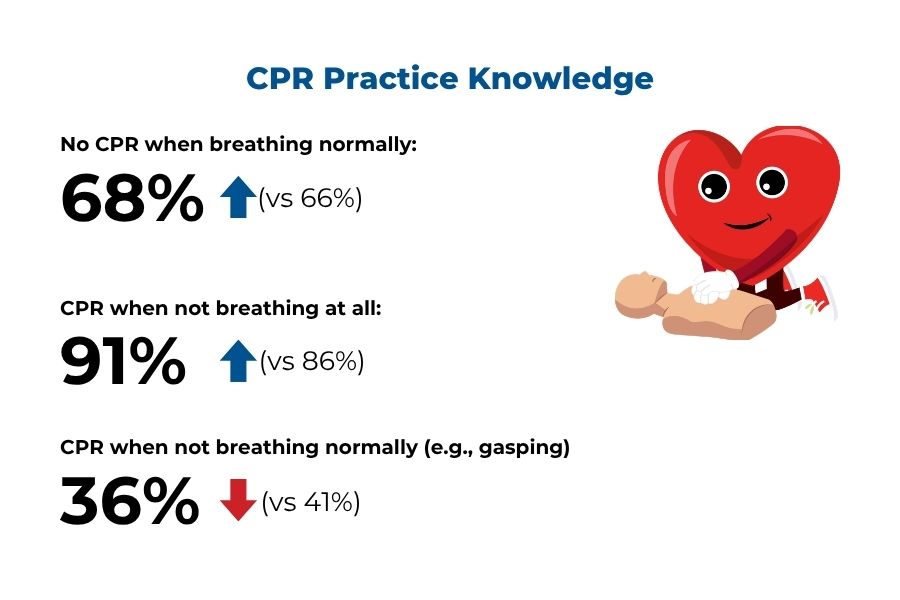
Knowledge that CPR should be performed when a person is not breathing improved significantly to 91%, up from 86% in 2024. However, only 36% correctly identified abnormal breathing or gasping as a sign to begin CPR, a decline from 41% in 2024.
Agonal breathing, commonly described as gasping, is not normal breathing and should be treated as a sign of cardiac arrest. Prompt recognition remains a critical area for public education.
Learn how to recognise agonal breathing and what to do when witnessing it.
CPR and AED Response
Past Actions when witnessing Cardiac Arrest
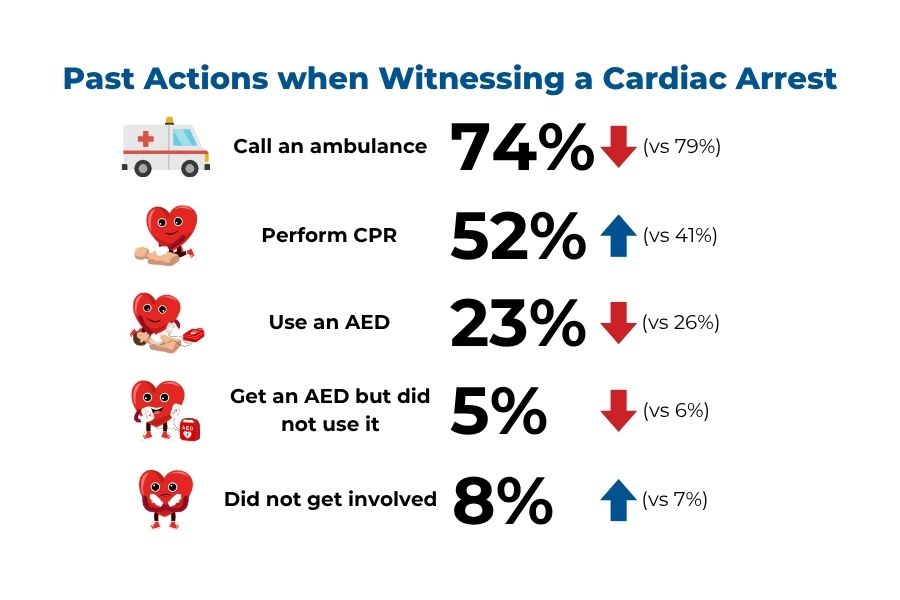
Among respondents who had previously witnessed a cardiac arrest, 74% called an ambulance, 52% performed CPR and 23% used an AED. The most significant positive shift was the increase in CPR performance, which rose from 41% in 2024 to 52% in 2026.
Future Actions when witnessing Cardiac Arrest
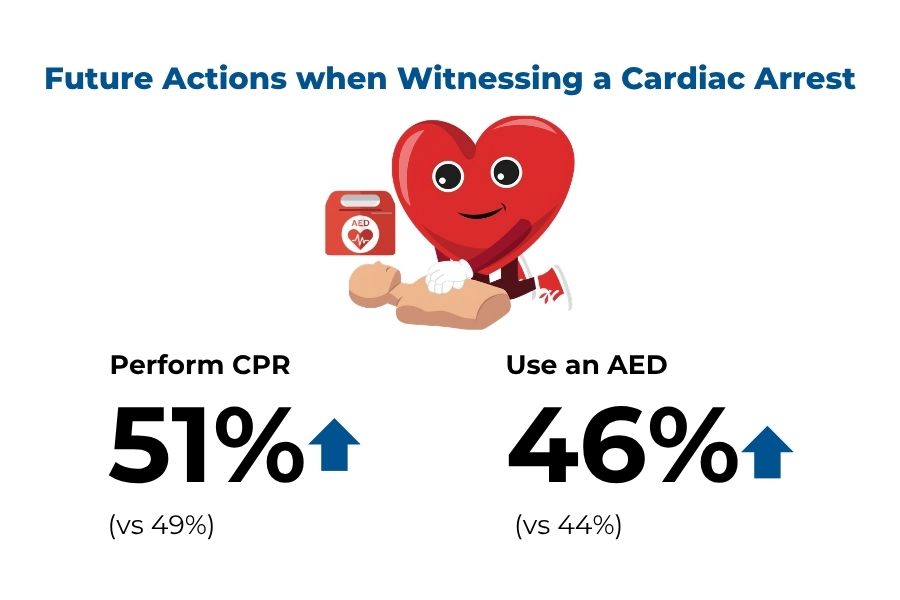
More than half of respondents (51%) indicated that they would perform CPR in a future cardiac arrest emergency, while 46% said they would use an AED. Both measures continue an upward trend from 2024.
Always start CPR right away and continue till other responders or paramedics arrive.
Bystander Knowledge & Training
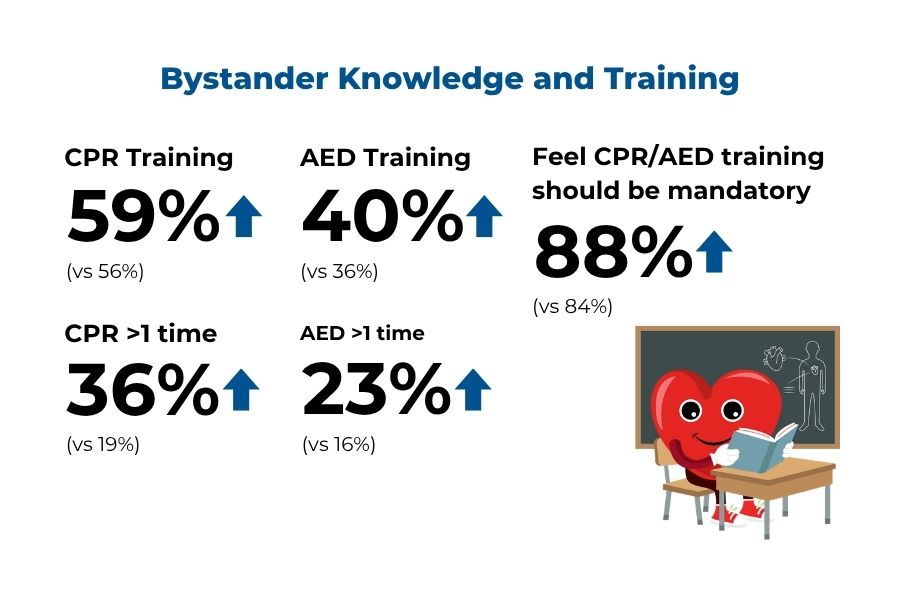
Training participation has continued to improve. Nearly six in ten residents (59%) have learnt CPR, while 40% have learnt to use an AED. Repeat training has also increased considerably, with 36% having attended CPR training more than once and 23% having attended AED training more than once.
Emergency Ambulance Awareness
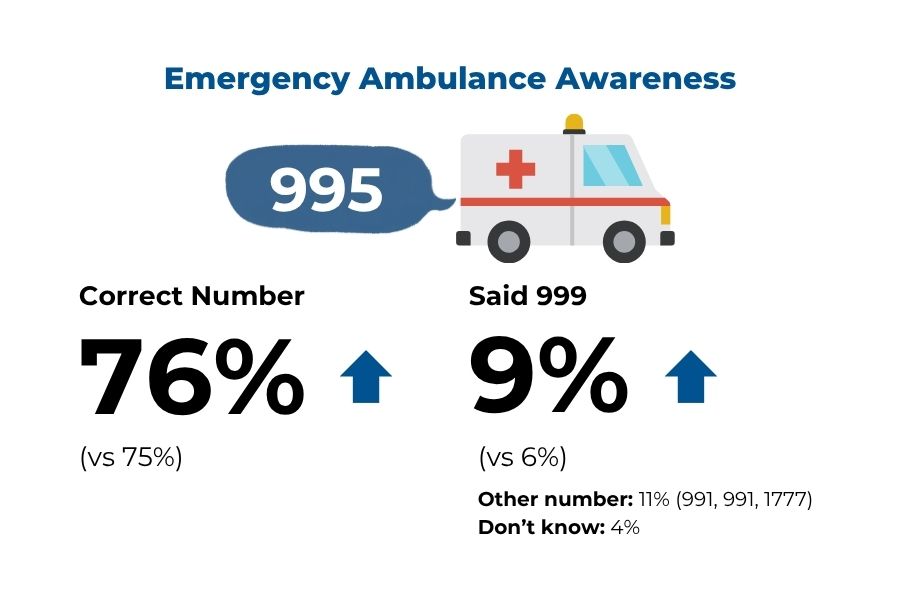
76% correctly identified 995 as Singapore’s emergency ambulance number. However, confusion remains, with some respondents choosing other emergency numbers such as 999, 911 and 1777.
Disclaimer: Call 1777 for a non-emergency ambulance. To know what constitutes an emergency, refer to SCDF’s EMS Tiered Response Framework.
Tele-guidance through 995 operators
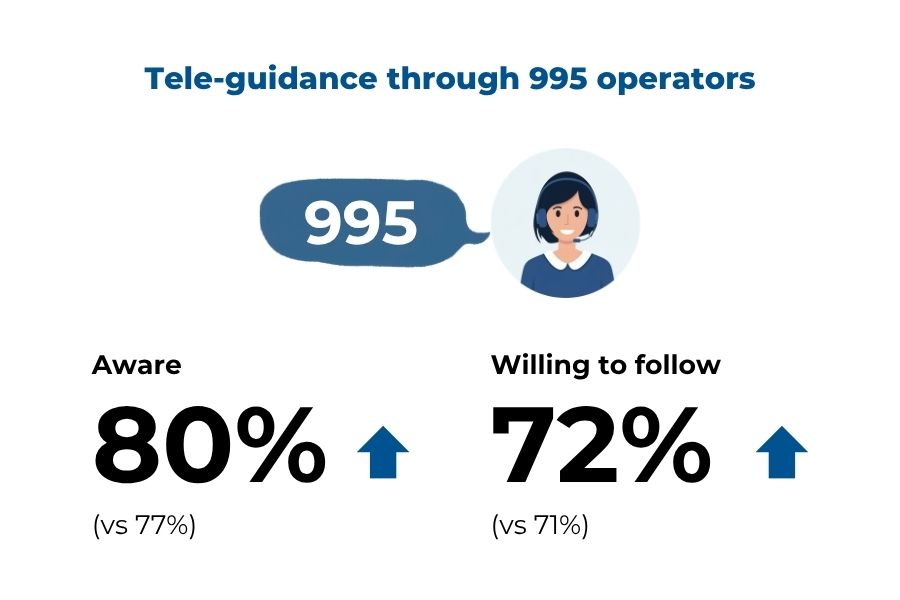
Awareness of CPR tele-guidance provided through 995 operators increased to 80%, while 72% said they would be willing to perform CPR with guidance over the phone.
AED Knowledge and Accessibility
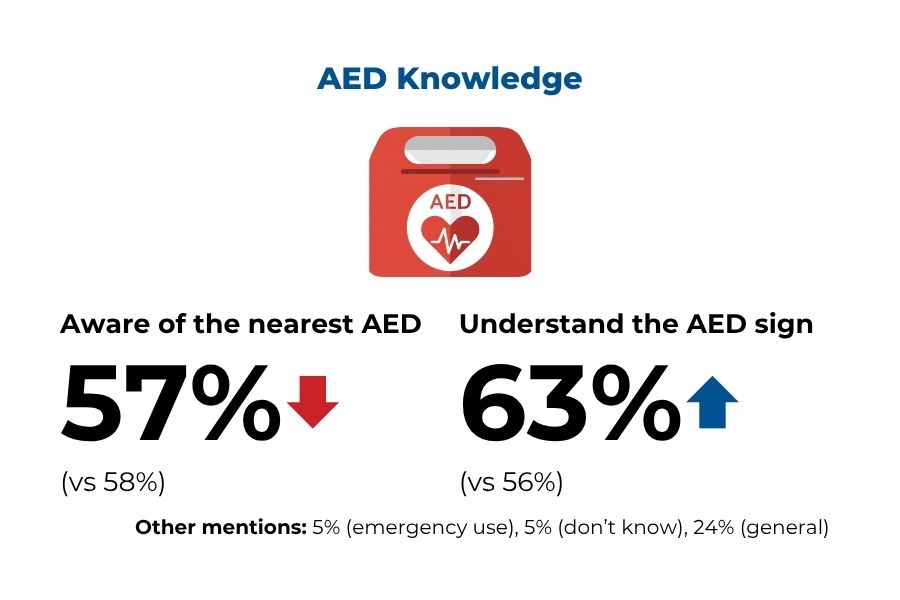
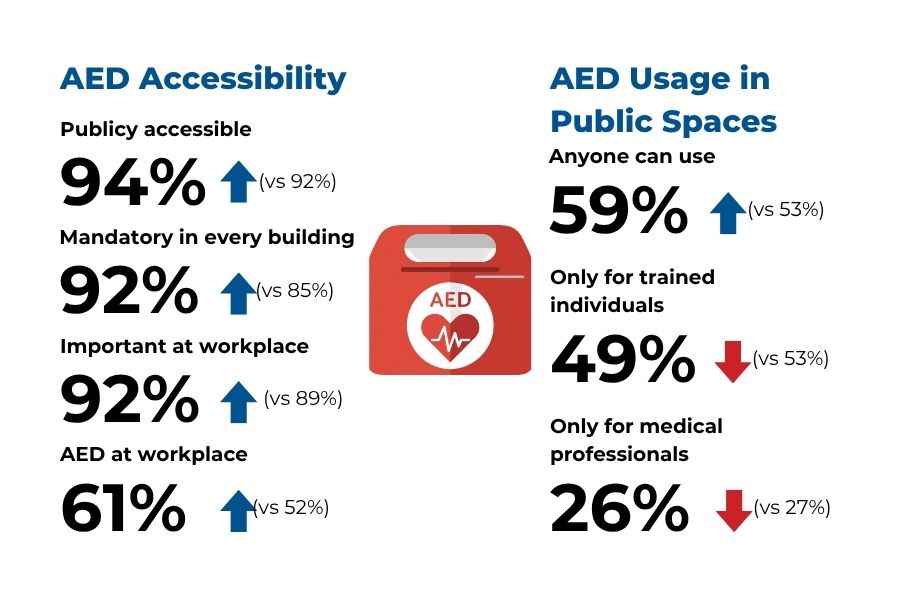
Recognition of the AED symbol improved from 56% in 2024 to 63% in 2026. Public support for AED deployment remains overwhelming, with 94% believing AEDs should be publicly accessible and 92% supporting AED installation in every building.
Using an AED in Public
59% believe that anyone can use an AED in a public setting, an increase from 53% in 2024. Encouragingly, fewer respondents believe that AEDs should only be operated by trained individuals or healthcare professionals.
AEDs are designed to be used by members of the public and provide clear voice prompts to guide users through the process.
Motivators to Learn CPR+AED
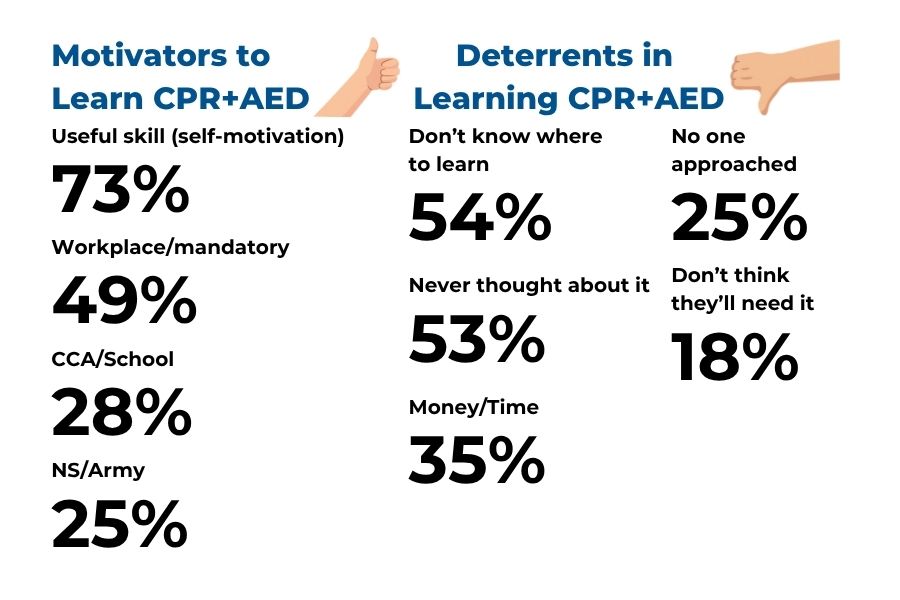
The top motivation for learning CPR+AED remains the belief that it is a useful lifesaving skill, cited by 73% of respondents. Workplace requirements, school programmes and National Service continue to play important roles in encouraging participation in training.
Barriers to Action
Barriers to Learning CPR+AED
More than half of respondents said they do not know where to learn CPR+AED (54%), while 53% said they had never considered learning. Cost and time commitments were also frequently cited barriers.
Barriers to Perform CPR
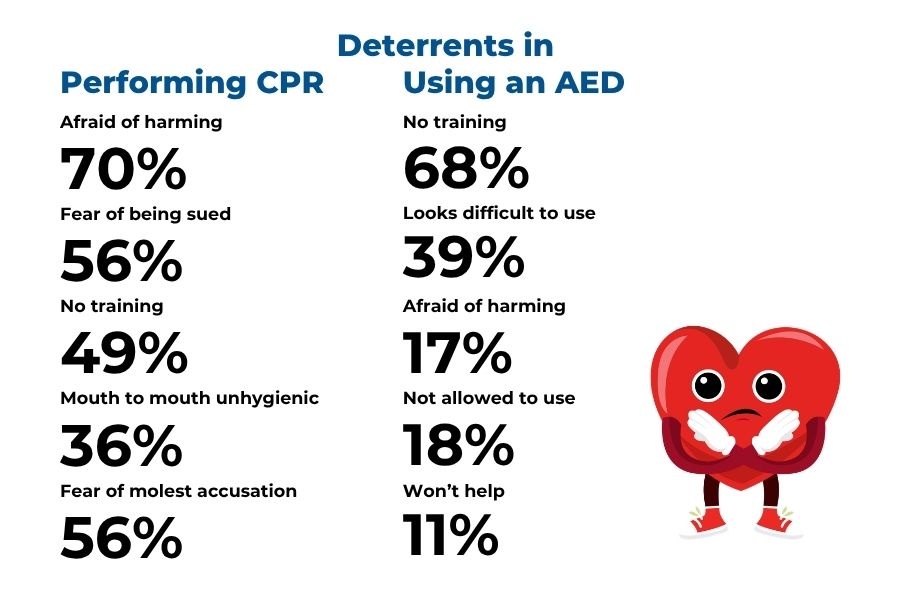
Fear remains the primary obstacle to intervention. Seven in ten respondents expressed concern about causing harm to the casualty, while many were worried about legal liability or lacked CPR training.
Barriers to Use an AED
The most common reason for not using an AED was lack of training (68%). Many respondents also perceived AEDs as difficult to use, despite their design being intended to support layperson use during emergencies.
If you ever face a legal issue arising from your resuscitation attempt and wish to seek legal advice, you can get free consultations with the Pro Bono SG (formerly named Law Society Pro Bono Services). Find out more about this Good Samaritan Initiative.
myResponder App Insights
Growing Awareness
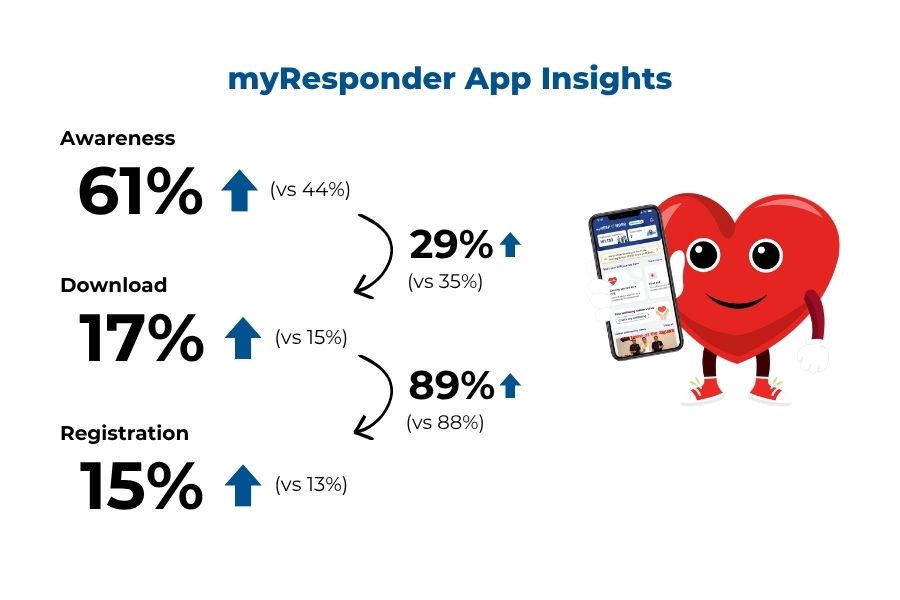
Awareness of the myResponder app increased substantially to 61%, up from 44% in 2024. Download rates also improved, with 17% of respondents having the app installed and 15% having completed registration.
Challenges in Conversion
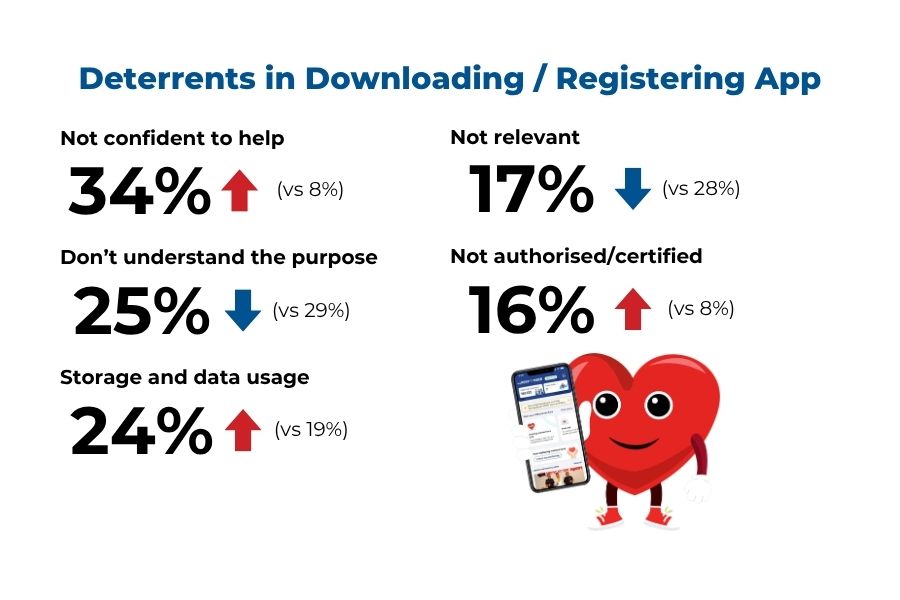
Despite higher awareness, conversion from awareness to download fell from 35% to 29%. A lack of confidence in responding to emergencies emerged as the leading barrier, increasing sharply compared to 2024.
Other commonly cited concerns included uncertainty about the app’s purpose, perceptions that the app is not relevant, and worries about storage space and mobile data usage.
Download the myResponder app to locate the nearest publicly accessible AED.
Conclusion
Progress Points in building community preparedness for cardiac arrest emergencies
- Higher CPR and AED Training Participation
More Singapore residents have received CPR and AED training, with repeat training rates showing substantial growth compared to 2024. - Improved Readiness to Intervene
Awareness of the importance of immediate CPR and AED intervention has increased, alongside greater willingness to perform CPR and use an AED in future emergencies. - Greater Acceptance of AEDs
Recognition of AED signage has improved, and public support for AED accessibility remains extremely high. More residents also understand that AEDs can be used by members of the public. - Growing Awareness of myResponder
Awareness of the myResponder app has increased significantly, creating further opportunities to expand Singapore’s network of community responders. - Continued Commitment to Community Preparedness
Residents continue to show strong support for CPR+AED education, including mandatory training initiatives and wider AED deployment across Singapore.
Key areas of concern to address in future community engagement
- Recognition of Agonal Breathing Remains Low
Only 36% correctly recognised gasping as a sign of cardiac arrest requiring immediate CPR. This knowledge gap may delay life-saving intervention. - Confidence in AED Use Has Declined
Learners’ confidence in using an AED fell from 63% in 2024 to 45% in 2026. This suggests a need for more hands-on practice and refresher training. - Recent Training Participation Has Decreased
Fewer respondents reported receiving CPR or AED training within the last two years, raising concerns about skills retention and confidence. - Training Gaps Among Older Residents
Training penetration remains considerably lower among older age groups than younger respondents, indicating a need for more targeted outreach and engagement. - Awareness Does Not Yet Translate Into App Adoption
While awareness of myResponder has increased, concerns about confidence, relevance and preparedness continue to limit downloads and registrations.